Angora Rabbit Care Guide: Everything US Owners Need to Know
How we researched this guide: In October 2026 we checked the facts in this article against Rabbit.org, National Angora Rabbit Breeders Club, International Association of German Angora Rabbit Breeders, dvm360 and British Veterinary Association, and corrected or removed anything we could not verify. Our sources are listed at the end. See our editorial policy. Last reviewed: October 2026.
Quick answer: Angora care means a hay-based diet, fresh water, roomy housing, regular grooming and a rabbit-savvy vet. The wool is the big extra: it needs grooming several times a week and harvesting every few months. Watch for wool block, mats, flystrike and heat stress.
Budgeting for a rabbit? Try our Angora rabbit cost calculator.
This article contains affiliate links. As an Amazon Associate, we earn from qualifying purchases, at no additional cost to you. We only recommend products we have researched. See our full Affiliate Disclosure for details.
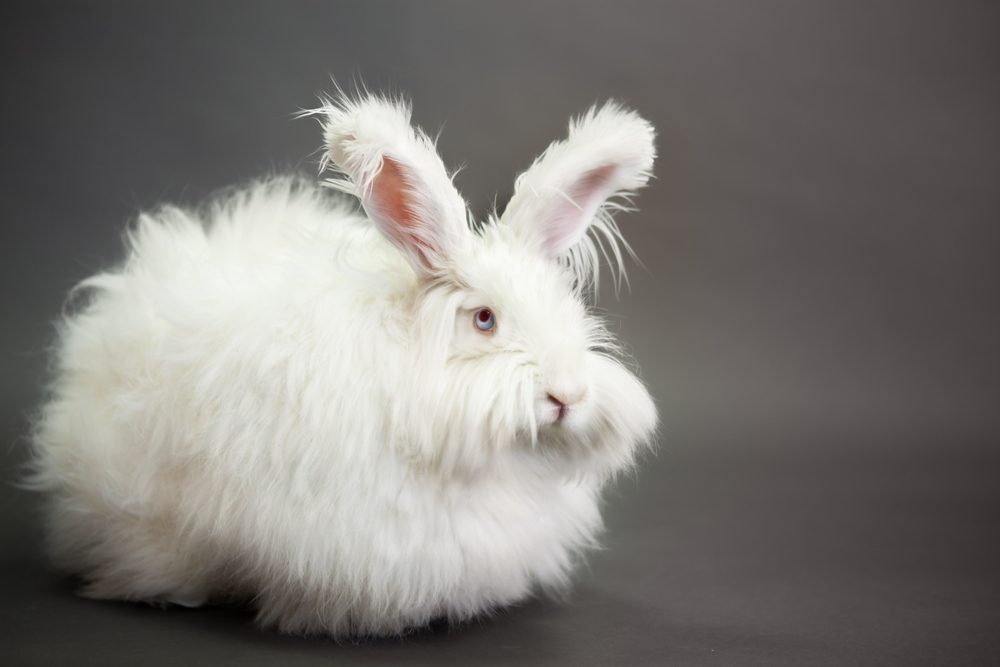
Caring for an Angora rabbit is a serious commitment. More serious, in fact, than most rabbit care articles acknowledge. The long, continuously growing wool coat that makes Angora rabbits so visually distinctive is also the source of their most significant care demands — demands that apply daily, every week, and every 90 to 120 days without exception, for the entire life of the animal.
This guide covers everything an Angora rabbit owner in the United States needs to know: housing, diet, grooming, wool harvesting, health monitoring, temperature management, and veterinary care. It applies to all four ARBA-recognized Angora breeds — English, French, Giant, and Satin — and to the German Angora. Where care requirements differ between breeds, those differences are noted clearly.
This is the most internally referenced article on Angora Rabbits, and it is designed to serve as your central reference point. Where deeper detail exists on a specific topic, links to the relevant dedicated article are provided throughout.
Is an Angora Rabbit Right for You?
Before covering how to care for an Angora rabbit, it is worth addressing the question of whether an Angora rabbit is the right choice for your situation.
Angora rabbits are rewarding, gentle, and genuinely fascinating animals. They are also significantly more demanding than short-haired rabbit breeds, and the coat management requirements are non-negotiable for every owner, regardless of their interest in spinning fiber.
An Angora rabbit is a good fit if you can commit to daily coat checks and thorough grooming at least two to three times per week, harvesting the coat every 90 to 120 days, feeding a diet with higher protein than standard rabbit pellets, monitoring daily for changes in eating and droppings, and providing indoor housing with adequate temperature management.
An Angora rabbit is not the right choice if you have a very busy schedule with limited daily time for animal care, are new to rabbit keeping and want a low-maintenance first pet, or cannot commit to the grooming schedule consistently.
If you are new to rabbits and drawn to the Angora breeds specifically, the French Angora is the most accessible starting point — manageable coat, good fiber production, calm temperament. See our Types of Angora Rabbits guide for a full breed comparison before deciding which Angora is right for you.
Housing Your Angora Rabbit
Indoor vs. Outdoor Housing
Indoor housing is strongly recommended for all Angora breeds. The dense wool coat that provides exceptional insulation in cold weather also makes Angora rabbits highly vulnerable to heat stress in warm conditions. Outdoor temperatures above 75 to 80 degrees Fahrenheit (24 to 27 degrees Celsius) are dangerous for Angora rabbits. In most US climates, this includes significant portions of spring, summer, and early autumn.
Indoor housing also protects the coat from environmental contamination — hay dust, bedding debris, and moisture from outdoor conditions all accumulate in the wool and create additional grooming labor and mat formation risk.
If outdoor housing is the only option, it must be in a permanently shaded, well-ventilated structure that protects from wind, rain, direct sunlight, and predators. A covered, elevated wire hutch with solid sides on three walls is the minimum standard for outdoor placement. German Angora rabbits, which have the highest heat sensitivity of all Angora breeds, require indoor climate-controlled housing in most US regions.
For a dedicated analysis of indoor versus outdoor housing options for Angora rabbits, see our Can Angora Rabbits Live Outside? article.
Cage Size and Construction
Minimum cage dimensions vary by breed due to size differences. The following are breeder minimums for cages. Your rabbit also needs plenty of exercise space outside the cage every day:
- English Angora (5 to 7.5 lb): 24 inches by 30 inches by 18 inches high minimum
- French Angora (7.5 to 10.5 lb): 30 inches by 30 inches by 18 inches high minimum; 30 by 36 inches preferred
- Satin Angora (6.5 to 9.5 lb): 30 inches by 30 inches by 18 inches high minimum
- Giant Angora (9.5 lb+): 36 inches by 30 inches by 24 inches high minimum
- German Angora (5.5 to 12 lb): 30 inches by 36 inches by 24 inches high minimum, per IAGARB Standards of Care
Every enclosure must allow the rabbit to take at least three full hops in any direction, stand fully upright without its ears touching the ceiling, and stretch out completely in any direction.
Wire-bottomed cages are recommended by Angora breed clubs, including the National Angora Rabbit Breeders Club — because they allow droppings and urine to fall through, keeping the wool coat cleaner between grooming sessions. The floor mesh should be 0.5-inch by 1-inch wire to allow waste passage while supporting the rabbit’s feet. Cover a good part of the wire floor with a solid resting board or mat to protect the feet from sore hocks, particularly for larger breeds whose weight concentrates on the hind feet over wire. View on Amazon
Avoid wooden hutches as the primary housing structure. Wood absorbs urine and bacteria, is difficult to sanitize effectively, and can harbor parasites. Wire construction is both more hygienic and easier to maintain.
Individual housing is standard breeder practice to protect the coat. Rabbits are social animals, though, so vets advise giving each one a companion it can see and spend time with. Group housing creates conditions for coat damage, mat formation from contact between animals, and elevated parasite and flystrike risk.
Temperature Management
The acceptable temperature range for Angora rabbits is 50 to 75 degrees Fahrenheit (10 to 24 degrees Celsius). Below 50°F (10°C), a well-groomed rabbit in full coat manages reasonably well — matted wool does not insulate effectively, however, so a rabbit with a neglected coat is vulnerable to cold as well as heat. Above 75°F (24°C), active cooling measures are required regardless of breed. Above 80°F (27°C), heat stress becomes a genuine life threat.
Signs of heat stress include panting with the mouth open, excessive salivation, lethargy, and flattening the body against the floor. A rabbit showing these signs must be moved to a cool environment immediately. Apply cool — not cold — damp cloths to the ears, offer water, and contact a veterinarian promptly. Do not use ice water, which can cause shock.
During summer months, frozen water bottles placed inside or against the cage provide effective cooling for several hours. Fans circulating air — not blowing directly at the rabbit — improve ventilation significantly. Air conditioning is the most reliable solution for warm-climate US owners.
Cage Hygiene
Clean the cage thoroughly at least once per week — more frequently if wool accumulates on the cage walls and floor. Wool build-up on wire mesh blocks wastes from falling through, traps moisture, and creates conditions for bacterial growth and flystrike. The National Angora Rabbit Breeders Club beginner’s guide notes that periodic propane torch burning of accumulated wool from wire cages is an effective and widely used cleaning method — always with the rabbit removed before use.
Feeding Your Angora Rabbit
Diet is the second most critical area of Angora rabbit care after grooming. The demands of continuous wool growth require a protein intake significantly higher than what standard rabbit pellets provide.
Timothy Hay — The Foundation of Every Angora’s Diet
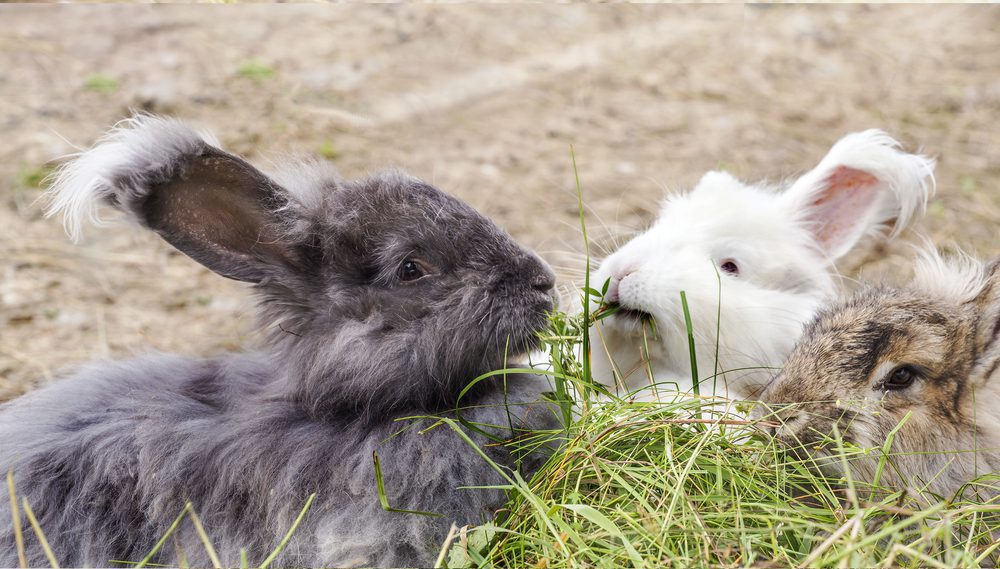
Timothy hay must be available at all times and without limit. This is not negotiable for any Angora rabbit. Hay provides the dietary fiber that keeps the digestive tract moving continuously — the most important defense against wool block. It also provides the mechanical dental wear that prevents overgrown teeth, a common health issue in all domestic rabbits.
Timothy hay is the standard recommendation for adult Angora rabbits. Orchard grass hay is an acceptable alternative that many rabbits find highly palatable. Bermuda grass hay is also suitable. Do not use alfalfa as the daily hay for adult rabbits — it is too high in calcium and protein and disrupts the nutritional balance when fed alongside high-protein pellets. Alfalfa may be appropriate for young rabbits under six months or pregnant does on veterinary guidance.
Hay should be fresh, sweet-smelling, and free of mold, dust, or chemical treatment. Buy from a local hay farmer where possible — feed-store sourcing is fresher and less expensive than pre-packaged pet store hay. Confirm the hay has not been sprayed with herbicides or pesticides.
Rabbit Pellets — higher-protein
Standard rabbit pellets formulated for short-haired breeds typically contain 14% to 16% protein — insufficient for an Angora rabbit in continuous wool production. Breeders often feed Angoras a higher-protein pellet than a standard pet formula. This is a common breeder guideline rather than an official standard. Ask a rabbit-savvy vet if your rabbit loses condition.
Look for pellets labeled “Show,” “Performance,” or “Breeder” — these formulations typically contain the higher protein content required. Blue Seal Home Fresh Show Hutch Deluxe 17 and Purina Show 18 are two examples widely used by Angora breeders in the United States. Purchase from a farm supply or feed store rather than a pet shop — feed is fresher and less expensive, and options with the correct protein level are more readily available.
Pellets should be provided in a measured daily ration rather than free-fed ad libitum for adult rabbits. A general guideline is approximately ¼ cup of pellets per 4 to 5 pounds of body weight per day, but individual rabbits vary. Monitor body condition — ribs should be palpable but not visible. Rabbits that leave pellets in the bowl consistently should have their daily ration reduced.
Use J-feeders or heavy ceramic crocks that attach to the outside of the cage — these prevent the rabbit from contaminating the pellets with wool and reduce spillage.
Fresh Greens
Dark leafy greens provide vitamins and minerals that complement the hay and pellet diet. Safe daily greens include romaine lettuce, cilantro, parsley, dandelion greens (from unsprayed sources), and kale in small amounts. Introduce any new green gradually — one new item at a time — and monitor for loose droppings, which indicate digestive upset.
Dark leaves are more nutrient-dense than pale ones — romaine over iceberg, for example. Rabbit.org suggests at least 1 packed cup of leafy greens per 2 pounds of body weight daily.
Foods to avoid entirely: Iceberg lettuce (high water content, low nutrition, can cause diarrhea), all members of the onion family, avocado, rhubarb, chocolate, and anything containing artificial sweeteners. These are toxic to rabbits in varying degrees.
Treats
Treats should be used sparingly and selectively. Small pieces of apple (without seeds), carrot, blueberry, or similar fruit are appropriate in pea-sized amounts, two to three times per week at most. Carrots — despite their association with rabbits in popular culture — are high in sugar and should be a genuine treat, not a dietary staple.
Papaya enzyme tablets, available from health food stores and some pharmacy vitamin sections, are used by many Angora breeders as a weekly supplement, in the belief that it helps break down ingested wool. Some breeders give a few tablets once a week, but there is little scientific evidence that this works, so check with a rabbit-savvy vet first.
Fresh Water
Fresh water must be available at all times. Both sipper bottles and heavy ceramic bowls are acceptable delivery methods. Sipper bottles keep the coat drier — water splashed from a bowl can cause mats in the wool around the chin and chest. Monitor sipper bottles daily to confirm they are functioning — the ball valve can stick, cutting off water without a visible indication.
Grooming Your Angora Rabbit
Grooming is the most time-intensive and most important aspect of Angora rabbit care. It is not optional, it cannot be postponed, and no owner should commit to an Angora rabbit without fully understanding what consistent grooming requires.
Why Grooming Is Non-Negotiable
Angora rabbits groom themselves continuously, as all rabbits do. Unlike cats, rabbits cannot vomit. Every fiber ingested during self-grooming must pass through the digestive system entirely, or it accumulates in the stomach and intestines. In short-haired rabbits, this is manageable with hay and adequate gut motility. In Angora rabbits, the volume of fiber ingested during self-grooming is substantially higher, and the fibers are longer, meaning they can form interlocking masses rather than passing cleanly through.
The resulting condition, wool block, is closely tied to GI stasis, where the gut slows down or stops. It can be fatal. Regular grooming removes loose fiber before it can be ingested, dramatically reducing the risk. It is the single most effective preventive measure available.
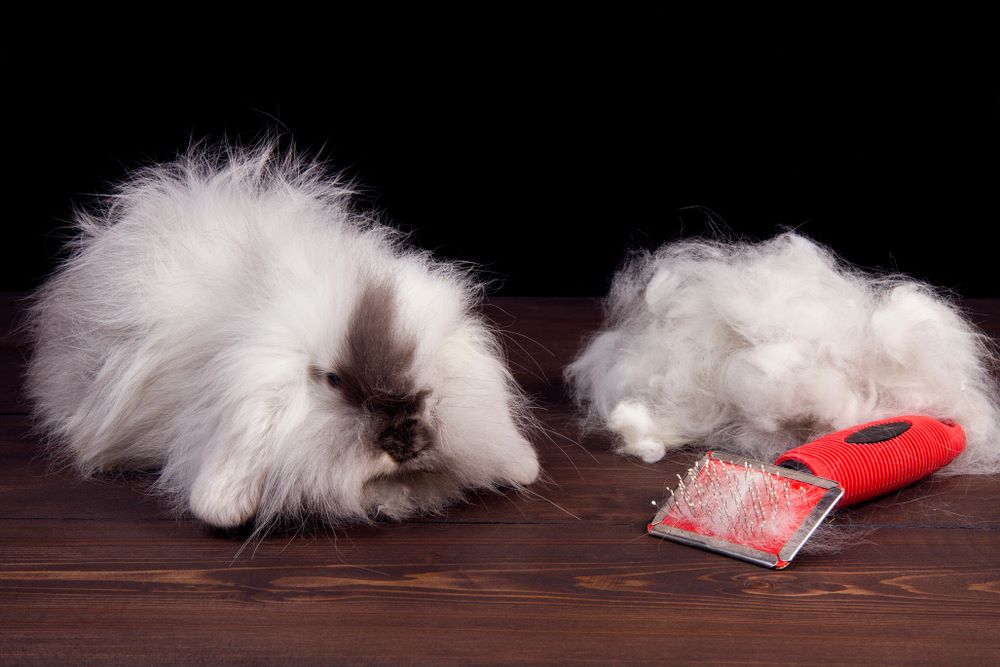
Beyond wool block prevention, regular grooming prevents mat formation. Mats pull painfully on the rabbit’s skin, restrict movement, trap moisture, and create ideal conditions for flystrike — fly larvae infestation that can be life-threatening.
Grooming Frequency
- English Angora: Minimum two to three times per week. Daily attention is required during molting periods.
- French Angora: Minimum two to three times per week. Daily during heavy molt.
- Satin Angora: Daily combing recommended due to the slippery satin fiber texture that mats more readily than French Angora.
- Giant Angora: Two to three times per week between 90-day clips.
- German Angora: Minimal grooming required between clips in well-bred lines — the coat should remain free-falling. If matting occurs before 90 days, management conditions need review.
Essential Grooming Tools
Every Angora rabbit owner needs the following tools at a minimum:
Wide-tooth Steel Comb — The primary working tool for Angora coats. Used to part and work through the coat section by section, from the tip of the fiber toward the skin. Never drag a comb from the skin outward through a long Angora coat — this creates painful pulling and can injure the rabbit’s delicate skin. View on Amazon
Small Pet Select Hair Buster Comb — Specifically designed for rabbits and small pets, the Hair Buster’s rounded tine tips protect delicate skin while the rubberized sleeve captures loose fiber during combing. Highly recommended by Angora rabbit owners and grooming experts as the go-to tool for deshedding and routine coat maintenance. View on Amazon
Self-cleaning Slicker Brush — Useful for finishing the outer coat after the comb has worked through the deeper layers. The Hertzko Self-Cleaning Slicker Brush is one of the most widely used options for long-coated pets, with retractable bristles that make cleaning between sessions easy. View on Amazon
Blunt-nosed Scissors — For cutting out mats that cannot be safely combed free. Always feel for the skin before cutting and point the tip of the scissors away from the rabbit’s body. View on Amazon
Mat splitter — A specialized tool with recessed blades that cuts through mat cores without the risk of scissors near the skin. Useful for dense mats in the early stages before they become fully solid. View on Amazon
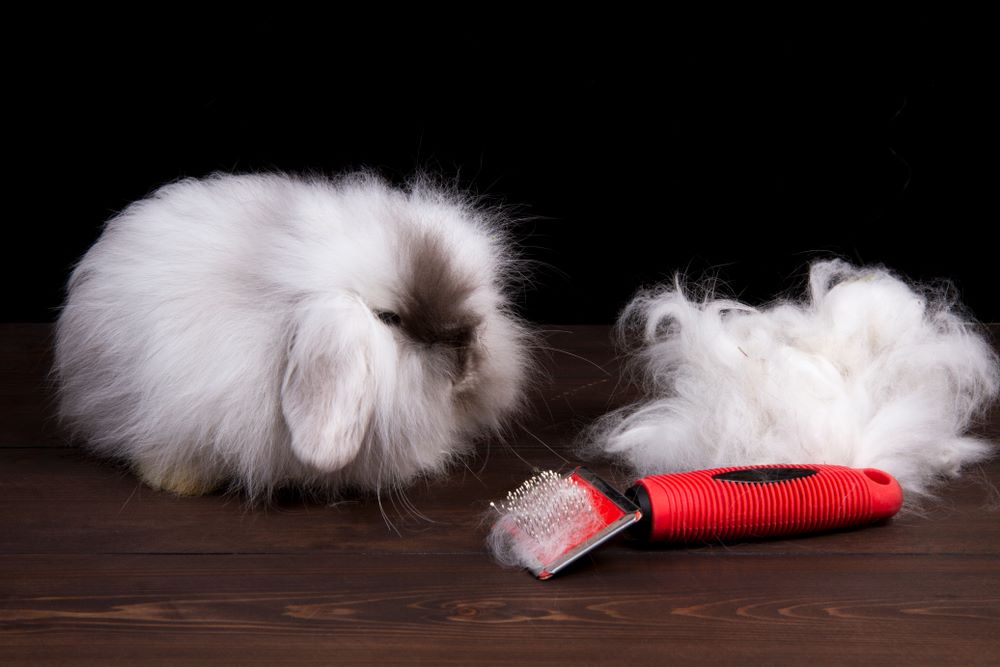
Grooming Technique
Begin each grooming session with a visual scan of the entire coat. Identify any mats, debris, or areas of concern before starting.
Work systematically through the coat — back, sides, belly, chest, and finally the legs and face. The belly is a high-mat-formation area and should be included in every grooming session without exception. For English Angoras, the facial wool must be checked and trimmed as needed at every session to keep it clear of the eyes.
Use the wide-tooth comb with the growth direction of the coat. Part the fiber with your fingers and work through the wool from tip to skin in manageable sections. If you encounter resistance, work gently with your fingers to separate the tangle before applying the comb. Do not force the comb through resistance — this causes pain and damages the coat.
Loose mats in the early stage — webby, not yet dense — can often be separated with the fingers and then combed free. Tight, solid mats must be cut out. Attempting to comb through a tight mat causes pain and can tear the skin.
For English Angoras and any breed with significant facial wool, trim the wool around the eyes at every session. Any wool touching the eyeball must be removed immediately — it causes chronic irritation and leads to eye infection.
Coat Harvesting
Every Angora rabbit’s coat must be harvested every 90 to 120 days. The coat grows at approximately 1 inch (2.5 cm) per month. Beyond 90 days, the older fiber begins to degrade at the tips and tangle with new growth, increasing mat formation and wool block risk significantly.
For molting breeds (English, French, Satin Angora): Hand-plucking during the natural molt produces the highest quality fiber and is the preferred harvesting method among fiber-focused owners. When the coat begins to loosen — visible as clumps releasing when gently tugged, or fiber dragging behind the rabbit — pluck by gathering small sections of fiber and pulling firmly in the direction of growth. The loose fiber releases easily without resistance or discomfort; healthy fiber that has not begun to loosen will not release. If you encounter resistance, stop — that fiber is not ready.
For non-molting breeds (Giant Angora, German Angora): Clipping is the only harvesting method. Use electric clippers designed for pet grooming — standard clippers designed for dogs and cats often cannot cut through dense Angora fiber effectively. The Andis brand clippers are widely recommended by experienced Angora breeders. Always blow out the coat before clipping to remove loose fiber and expose any mats. Clip in smooth single passes to minimize second cuts (short pieces from re-cutting the same area), which reduces fiber quality. Clip carefully away from loose skin, particularly in the armpit and groin areas.
For a comprehensive, dedicated grooming guide, see our Angora Rabbit Grooming guide.
Health Monitoring
Daily health monitoring is essential for every Angora rabbit. Rabbits are prey animals and instinctively conceal signs of illness — by the time a rabbit shows obvious signs of distress, the condition has often been developing for some time. Daily observation catches problems early, when intervention is most effective.
Daily Monitoring Checklist
Check the following every day:
Food consumption: A rabbit that has not finished its pellets or is eating significantly less than usual is showing the first warning sign of almost every health problem, including wool block, dental disease, and respiratory illness.
Droppings: Healthy droppings are round, uniform, and abundant. Reduced droppings indicate reduced gut motility. String-of-pearls droppings — fecal pellets strung together with wool fiber — indicate wool ingestion and are an early warning of wool block risk. Misshapen, very small, or absent droppings are a medical emergency.
Vent area: Check the hindquarters and vent area daily for soiling or wool matting. Soiled wool in the vent area is the primary entry point for flystrike during warm months.
Eye area: Check for any discharge, cloudiness, or redness. Any eye concern that does not resolve within 24 hours warrants a veterinary assessment.
Posture and behavior: A rabbit that is hunched, reluctant to move, grinding its teeth, or pressing its abdomen against the floor is in pain and requires immediate veterinary attention.
Wool Block — The Primary Health Emergency
Wool block is the most serious and common health emergency for Angora rabbits. It occurs when ingested fiber accumulates in the digestive tract faster than it can pass through, creating a blockage that prevents normal eating and digestion. If not addressed promptly, wool block is fatal.
Early signs: Reduced pellet consumption, smaller or fewer droppings, string-of-pearls droppings, reduced activity.
Progression: Complete loss of appetite, no droppings, hunched posture, and audible tooth grinding.
Emergency protocol: Clip all remaining wool from the rabbit immediately — this eliminates the source of ongoing fiber ingestion. Remove pellets and feed only hay and water. Some breeders give papaya enzyme tablets or fresh pineapple juice, which contains the enzyme bromelain, but there is little evidence they help. Don’t give cat hairball remedies or laxatives unless your vet advises it. There is no good evidence these remedies dissolve wool, and laxatives should only be used with a vet’s guidance. Treat these only as stopgaps on the way to the vet.
A rabbit that has not eaten or passed droppings for 12 hours is an emergency. Take it to a rabbit-savvy vet right away. Severe wool block requires professional treatment — do not delay seeking veterinary care in the hope the situation will resolve on its own.
Wool Mites
Wool mites (Cheyletiella parasitovorax) are common in Angora rabbits and are sometimes called “walking dandruff” because the mite is visible as white flakes that move when examined closely. Signs include flaking skin patches, fur loss, and increased scratching or skin sensitivity. Wool mites require veterinary treatment. A rabbit-savvy vet will choose the medication and the schedule. Regular coat inspection during grooming sessions is the best early detection method.
Do not use any anti-parasitic product as a routine preventive unless your vet prescribes it. Discuss this with a rabbit-experienced veterinarian before use.
Dental Disease
All domestic rabbits have continuously growing teeth. Misaligned teeth — malocclusion — is a common problem, particularly in breeds with dwarf gene influence. Overgrown teeth cause pain, prevent normal eating, and create secondary health complications. Unlimited hay provides the mechanical wear that keeps teeth at the correct length under normal conditions. Annual veterinary dental examinations are essential to catch problems early.
Flystrike
Flystrike occurs when flies lay eggs in soiled or matted wool, particularly in the warm, moist vent area. The larvae hatch within hours and can cause severe, rapidly progressing tissue damage. Flystrike is most common during summer months and is almost entirely preventable through daily vent area inspection, regular wool trimming in the hindquarters, and maintaining clean housing.
If you find fly larvae on a rabbit, this is a veterinary emergency. Do not attempt to treat flystrike at home — contact a rabbit-experienced veterinarian immediately.
Finding a Rabbit-Experienced Veterinarian
Not all veterinarians have significant rabbit experience. Rabbits have different physiology, medication sensitivities, and health priorities from dogs and cats. Find a rabbit-experienced veterinarian before an emergency arises — not during one. The House Rabbit Society maintains a state-by-state directory of rabbit-savvy veterinarians across the United States. Annual health checks are recommended for all Angora rabbits.
For a comprehensive Angora rabbit health guide, see our Angora Rabbit Health guide.
Nail Care
Angora rabbit nails grow continuously and must be trimmed every four to six weeks. Overgrown nails curl and can catch on cage wire, causing injury. Long nails also alter the rabbit’s posture and foot placement, increasing the risk of sore hocks over time.
Use small animal nail clippers designed for rabbits or cats. Clip just the clear tip of the nail, avoiding the pink quick visible in light-colored nails. In dark-colored nails, clip only the very tip — if uncertain, clip less rather than more. Keep styptic powder on hand to stop minor bleeding if the quick is accidentally nicked.
Exercise and Enrichment
Daily free-roam time outside the enclosure is essential for the physical and mental well-being of all Angora rabbits. At minimum, two to three hours per day in a rabbit-proofed area — more is better.
Rabbit-proofing means removing or covering all electrical cables (rabbits will chew through live wires with no apparent awareness of the danger), blocking access to tight spaces where a rabbit can become trapped, removing toxic plants from floor level, and ensuring there are no gaps the rabbit can escape through.
Enrichment inside the enclosure should include hay in a rack or loose pile that the rabbit can dig through and pull at — foraging behavior is natural and beneficial. Safe chewable toys made from untreated wood or cardboard provide dental stimulation and prevent destructive chewing. Tunnels and hiding areas reduce stress.
Angora rabbits are naturally curious and social animals. They form genuine bonds with their owners through consistent, calm handling and daily interaction. Regular handling from a young age builds confidence and makes grooming sessions significantly easier.
Seasonal Care Adjustments
Summer: Heat management is the priority. Clip the coat shorter than usual before the hottest months — a summer clip is practiced by many Angora owners to reduce heat load. Provide frozen water bottles inside or against the cage. Ensure continuous ventilation. Never leave an Angora rabbit in direct sunlight, even briefly.
Winter: The full Angora coat provides excellent insulation — a rabbit in good coat condition handles cold far better than heat. Ensure the coat is mat-free, as matted wool loses its insulating properties. Keep outdoor housing sheltered from wind and wet. Ensure water does not freeze — check water sources multiple times daily in freezing conditions.
Molting seasons: English, French, and Satin Angoras typically molt every 90 to 120 days, with heavier molts often coinciding with seasonal temperature changes. During molt, increase grooming to daily sessions and harvest the loosening coat promptly. Wool block risk is highest during active molting periods.
FAQs
How much time does caring for an Angora rabbit take each week?
Grooming alone requires 30 to 60 minutes per week during routine periods and up to 20 to 30 minutes per day during active molting. Add feeding, cage cleaning, daily health monitoring, and free-roam time. Plan to spend some time on care every day, and more during a molt.
What is the most important thing to know about Angora rabbit care?
Wool block prevention. Everything else in this guide — grooming frequency, the importance of unlimited hay, the protein requirements of the diet — ultimately connects back to preventing wool block. It is one of the most serious preventable health risks for Angora rabbits and the care priority that separates successful Angora ownership from unsuccessful ownership.
Can Angora rabbits live with other rabbits?
With careful introduction, bonded pairs or small groups of neutered same-sex rabbits can coexist. However, most Angora breeders keep each rabbit in its own enclosure — separate cages with adjacent contact time is the practical arrangement for multi-rabbit Angora households. Breeders find shared enclosures can mean more coat damage and mats. Vets stress that rabbits still need company.
How long do Angora rabbits live?
Many Angoras live around 7 to 12 years with good care, though some sources give shorter estimates. For a detailed breakdown by breed and the factors that most influence lifespan, see our Lifespan of Angora Rabbits guide.
Do Angora rabbits need vaccinations in the United States?
Unlike in the UK and Europe, core rabbit vaccinations for myxomatosis and RVHD are not standard practice in the United States, though an RHDV2 vaccine (Medgene) has held a USDA conditional license since 2023 and is offered by many US vets. No myxomatosis vaccine is available in the US. Annual wellness examinations are recommended regardless. Discuss preventive care protocols with a veterinarian experienced with rabbits.
How do I find a good Angora rabbit breeder?
The American Rabbit Breeders Association maintains a breeder directory. For German Angoras, the IAGARB maintains a network of breeders. For more detailed guidance, see our Where to Buy an Angora Rabbit guide.
How much does it cost to keep an Angora rabbit?
Initial costs and ongoing monthly expenses vary significantly by location and setup. For a current breakdown, see our How Much Are Angora Rabbits guide.
Conclusion
Angora rabbit care is demanding, consistent, and genuinely rewarding when approached with the right preparation. The framework is straightforward: a clean, appropriately sized enclosure at a safe temperature, unlimited timothy hay as the dietary foundation, high-protein pellets to support wool growth, consistent grooming two to three times per week, a 90 to 120 day harvest schedule, and daily health monitoring.
None of these elements is complicated in isolation. The challenge is maintaining every element simultaneously, every week, for the life of the animal. Owners who meet that challenge consistently find Angora rabbits to be among the most engaging and rewarding companion animals available.
Use this guide as your reference point. The linked articles throughout provide deeper coverage of every major topic — grooming, health, housing, breeds, feeding, and more. If you have a question not answered here, use our contact page, and we will do our best to help.
Sources
- Rabbit.org. Gi Stasis – The Silent Killer, checked October 2026.
- Rabbit.org. Healthy Rabbit Diet Guide: Safe Foods & Treats, checked October 2026.
- National Angora Rabbit Breeders Club. A Beginners Guide to Angoras, checked October 2026.
- International Association of German Angora Rabbit Breeders. IAGARB Standards of Care, checked October 2026.
- dvm360. Vaccine for rabbit hemorrhagic disease receives conditional license from USDA-CVB, checked October 2026.
- British Veterinary Association. Housing pet rabbits in pairs or compatible groups, checked October 2026.
This guide is for general information and is not a substitute for advice from a vet. Read our disclaimer.