
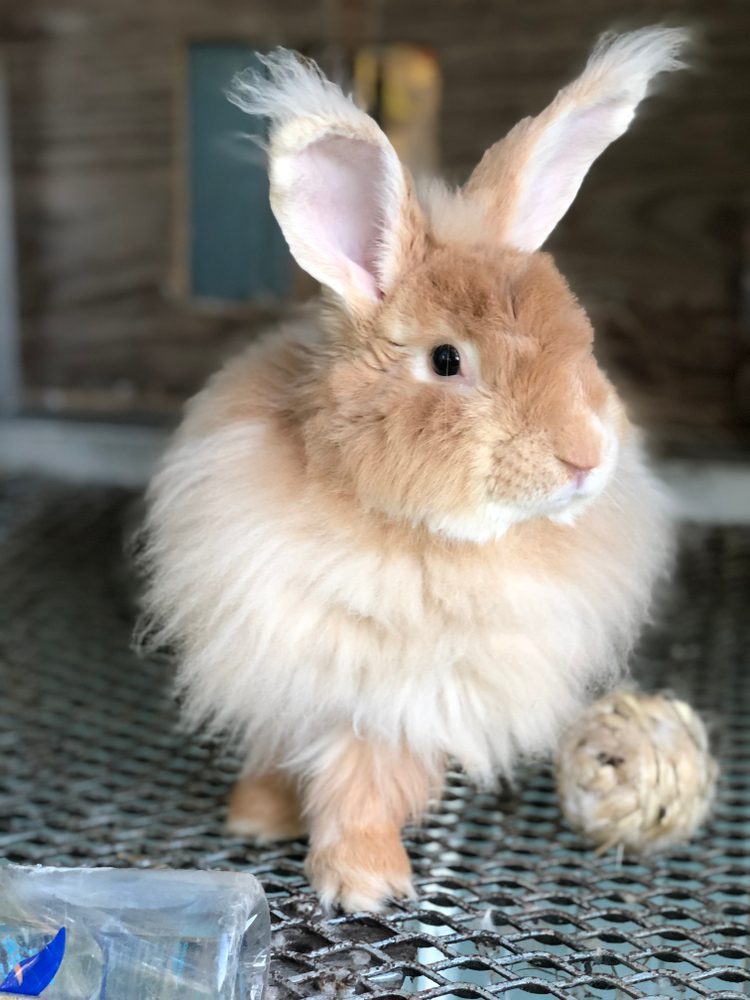
French Angora Rabbit

French Angora Rabbit: Complete Breed Profile, Care Guide, and What US Owners Need to Know

The French Angora is the most recommended Angora breed for first-time owners — and one of the most capable fiber animals available to US producers. Its clean face and feet eliminate the mandatory facial wool trimming that makes the English Angora so demanding. Its higher guard hair proportion makes its coat significantly more resistant to matting. Its natural molting cycle means fiber is harvested by plucking rather than shearing. And it remains an excellent fiber animal, producing 12 to 16 ounces of quality wool per year in a range of natural colors unmatched by any other Angora breed.

This page covers the complete French Angora breed profile: history, ARBA standard, physical specifications, fiber properties, grooming requirements, diet, housing, health, and temperament — everything a US owner or prospective buyer needs to make an informed decision.

Breed History and Origin

The Angora rabbit originated in Ankara, Turkey, and reached France in 1723. The French Angora developed as a distinct variety through selective breeding that emphasized a larger commercial body type, a clean face and feet — distinct from the fully wooled English Angora — and a higher proportion of guard hair in the coat that produces a more manageable fiber animal.

The breed was introduced to the United States in the early 20th century and was among the founding breeds recognized by the American Rabbit Breeders Association (ARBA). In the US, the French Angora is kept both as a show animal and as a fiber source, and its wide range of natural colors makes it a particular favorite among hand spinners who value color variety alongside fiber quality.

ARBA Breed Standard: Key Specifications

CharacteristicARBA Standard
Minimum weight7.5 lbs (3.4 kg)
Maximum weight10.5 lbs (4.76 kg)
Ideal weight7.5–10 lbs (3.4–4.53 kg)
Body typeCommercial — long, broad, well-muscled
Recognized colorsAll ARBA-recognized colors including agouti, broken, pointed white, self, shaded, ticked, wideband
Facial woolClean face and feet — NO facial wool; tufts at ear tips only
Ear tuftsAll ARBA-recognized colors, including agouti, broken, pointed white, self, shaded, ticked, and wideband

The French Angora is judged on wool density, texture, and condition alongside body conformation. The clean face is a defining breed characteristic — any facial wool is a fault on the show table.

Physical Characteristics

Body

The French Angora has a commercial body type — longer and more substantial than the English Angora’s compact form. Well-developed hindquarters and good muscling throughout give the breed a solid, substantial feel beneath the coat. Adults weigh 7.5 to 10.5 pounds, making them one of the larger Angora breeds.

Wool Coverage

The French Angora’s coat covers the body from neck to tail but leaves the face and feet completely clean — the most significant physical difference from the English Angora. The ear tips carry small tufts of wool that are a breed characteristic. The body wool is dense with a higher guard hair proportion than the English Angora, which provides the structural support that makes the French Angora coat less prone to matting.

Fiber Specifications

SpecificationFrench Angora Value
Fiber diameter13–16 microns
Annual fiber yield12–16 oz (340–450g)
Harvest methodPlucking (natural molting breed)
Harvest frequencyEvery 90–120 days
Guard hair proportionModerate — provides coat structure, reduces mat risk

French Angora fiber at 13 to 16 microns is finer than fine merino wool and comparable to the finest commercial cashmere. The moderate guard hair proportion in the spun yarn provides more body and structure than pure English Angora yarn while retaining the characteristic Angora halo and softness.

Coat Colors

The French Angora is available in the widest range of natural colors of any Angora breed. ARBA-recognized color classes include agouti (chestnut, opal, lynx, squirrel, copper, chocolate agouti), broken (any recognized color with white), pointed white (blue-eyed or ruby-eyed white), self (white, black, blue, chocolate, lilac), shaded (sable, smoke pearl, seal), ticked (steel, chocolate steel, blue steel), and wideband (red, cream, fawn). This color diversity makes the French Angora the preferred breed for hand spinners seeking natural, undyed fiber in a range of shades.

Grooming

The French Angora’s grooming requirement is substantial but significantly less demanding than the English Angora, primarily because:

  • No facial wool trimming is required
  • Higher guard hair proportion reduces mat formation rate
  • The coat is more forgiving of slightly extended intervals between sessions

Grooming Schedule

Minimum: Two full sessions per week, each 30 to 45 minutes in duration.

During active molt: Sessions every two to three days as the loosening fiber releases progressively over two to three weeks. Unlike the English Angora’s more abrupt molt, the French Angora’s molt is typically more gradual, which reduces the crisis window but still requires consistent management.

Grooming Order

Always begin at the underside — belly, chest, and inguinal folds — before moving to back, sides, legs, and ears. The hindquarters and inner thighs are the highest-mat-risk areas regardless of breed.

Mat Management

The French Angora’s guard hair structure provides natural mat resistance, but mats still form — particularly at the hindquarters, under the chin, and behind the ears. Apply the standard mat rule: webbed mats — work through with fingers and steel comb from the base; solid mats — cut, always feeling for skin first.

Tools

  • Steel grooming comb — primary maintenance tool
  • Slicker brush — surface finishing
  • Blunt-nosed scissors — mat removal
  • Pet grooming blower on cool setting — recommended for experienced owners managing multiple rabbits or longer coat intervals

Diet

The French Angora’s diet follows the same elevated-protein standard required by all Angora breeds for continuous wool growth.

Unlimited timothy hay — the foundation of the diet. Non-negotiable.

Minimum 17% protein pellets — standard generic rabbit pellets at 12 to 16% protein are insufficient for Angora wool growth. Confirm on the label before purchase. Approximately ¼ cup per 5 lbs of body weight daily, adjusted for individual body condition.

Daily fresh leafy greens — romaine, cilantro, parsley, dandelion greens. Introduce new items one at a time.

Fresh water at all times — water bottle preferred over open bowl to keep the wool dry.

Avoid: onion family, avocado, rhubarb, chocolate, apple seeds and stone fruit pits, iceberg lettuce in quantity, and cauliflower (gas risk). Carrots are occasional treats only.

Housing

Indoor housing is the standard for all French Angora rabbits. The wool coat feels in moisture, outdoor debris accumulates in the coat, accelerating mat formation, and flystrike risk outdoors is significantly higher than indoors.

RequirementSpecification
Minimum floor space30 × 36 inches (76 × 91 cm)
Minimum height18 inches (46 cm)
Solid resting boardMandatory — minimum one-third of floor area
Hide boxRequired
Temperature range60–72°F (16–22°C)
Upper heat limit80°F (27°C)

The French Angora’s larger commercial body size requires more floor space than the English Angora. Ensure the enclosure is large enough for the rabbit to stretch out fully and turn around comfortably without the coat contacting the sides.

Health

GI Stasis

The primary emergency for all rabbit breeds. Reduced eating and reduced droppings for 6 to 8 hours require a same-day veterinary assessment. Wool block contributing to GI stasis is a risk for French Angoras — consistent grooming and unlimited hay are the primary preventive measures.

Dental Disease

Rabbit teeth grow continuously. French Angoras, with their larger commercial body and broader jaw, are generally less prone to dental crowding than the compact English Angora, but dental assessment remains important from age three onward.

Flystrike

Negligible risk for indoor rabbits. Hindquarter wool monitoring at each grooming session — checking for urine staining, soiling, or dampness — is the appropriate management standard.

Ear Mites

The French Angora’s clean ears and small ear tip tufts provide much lower infestation risk than the English Angora’s fully wooled ears. Brief visual inspection of the ear canal entrance at each grooming session is sufficient.

Find a rabbit-experienced veterinarian through the House Rabbit Society vet directory before you need one.

Temperament and Suitability

The French Angora is widely regarded as the most appropriate Angora breed for first-time Angora owners. It is calm, handleable, and sociable. Its temperament is docile without the extreme sensitivity to grooming stimulus that some English Angoras display, making the grooming relationship more straightforward to establish.

Well suited to: First-time Angora owners; fiber enthusiasts who want to start spinning; families with older children; owners who want excellent fiber production without the complexity of the English Angora’s facial wool care.

Less suited to: Owners seeking maximum fiber yield (German or Giant Angora produces significantly more); owners seeking the finest possible fiber (English Angora produces finer fiber at 11 to 13 microns vs French Angora’s 13 to 16 microns).

FAQs

Is the French Angora good for beginners?

Yes, it is the most recommended Angora breed for first-time owners. Its clean face eliminates the facial wool eye-contact risk of the English Angora, its guard hair structure reduces mat formation, and its grooming demand is manageable for a committed new owner.

How much fiber does a French Angora produce per year?

12 to 16 ounces (340 to 450 grams) per year, harvested by plucking every 90 to 120 days during the natural molting cycle.

What colors do French Angora rabbits come in?

The widest color range of any Angora breed — including chestnut, opal, lynx, fawn, cream, red, black, blue, chocolate, sable, seal, smoke pearl, broken patterns, and pointed white. This color diversity makes the French Angora the preferred breed for spinners wanting natural undyed fiber in a range of shades.

Can French Angora rabbits live outdoors?

Not recommended. The wool coat felts in moisture, outdoor debris accelerates mat formation, and flystrike risk is substantially higher outdoors. Indoor housing with climate control is the standard.

How often does a French Angora need grooming?

Minimum two full sessions per week of 30 to 45 minutes each. During molt, every two to three days. No facial wool trimming required — a significant advantage over the English Angora.

How long do French Angora rabbits live?

7 to 12 years with proper care.

Conclusion

The French Angora offers one of the most balanced ownership propositions in the Angora rabbit group: genuine fiber production capability, excellent temperament, manageable grooming demand, and the widest natural color palette of any Angora breed. For first-time Angora owners specifically, it is the breed most likely to result in a positive, sustainable ownership experience.

For sourcing guidance, see our Where to Buy an Angora Rabbit guide. For fiber production specifics, see our Raising Angora Rabbits for Wool guide.

This page is for general educational purposes and does not constitute veterinary advice. See our disclaimer for full details.