Raising Angora Rabbits for Wool: The Complete US Producer’s Guide
How we researched this guide: In October 2026 we checked the facts in this article against National Angora Rabbit Breeders Club, International Association of German Angora Rabbit Breeders, James Hutton Institute archive and Cashmere and Camel Hair Manufacturers Institute, and corrected or removed anything we could not verify. Our sources are listed at the end. See our editorial policy. All prices are in US dollars (USD). Last reviewed: October 2026.
Quick answer: Angoras are kept for their fine, warm wool, which is harvested every few months by plucking or shearing. Yield depends on the breed, and Giant and German Angoras give the most. Regular grooming between harvests keeps the wool clean and free of mats.
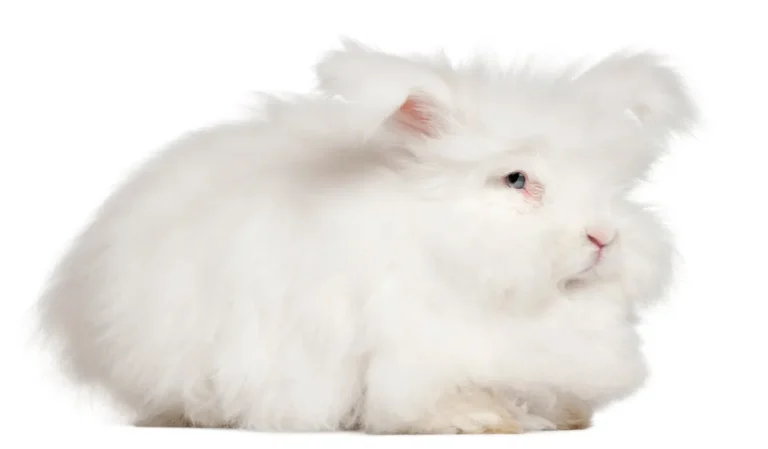
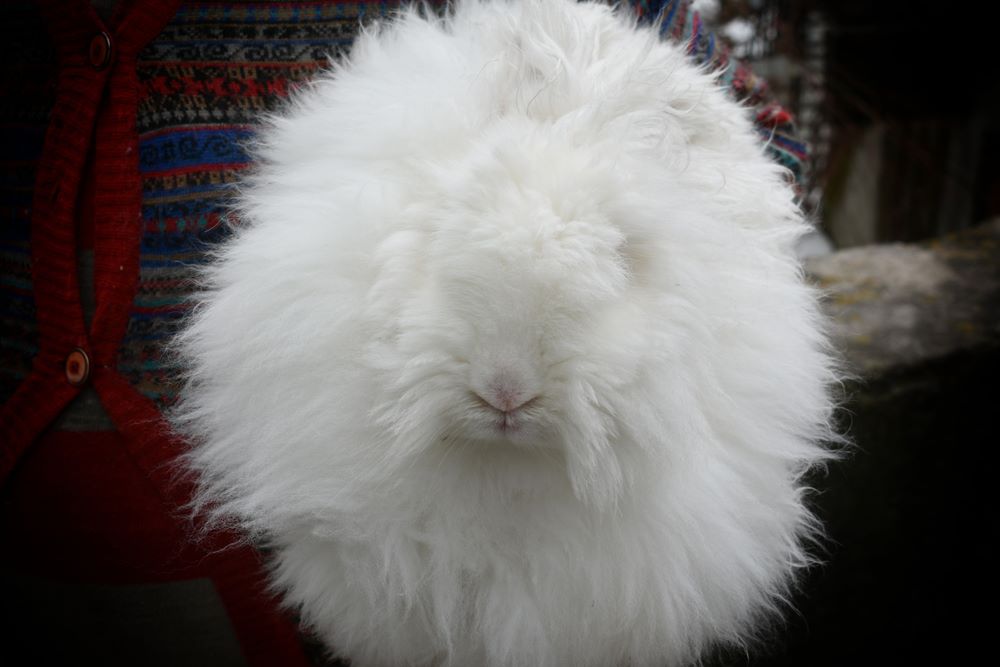
Angora rabbits can grow a lot of wool in a small space. The International Association of German Angora Rabbit Breeders (IAGARB) says certified shearing totals above 2,000 grams (about 4.4 pounds) a year per German Angora are not uncommon in Europe and North America. In October 2026, Angora rabbit wool we found for sale online was listed at $4.50 to about $10.50 per ounce (USD). See the price table below for each source.
This guide covers everything a US owner needs to know about raising Angora rabbits specifically for wool production: which breeds to choose for fiber goals, how to optimize care for wool quality, the three harvesting methods and when to use each, how to prepare and sell raw fiber, and the ethical standards that distinguish responsible Angora fiber production from practices that harm the animals.
Choosing the Right Breed for Wool Production
The five Angora breeds differ substantially in annual fiber yield, fiber quality, harvesting method, and maintenance demands. Matching breed to production goals is the most important decision a new Angora fiber producer makes.
Breed Comparison for Wool Production
| Breed | Wool yield per year | Source |
|---|---|---|
| English Angora | Can yield 10 to 16 oz | NARBC beginner’s guide |
| French Angora | Can yield 10 to 16 oz | NARBC beginner’s guide |
| Satin Angora | Can yield 10 to 16 oz; produces less wool than other Angora breeds | NARBC beginner’s guide, Wikipedia |
| Giant Angora | Up to 28 to 40 oz | NARBC beginner’s guide |
| German Angora | Certified shearing totals above 2,000 g (about 70 oz) are not uncommon | IAGARB |
For the most wool per rabbit, look at the German Angora or Giant Angora. The IAGARB describes a 90-day shearing interval for German Angoras.
For finest fiber quality: English Angora, prized by hand spinners for its fine wool.
For easiest maintenance: French Angora — clean face, higher guard hair content resists matting, and the molting cycle means no clipping equipment required.
For the rarest and most lustrous fiber: Satin Angora — the translucent guard hair structure that gives Satin wool its distinctive sheen is unique among Angora breeds, making it highly sought after by discerning hand spinners despite its lower yield.
Why Angora Wool Commands Premium Prices
Angora rabbit fiber has properties that no other natural fiber replicates exactly:
Extraordinary fineness. Angora fiber measures about 12 to 16 microns in diameter, according to the European Fine Fibre Network archive, which puts it among the finest animal fibers. For comparison, cashmere is 14 to 19 microns.
Hollow fiber core. Angora fiber has a hollow core that traps air, which helps make it warm for its weight. A garment containing Angora fiber is warmer per gram than an equivalent weight of sheep wool.
Low allergenicity. The fiber lacks the microscopic surface scales that cause the prickle sensation in many sheep wools, making Angora-containing garments wearable by many people who cannot tolerate standard wool against the skin.
Natural luster. Particularly in Satin Angora fiber, the semi-transparent guard hair structure produces a natural sheen that requires no processing to achieve.
Renewable without harm. Angora fiber is harvested from living animals on a recurring cycle — typically every 90 to 120 days — making it a genuinely renewable fiber source that does not require slaughter.
Optimizing Care for Wool Quality
The quality of the wool a rabbit produces is directly determined by the quality of its care. Poor diet, chronic stress, health problems, and inadequate grooming all produce fiber that is weaker, less even, and lower in market value than fiber from a well-managed animal.
Diet for Wool Production
Angora rabbits require elevated protein relative to other rabbit breeds because the continuous energy demands of wool growth compete with basic metabolic maintenance. Breeders often recommend a higher-protein pellet for Angoras kept for fiber production. This is higher than the standard 12 to 16% protein in generic rabbit pellets and should be confirmed on the feed label before purchase.
Diet structure for fiber-focused Angora rabbits:
- Unlimited timothy hay — the foundation of every Angora rabbit diet, regardless of production goals; supports gut motility and prevents wool block
- Measured high-protein pellets — approximately ¼ cup per 4 to 5 pounds of body weight daily, adjusted for body condition
- Daily leafy greens — romaine, cilantro, parsley, dandelion greens; vitamins and minerals that contribute to coat health
- Fresh water at all times — hydration directly affects fiber strength and growth rate
Nutritional deficiency in a breeding or fiber-producing Angora rabbit shows up in the fiber before it shows up in clinical signs — look for increased fiber breakage, uneven staple length, and changes in luster as early indicators of dietary inadequacy.
Grooming for Fiber Quality
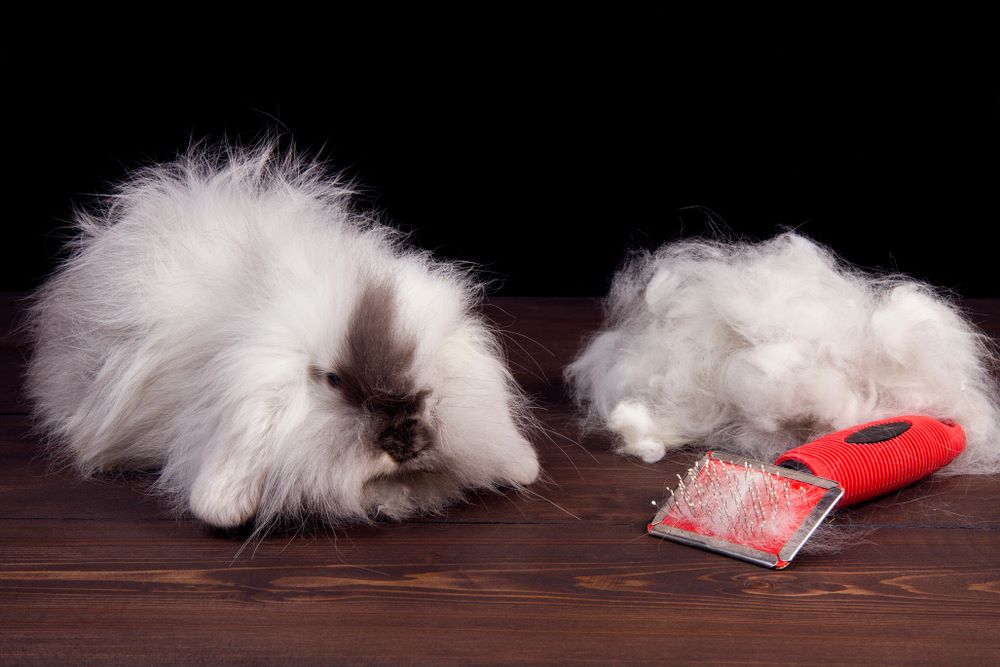
Grooming is inseparable from fiber quality in Angora rabbit production. A coat that develops mats produces unusable fiber at the mat sites and compromises fiber quality across the surrounding area. The grooming schedule required for show and fiber quality coats differs from basic pet maintenance:
Molting breeds (English, French, Satin):
- Two to three full sessions per week during maintenance periods
- Daily sessions during active molt to prevent loose fiber from felting into the new coat
- Blower sessions on cool setting recommended for experienced breeders — separates fiber, removes dander, and lifts early felted spots before they become solid mats
Non-molting breeds (German, Giant):
- Two to three full sessions per week minimum
- Mandatory shearing every 90 days — fiber that is not harvested on schedule becomes increasingly prone to tip matting and eventually forms solid mats that require cutting
- Cool-setting blower is particularly valuable for Giant Angoras, given the volume of coat
For the complete grooming technique guide, see our Angora Rabbit Grooming guide.
Harvesting Angora Wool: Three Methods
Method 1: Plucking
Plucking is the traditional and preferred harvesting method for molting Angora breeds — English, French, and Satin Angoras. During the natural molt, the old fiber loosens at the follicle and can be removed by gentle hand-pulling or combing with almost no resistance. Correctly timed plucking causes the rabbit no discomfort — the fiber releases with minimal tension because the follicle has already released it.
How to recognize molt-ready fiber: The fiber pulls free with very gentle tension when a small bundle is grasped between thumb and forefinger. Any resistance means the molt has not fully advanced in that area — wait and return.
Plucking technique: Work systematically from the rabbit’s back, parting the coat and pulling small bundles of loose fiber in the direction of growth. The fiber can be collected directly into a breathable bag or basket. A session typically takes 30 to 90 minutes, depending on coat length and the rabbit’s tolerance.
Plucked fiber quality: Plucked fiber has an intact tip and cut base — the natural fiber structure is preserved end to end. This is the highest quality harvesting outcome and produces fiber most suitable for hand-spinning without further processing.
Method 2: Shearing
Shearing is the required harvesting method for non-molting breeds — German and Giant Angoras — and is also used for molting breeds when the coat has extended beyond the normal harvest window, and mat formation has begun.
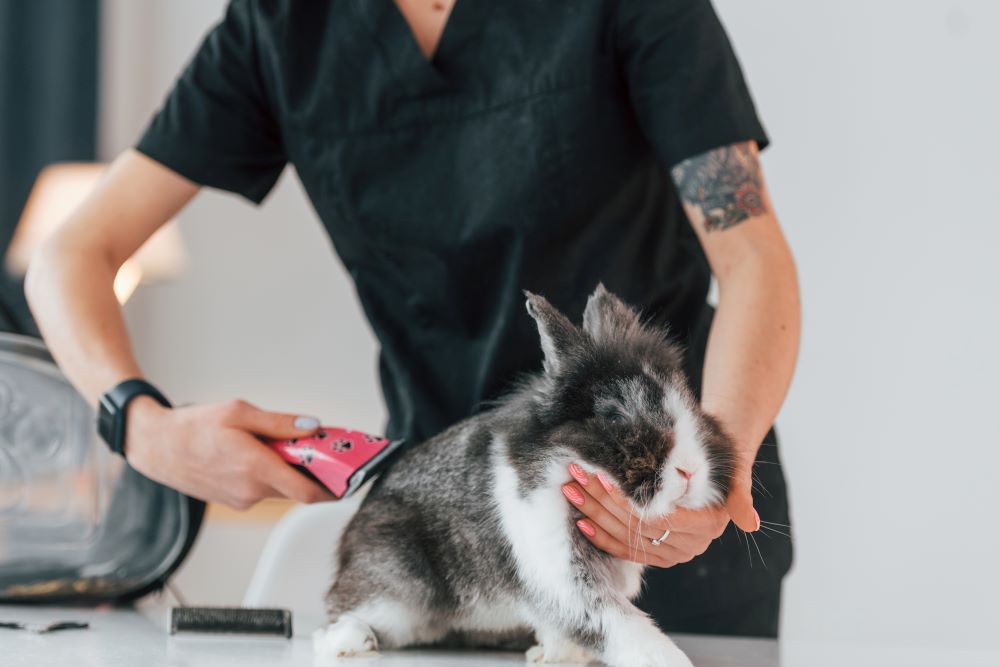
Small animal clippers or sharp grooming scissors are used to cut the fiber close to the skin. For non-molting breeds, shearing is usually done about every 90 days — the fiber does not self-limit its growth and will eventually become unmanageable and harmful to the rabbit if not clipped.
Shearing safety: Rabbit skin is thin and tears easily. Always keep the clipper blade flat against the skin and move slowly, especially in areas where skin folds — the inguinal folds at the back legs, the dewlap, and the armpits. Use blunt-nosed scissors for any area where visibility is limited. Two people — one to hold the rabbit and one to shear — significantly reduces the risk of injury.
Sheared fiber quality: Sheared fiber has a cut end on one side. This affects spinning behavior slightly — the cut end is less smooth than a plucked tip — but sheared fiber from a healthy coat in good condition is entirely suitable for spinning, felting, and blending.
Method 3: Combing
Combing is appropriate during the early stages of molt in English and French Angoras, when some fiber is loosening, but a full plucking session would be premature. A steel grooming comb removes the loosest fiber while leaving fiber that is not yet ready to harvest. This extends the harvest window and prevents the coat from becoming congested with loose fiber that might feel before a full pluck session.
Combing is most useful as a supplement to plucking, not as a standalone harvesting method for a full coat.
Harvest Schedule by Breed
| Breed | What the sources say | Source |
|---|---|---|
| English, French and Satin Angora | Most Angoras today keep their coat at least nine months before shedding. Some spinners prefer to remove the coat every two to three months. | NARBC beginner’s guide |
| German Angora | A 90-day shearing interval. | IAGARB |
Preparing Raw Fiber for Sale or Spinning
Raw harvested Angora fiber — called “in the grease” or simply raw fiber — is ready to spin after basic preparation. Most hand spinners prefer to purchase raw fiber and process it themselves. Some producers add value by skirting, washing, and carding or combing the fiber before sale.
Skirting
Remove any soiled, matted, or second-cut fiber from the harvested lot. Second cuts — short pieces created when scissors pass over an area twice during shearing — are not suitable for spinning and reduce the value of a lot if left mixed in. Sort the fiber by color if the rabbit has multiple color zones.
Washing
Raw Angora fiber can be washed before sale, though many hand spinners prefer to wash it themselves. If washing, use lukewarm water and a gentle wool wash — never agitate Angora fiber or change the water temperature abruptly, as either will cause felting. Press and squeeze gently; do not wring. Lay flat to dry on a towel or mesh rack away from direct heat.
Storage
Store dry, clean raw Angora fiber in breathable paper bags or cotton bags — never airtight plastic, which traps moisture and promotes mold. Keep away from cedar and mothball products, which can affect fiber quality and color. Store separately by breed and color.
Selling Angora Wool in the US
The US Angora wool market is a genuine cottage industry with consistent demand from hand spinners, fiber artists, and small yarn producers. Key selling channels:
Online fiber marketplaces: Etsy and Ravelry are the primary US platforms for raw and processed Angora fiber. Listings with breed identified, fiber diameter stated, and harvest method noted command higher prices from informed buyers.
Fiber festivals and shows: The Rhinebeck Sheep and Wool Festival, Maryland Sheep and Wool Festival, and equivalent regional events attract serious fiber buyers who pay premium prices for direct-from-producer Angora fiber. Bringing samples and a live demonstration of the rabbits significantly increases sales.
Local spinning guilds: Many US cities and regions have active handspinning guilds whose members are the ideal buyers for small-batch raw Angora fiber. Contact your local guild through the Handweavers Guild of America directory.
Direct from rabbitry: Many established Angora fiber producers maintain a mailing list of repeat buyers who purchase directly with each harvest.
Current US Market Prices
| Seller | What is listed | Price (USD) |
|---|---|---|
| ATi Farms | Angora rabbit wool, 1 oz (out of stock when checked) | $4.50 per oz |
| Rowdy Ranch, TX | German Angora wool | $8 per oz |
| Living Dreams Yarn on Michaels | Angora wool, 2 oz | $20.95 (about $10.48 per oz) |
Ethical Production Standards
The Angora wool industry has faced significant scrutiny regarding commercial production practices in countries with inadequate animal welfare standards. US small-scale producers operating under NARBC and IAGARB standards represent a categorically different model from commercial industrial production.
Ethical Angora wool production in the US context means:
- Rabbits are housed with adequate space, solid resting surfaces, and environmental enrichment
- Grooming is performed regularly enough to prevent matting and coat-related health complications
- Shearing is performed carefully with appropriate tools by a skilled handler
- Plucking is performed only during active molt when the fiber releases without resistance
- Rabbits are maintained for their full productive lifespan — 5 to 7 productive years for most Angora breeds — not culled when production declines
US buyers and consumers who source Angora fiber directly from small US rabbitries can be confident that the production conditions are vastly different from those documented in commercial facilities. Asking producers directly about their housing, grooming schedule, and harvesting method is a reasonable and welcome question for any ethically minded buyer.
FAQs
Which Angora rabbit produces the most wool?
The German Angora produces the most wool relative to body size; IAGARB registration requires at least 325 grams (about 11.5 oz) in a 90-day test — and requires mandatory shearing every 90 days. The Giant Angora is the highest-yielding ARBA-recognized breed thanks to its larger body; the national breed club cites about 28 to 40 ounces per year in exceptional animals. Both are non-molting breeds governed by mandatory harvest schedules.
How much can I earn selling Angora wool?
It depends on how much wool your rabbits grow, its quality and what buyers in your market will pay. As a worked example, at the $8 per ounce one Texas breeder asks for German Angora wool, each pound (16 oz) sold would bring $128 before costs. Feed, housing, vet care and your time all come out of that.
Is Angora wool ethical?
Small-scale US production under NARBC and IAGARB standards, with proper housing, regular grooming, and careful harvesting, represents ethical fiber production. The animal is not harmed during harvest and lives a full, productive life. The practices documented in commercial industrial facilities — primarily in Asia — are a different matter and should not be conflated with US small-scale rabbitry conditions.
Can I spin Angora wool myself as a beginner?
Angora fiber can be spun in its raw state or blended with other fibers such as merino or BFL to improve drafting ease. Pure Angora spins quickly and lightly but can be slippery for beginners. A blend of 20 to 30% Angora with a longer-staple wool is an excellent starting point for new spinners.
How do I store harvested Angora fiber?
Store in breathable paper or cotton bags, dry, at room temperature, away from direct sunlight and aromatic deterrents. Never store in airtight plastic — moisture trapping causes mold. Label each lot with breed, harvest date, and color.
How long does a productive Angora rabbit live?
Angora rabbits live 7 to 12 years with proper care. Most remain productive fiber animals from their first harvest at 3 to 4 months through 5 to 7 years of age, with some individuals continuing to produce quality fiber into their senior years with appropriate senior care adjustments.
Conclusion
Raising Angora rabbits for wool is one of the most rewarding small-scale fiber production activities available to US homesteaders, fiber artists, and small farm operators. The combination of exceptional fiber value, sustainable no-kill harvest, compact space requirements, and the quality relationship that develops between a fiber producer and well-managed rabbits makes Angora production genuinely distinct from other livestock fiber operations.
The key variables are breed selection matched to your production goals, diet and grooming standards maintained at the level the fiber quality demands, and harvest timing and technique appropriate to whether your breed is a molting or non-molting type.
For the complete grooming guide that underpins fiber quality, see our Angora Rabbit Grooming guide. For breed-specific profiles to assist your selection decision, see our Types of Angora Rabbits guide. For acquiring your first rabbit from a reputable US source, see our Where to Buy an Angora Rabbit guide.
Sources
- National Angora Rabbit Breeders Club. A Beginner’s Guide to Angoras, checked October 2026.
- International Association of German Angora Rabbit Breeders. About the German Angora, checked October 2026.
- National Angora Rabbit Breeders Club. Satin Angora Rabbits, checked October 2026.
- James Hutton Institute archive. Fleece and fibre measurements in angora goats and angora rabbits, checked October 2026.
- Cashmere and Camel Hair Manufacturers Institute. Definition of Cashmere, checked October 2026.
This guide is for general information and is not a substitute for advice from a vet. Read our disclaimer.

Similar Posts
Angora Rabbit Care Guide: Everything US Owners Need to Know
How we researched this guide: In October 2026 we checked the facts in this article against Rabbit.org, National Angora Rabbit Breeders Club, International Association of German Angora Rabbit Breeders, dvm360…
Can Angora Rabbits Live Outside? What US Owners Need to Know
How we researched this guide: In October 2026 we checked the facts in this article against Rabbit Welfare Association & Fund, IAGARB, MSD Veterinary Manual and Rabbit.org, and corrected or…
Raising Angora Rabbits: The Complete Beginner’s Guide for US Owners
How we researched this guide: In October 2026 we checked the facts in this article against PDSA, Scottish Government, Rabbit.org and IAGARB, and corrected or removed anything we could not…
Best Brush for Angora Rabbits: The Complete Grooming Tool Guide
How we researched this guide: In October 2026 we checked the facts in this article against Small Pet Select, National Angora Rabbit Breeders Club, RSPCA South Australia, IAGARB and Petplan,…
Can Angora Rabbits Be Shaved? The Complete Answer for Every Situation
How we researched this guide: In October 2026 we checked the facts in this article against IAGARB, National Angora Rabbit Breeders Club, RSPCA South Australia and VCA Animal Hospitals, and…
Angora Rabbit Price: What Breeders Charge in 2026
How we researched this guide: In October 2026 we checked the published prices of US Angora breeders and rabbit classifieds. Each price below links to its source. We do not…