How to Litter Train an Angora Rabbit: The Complete Step-by-Step Guide
How we researched this guide: In October 2026 we checked the facts in this article against Rabbit.org, PDSA and VCA Animal Hospitals, and corrected or removed anything we could not verify. Our sources are listed at the end. See our editorial policy. Last reviewed: October 2026.
Quick answer: Yes. Angoras can be litter trained like other rabbits. Put a large, low-sided box with rabbit-safe litter and hay where your rabbit already goes. Spaying or neutering makes training much easier. Avoid clumping cat litter.
Litter training an Angora rabbit is achievable for most owners within two to four weeks and delivers practical benefits that go beyond hygiene. A litter-trained Angora rabbit can be safely given supervised free-roam time in the home, its enclosure stays cleaner between full cleans, and — critically for the breed — the wool coat is kept away from the ammonia-saturated enclosure floor that causes rapid felting, skin irritation, and flystrike risk in unmanaged Angora coats.
The litter training process for Angora rabbits follows the same principles as for other rabbit breeds, but with several breed-specific considerations around litter material choice, litter box design, and coat protection that this guide addresses directly.
Why Litter Training Matters More for Angora Rabbits
Short-haired rabbit breeds that sit or lie in urine-soaked bedding experience discomfort and hygiene problems. For Angora rabbits, the consequences are significantly more serious.
Urine contact with the Angora wool coat causes three cascading problems. First, urine stains the wool and can damage the fiber in the affected area. Second, wet wool felts — the mechanical agitation of movement compresses saturated wool fibers into a solid mat that cannot be combed out and must be cut. Third, permanently damp wool at the hindquarters creates conditions ideal for flystrike — the deposit of fly eggs in warm, moist, soiled wool that hatch into larvae within hours.
A litter-trained Angora rabbit that consistently uses a designated toilet area keeps the majority of its coat dry and clean between grooming sessions. This directly reduces matting at the hindquarters, one of the most common mat sites in all Angora breeds, and greatly reduces the urine-contact felting risk.
Understanding Rabbit Toilet Behavior Before You Start
Effective litter training works with rabbit biology rather than against it. Understanding why rabbits use corners helps explain why the training process is faster than most owners expect.
Natural Corner Preference
Rabbits instinctively eliminate in consistent locations — a behavior rooted in territory marking. In a domestic enclosure, rabbits reliably choose one or two corners for urination and droppings. This natural consistency is the foundation of litter training: the training process is essentially redirecting existing behavior to a designated receptacle rather than teaching an entirely new behavior.
The Cecotrope Distinction
Rabbits produce two types of droppings. Standard fecal pellets — the round, dry droppings visible throughout the enclosure — are produced continuously and distributed broadly. Cecotropes — softer, clustered, nutrient-rich droppings that rabbits re-ingest directly from the anus — are also produced but are rarely seen in a healthy rabbit because they are consumed immediately. Both types may appear in the litter box. Standard fecal scatter outside the litter box is normal in litter-trained rabbits and does not indicate training failure — urination is the primary target of litter training.
Effect of Spay and Neuter on Training Success
Unneutered rabbits of both sexes mark territory with urine far more persistently than neutered animals. Intact bucks spray urine horizontally — a behavior entirely distinct from normal urination — and intact does mark repeatedly in response to hormonal cycles. Both behaviors significantly complicate litter training and resist consistent improvement through training alone.
Spaying or neutering before or during the litter training process dramatically improves training success and retention. For owners who have not yet spayed or neutered their rabbit, this is the single most impactful step available. The procedure also eliminates uterine cancer risk in does — a risk Rabbit.org puts as high as 85% for reproductive cancers in unspayed females — making it a welfare decision as well as a training one.
Choosing the Right Litter Box
Size by Breed
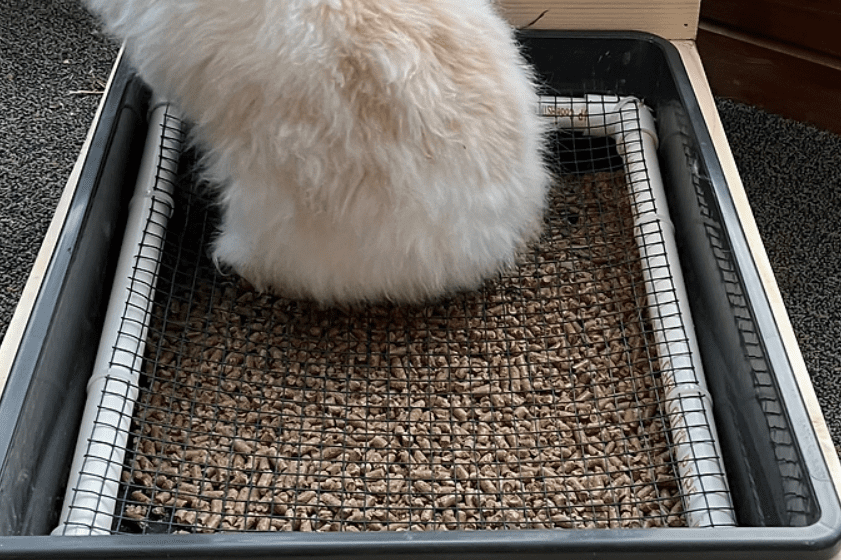
The litter box must be large enough for the rabbit to enter, turn around, and squat fully without its wool coat contacting the sides. For Angora breeds, standard cat litter boxes are generally appropriate — corner-shaped litter boxes designed for small pets are often too small for French, Giant, and German Angoras.
| Breed | Minimum Litter Box Size |
|---|---|
| English Angora | Medium cat litter box — approximately 14 × 10 inches |
| French Angora | Large cat litter box — approximately 17 × 13 inches |
| Satin Angora | Medium-large cat litter box — approximately 15 × 11 inches |
| Giant Angora | Extra-large cat litter box or dedicated rabbit pan — 18 × 14 inches minimum |
| German Angora | Large cat litter box — approximately 17 × 13 inches |
Low entry height is important for Angora rabbits — particularly Giant Angoras and senior animals — to allow easy entry and exit without the rabbit dragging its hindquarters over the box rim, which soils the coat.
High-Sided vs Low-Sided Boxes
High-sided litter boxes reduce litter scatter and contain urine splashback — both beneficial for coat protection. However, a low front entry is essential: if the entry requires the rabbit to jump in, some individuals — particularly larger breeds and elderly rabbits — will avoid it.
The practical solution is a high-sided box with one low-cut entry side. Many owners modify a standard storage tote by cutting a low entry on one short side, leaving the remaining three sides high. This combination provides splash containment while keeping entry accessible.
Choosing the Right Litter Material
Litter material choice for Angora rabbits has an additional consideration beyond the standard rabbit welfare criteria: litter must not transfer to, adhere to, or be ingested along with the Angora wool coat.
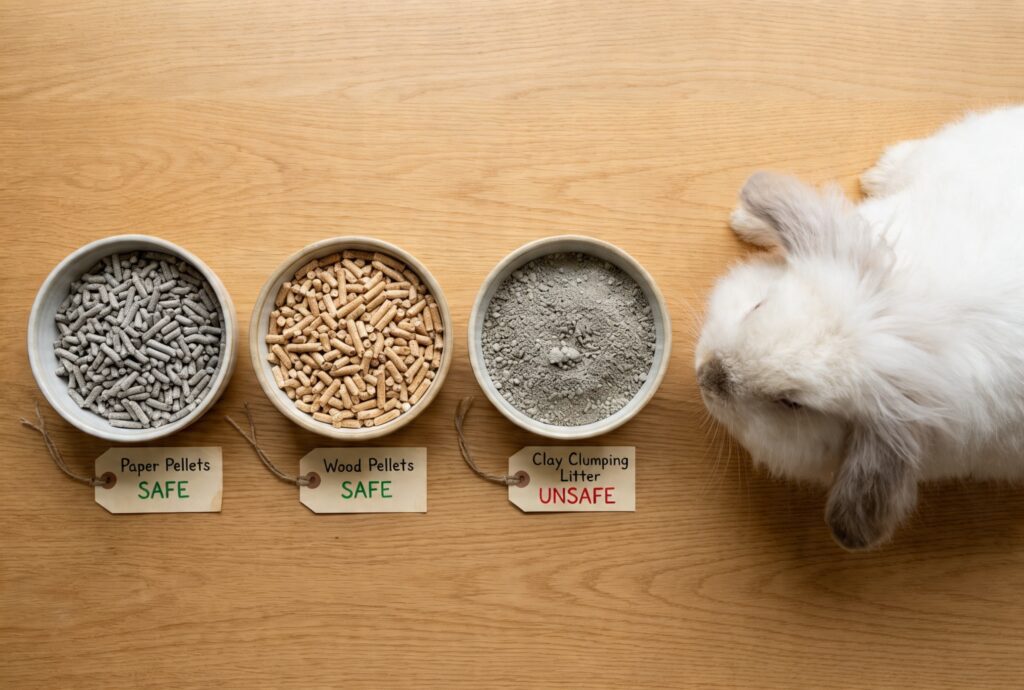
Litter Comparison
| Litter Type | Safe for Rabbits | Wool-Safe | Notes |
|---|---|---|---|
| Paper pellets (e.g. Yesterday’s News) | ✅ | ✅ | Excellent absorption; does not adhere to wool; recommended |
| Compressed wood pellets (kiln-dried) | ✅ | ✅ | High ammonia absorption; breaks down to sawdust; cost-effective |
| Paper-based shredded litter | ✅ | ⚠️ | Shredded paper can catch in Angora wool during entry/exit |
| Aspen shavings | ✅ | ⚠️ | Fine shavings adhere to Angora wool; not recommended |
| Pine or cedar shavings | ❌ | ❌ | Aromatic oils toxic to rabbits — never use |
| Clay clumping cat litter | ❌ | ❌ | Respiratory risk; clumps in coat — never use |
| Clumping or silica cat litter | ❌ | ❌ | Can cause intestinal blockage if eaten; clumps in coat — never use |
| Corn cob litter | ❌ | ❌ | Mold risk: digestive obstruction if ingested |
Recommended for Angora rabbits: Paper pellets or compressed wood pellets (kiln-dried pine or wood only — not aromatic fresh-cut pine or cedar). Both provide high liquid absorption that minimizes damp contact with the wool coat, and neither adheres to or transfers into the Angora coat during normal litter box use.
Hay in the Litter Box
Placing a layer of fresh hay at one end of the litter box — or directly in the box — significantly improves litter training success. Rabbits habitually eat and eliminate simultaneously. A rabbit that grazes on hay in the litter box naturally associates the box with toileting and spends more time in it voluntarily.
For Angora rabbits, the hay layer also serves a coat protection function: hay provides a surface the rabbit can sit on that elevates the wool coat above the wet litter base. Ensure the hay is replaced daily — wet hay in the litter box creates the same moisture and felting risk as wet litter in contact with the coat.
Step-by-Step Litter Training Process
Step 1: Observe the Natural Toilet Corner
Before placing the litter box, spend one to two days observing which corner of the enclosure the rabbit consistently uses for urination. This is almost always the same corner used repeatedly. This corner becomes the litter box placement site.
If the rabbit uses multiple corners, begin with the primary corner and add a second box at the secondary corner after the first is established.
Step 2: Place the Litter Box
Place the litter box in the identified corner with a thin layer of paper or wood pellet litter at the base and a generous portion of fresh hay at the far end. Collect two or three dry fecal pellets from the enclosure floor and drop them into the litter box — the rabbit’s own scent signals this as a toilet location.
Do not clean the enclosure thoroughly before the first few sessions. A completely clean enclosure removes the scent cues the rabbit uses to locate its toilet area.
Step 3: Confine and Supervise During Initial Training
For the first one to two weeks, keep the rabbit’s accessible space small — limited to the enclosure and a small adjacent area if free-roam time is offered. Smaller spaces make the litter box easier to reach and reduce the likelihood of the rabbit establishing a new toilet corner in a distant part of the room.
During free-roam time, return the rabbit to the enclosure every 20 to 30 minutes initially, or immediately if you observe the pre-elimination signals: slowing movement, backing into a corner, or lowering the hindquarters while sniffing the floor.
Step 4: Redirect, Not Punish
If the rabbit begins to eliminate outside the litter box, pick it up calmly and place it in the box. Do not scold, clap loudly, or spray water — aversive responses cause stress and associate the litter box with unpleasant experiences, which is counterproductive. Clean any accidents outside the box with an enzymatic cleaner to remove scent cues from that location.
Step 5: Reinforce Correct Use
Each time the rabbit uses the litter box, offer a small positive reinforcement immediately upon exiting — a small piece of leafy green or a brief, gentle stroke. Keep treats very small to avoid disrupting the diet. The association between box use and reward reinforces the target behavior.
Step 6: Expand Free-Roam Area Gradually
After one to two consistent weeks of litter box use, gradually expand the free-roam area. Add one room at a time, placing an additional litter box in the new area before allowing access. Each new space should have a toilet option available before the rabbit discovers and claims a corner independently.
Step 7: Maintain Consistent Cleaning
Clean the litter box every one to two days — remove wet litter and soiled hay, replace with fresh. Complete box wash with hot water and white vinegar once weekly. A clean box encourages continued use. A malodorous or saturated box prompts the rabbit to seek alternatives.
Angora-specific cleaning note: Check the litter box rim and adjacent enclosure floor for any wet litter or soiled hay that may have been kicked out and is in contact with the coat. Wipe the enclosure floor area surrounding the litter box at each litter change.
Angora-Specific Coat Protection During Litter Training
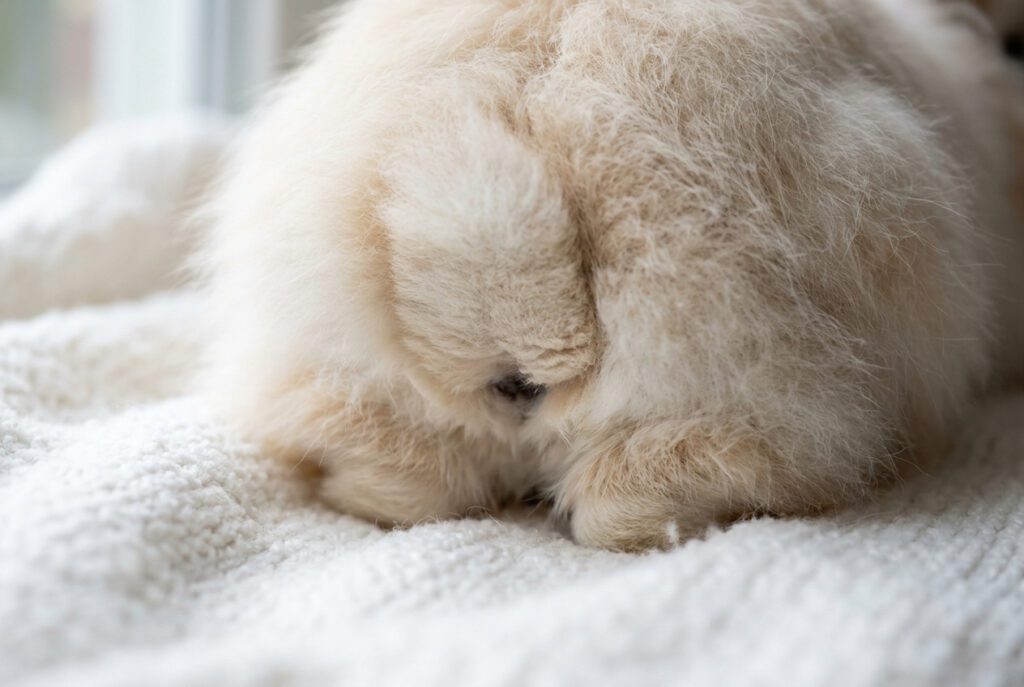
Vent Area Monitoring
During litter training — particularly in the early weeks — inspect the vent area and hindquarter wool at each grooming session. Any staining, matting, or dampness at the hindquarters indicates urine contact with the coat. Trim the wool immediately around the vent area if soiling is occurring, and reassess litter box design (size, entry height, litter depth) to identify the cause.
Skirt Wool Trimming
Many Angora rabbit owners who keep pets rather than show animals choose to maintain the hindquarter wool trimmed short year-round — typically to 1 to 2 inches — regardless of the rabbit’s overall coat length. This significantly reduces the risk of urine contact with the coat even if the rabbit occasionally misses the litter box, and reduces grooming time in the highest-mat-risk area of the coat.
Troubleshooting Common Problems
Rabbit Uses the Box for Sleeping, Not Toileting
Rabbits sometimes choose the litter box as a preferred resting spot. This is not a training failure — it means the rabbit finds the box comfortable and safe, which is a good sign. Add a separate hide box or enclosed sleeping area to the enclosure so the rabbit has a clear alternative for resting. The toileting behavior will separate from the sleeping behavior as the routine is established.
Rabbit Consistently Eliminates in One Specific Spot Outside the Box
Move the litter box to that spot. The rabbit’s natural preference overrides placement decisions. Once the box is established in the preferred spot, it can be moved very gradually — a few inches per day — toward a more convenient location if needed.
Litter Training Regression in a Previously Trained Rabbit
Sudden regression in a reliably litter-trained rabbit almost always has a cause: a new environment or enclosure arrangement, the introduction of a new animal in the home, hormonal changes in an unspayed or unneutered rabbit reaching sexual maturity, or an underlying health condition affecting bladder or bowel control. Assess each possibility systematically and consult a rabbit-experienced veterinarian if no environmental cause is identified within a few days.
Angora Coat Soiled Despite Litter Training
Check litter box entry height — the rabbit may be dragging its hindquarters over a high rim. Check litter depth — deep litter displaces upward during digging and contacts the coat. Reduce litter depth to 1 to 2 inches for Angora breeds. Consider switching to paper pellets if currently using a litter that adheres to wool.
FAQs
How long does it take to litter train an Angora rabbit?
Most Angora rabbits show consistent litter box use within two to four weeks of starting the training process. Spayed and neutered animals typically train faster than intact rabbits. Some individuals take longer — up to eight weeks — particularly intact adults being trained for the first time or rescue rabbits adjusting to a new environment.
What is the best litter for an Angora rabbit?
Paper pellets (such as Yesterday’s News unscented) or compressed kiln-dried wood pellets are the best options for Angora rabbits. Both provide high absorption, do not adhere to the wool coat, and are safe if ingested in small amounts. Never use clumping clay cat litter, cedar or pine shavings, or corn cob litter with any rabbit.
Do I need to spay or neuter my rabbit before litter training?
Litter training is possible without spaying or neutering, but significantly more difficult — particularly for intact bucks that spray urine horizontally. Spaying or neutering dramatically improves training success and retention and is strongly recommended for any rabbit kept as a pet. It also eliminates the risk of uterine cancer in does.
How many litter boxes does my Angora rabbit need?
One box in the enclosure and one box in each free-roam area the rabbit has access to. A single litter box for a rabbit with access to multiple rooms typically results in corner accidents in rooms where no box is available.
Why does my rabbit scatter litter and hay out of the box?
Digging is normal rabbit behavior, and most rabbits will redistribute some litter during use. High-sided litter boxes with a low front entry significantly reduce scatter. Placing a small mat outside the front of the box catches displaced litter before it spreads through the enclosure.
Can I litter train an older Angora rabbit?
Yes — older rabbits can be litter trained using the same process. Spayed and neutered older rabbits often train very successfully. Allow more time for the habit to establish — four to six weeks rather than two to four — and ensure the litter box has a low, easy entry if the rabbit has any mobility limitations.
Conclusion
Litter training an Angora rabbit is a practical investment that pays dividends across the rabbit’s entire lifespan. A litter-trained rabbit keeps its wool coat cleaner, reduces the risk of urine-contact felting and flystrike at the hindquarters, and can be safely given the free-roam time that supports physical health and behavioral well-being.
The process requires consistency, appropriate litter material, and a box design for the breed’s coat, and patience with the normal adjustment period. Spaying or neutering makes the process significantly more reliable and is recommended for all pet Angora rabbits, regardless of litter training goals.
For the complete grooming protocol that addresses hindquarter coat maintenance alongside litter training, see our Angora Rabbit Grooming guide. For the full habitat setup that incorporates the litter box into the enclosure correctly, see our Angora Rabbit Habitat guide. For the complete care framework, see our Angora Rabbit Care Guide.
The information in this article is for general educational purposes and does not constitute veterinary advice. See our disclaimer for full details.
Sources
- Rabbit.org. Rabbit Litter Training FAQ, checked October 2026.
- Rabbit.org. Spay For Health, checked October 2026.
- PDSA. Flystrike in rabbits, checked October 2026.
- VCA Animal Hospitals. Housing Your Rabbit, checked October 2026.
This guide is for general information and is not a substitute for advice from a vet. Read our disclaimer.