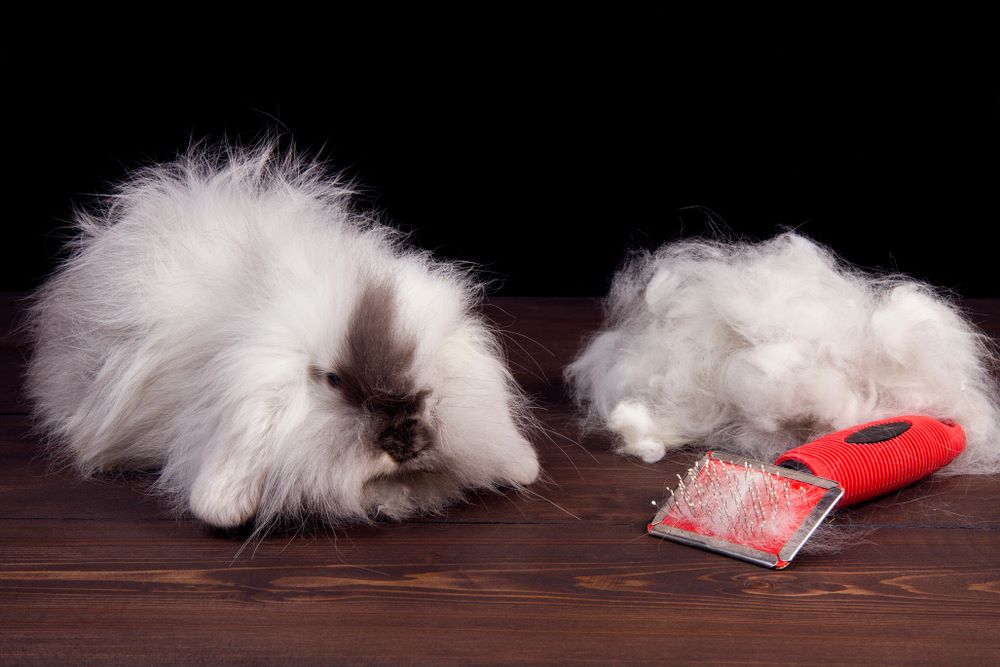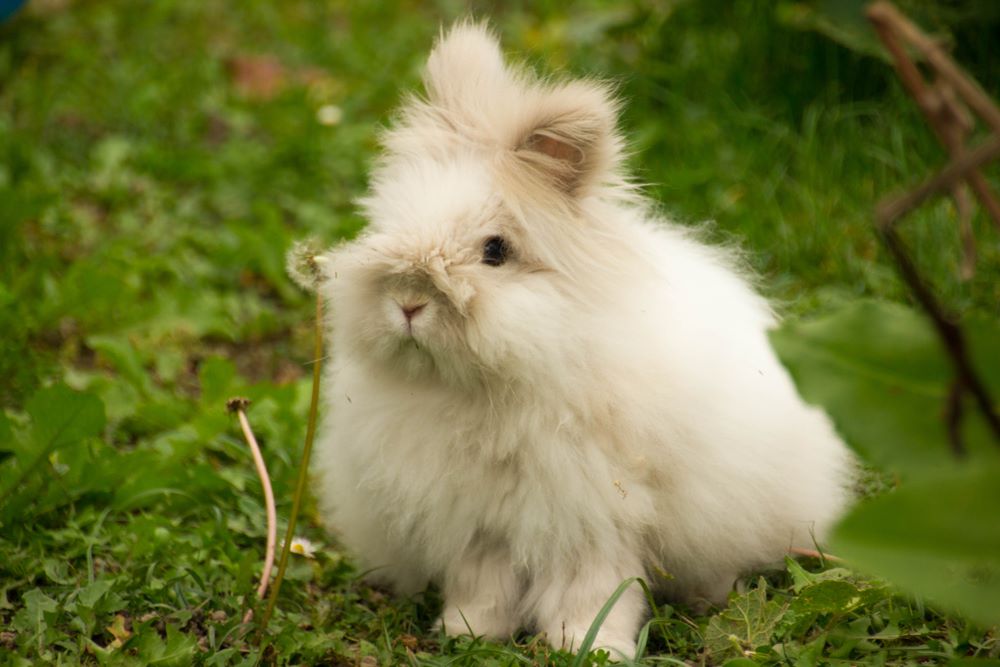
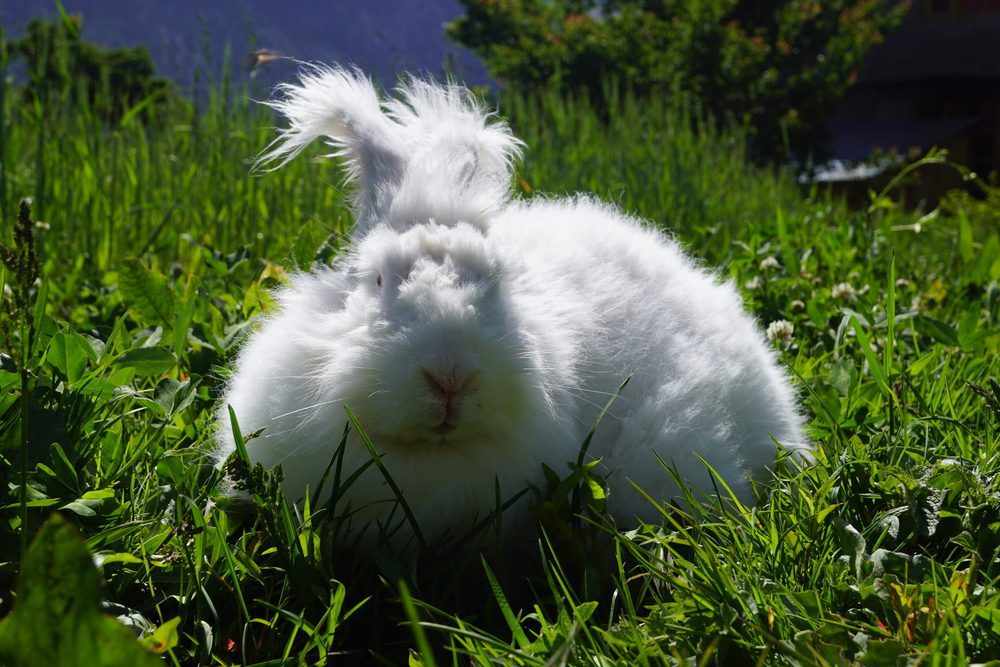
Can Angora Rabbits Live Outside? What US Owners Need to Know
The direct answer is: not recommended, and for most US owners in most US climates, outdoor housing for Angora rabbits is functionally incompatible with the care requirements of the breed. This is not a matter of preference — it is a matter of the specific ways that outdoor conditions interact with the Angora rabbit’s wool coat to create health risks that indoor housing prevents.
This article explains exactly why outdoor living poses specific risks for Angora rabbits that do not apply equally to short-haired breeds, what those risks are, and what supervised outdoor time — the appropriate alternative to full outdoor housing — looks like in practice.
Why Outdoor Housing Is Different for Angora Rabbits
All domestic rabbits face risks in outdoor environments: predator stress, temperature extremes, flystrike, and reduced owner monitoring. These risks apply to every rabbit breed. For Angora rabbits, the wool coat introduces a second set of risks that are specific to the breed, and that fundamentally change the risk calculation.
Rain and moisture
Angora rabbit wool felts on contact with water and agitation. A single rainstorm that catches an Angora rabbit in an outdoor hutch or run — even with a covered section — can drench the coat to the skin. A wet Angora coat does not dry normally; it compresses, mats, and felts in a way that cannot be combed out. In most cases of full saturation, the only resolution is clipping the entire coat and starting over. Beyond the coat damage, a wet Angora rabbit loses body heat rapidly and is at acute risk of hypothermia even in mild temperatures.
Flystrike
Flystrike — the infestation of living tissue by blowfly larvae — is a serious risk for all outdoor rabbits in warm months, but the risk is dramatically elevated for Angora breeds. The dense wool coat traps moisture, urine, and fecal contamination in the wool around the vent area. This warm, moist, soiled wool is precisely the environment that blowflies seek for egg-laying. Eggs hatch within 12 to 24 hours. The larvae begin consuming living tissue within hours of hatching. Flystrike in a heavily wooled rabbit can progress from invisible to life-threatening in under 24 hours. Indoor rabbits with controlled environments and twice-weekly grooming are monitored closely enough to catch vent area soiling before it reaches this stage. An outdoor rabbit may not be checked with the frequency this risk requires.
Grooming incompatibility
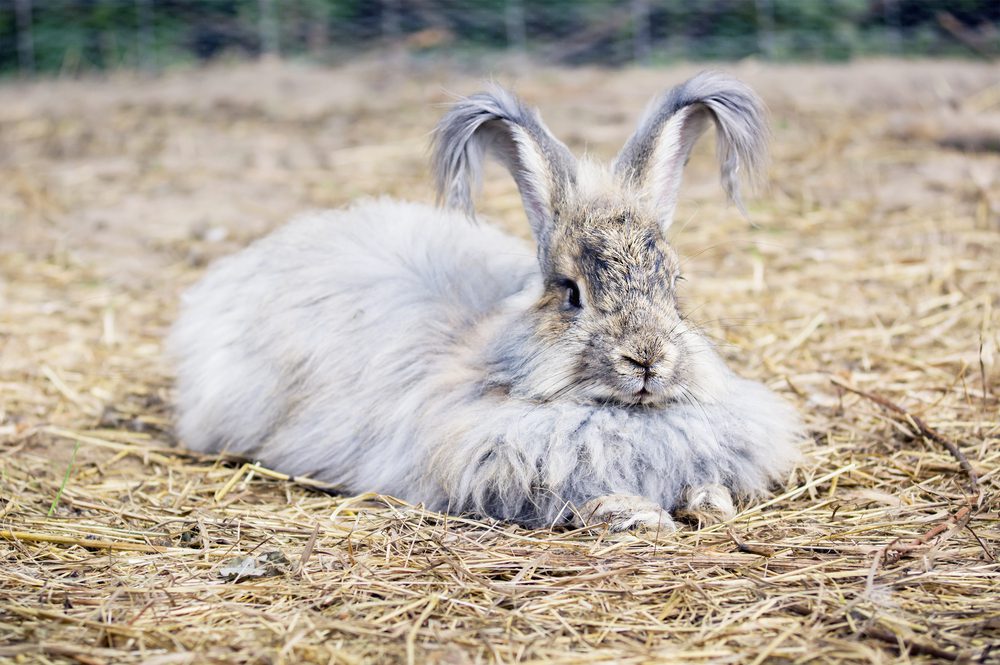
Angora rabbits require two to three grooming sessions per week at a minimum, and daily sessions during molting periods. Outdoor environments introduce debris — hay particles, bark, dust, dried plant material — into the wool at a rate that indoor environments do not. Every piece of organic material trapped in the wool is a mat nucleus. An outdoor Angora coat accumulates debris faster than grooming sessions can remove it, progressively degrading coat condition and increasing mat formation and wool block risk.
Heat stress
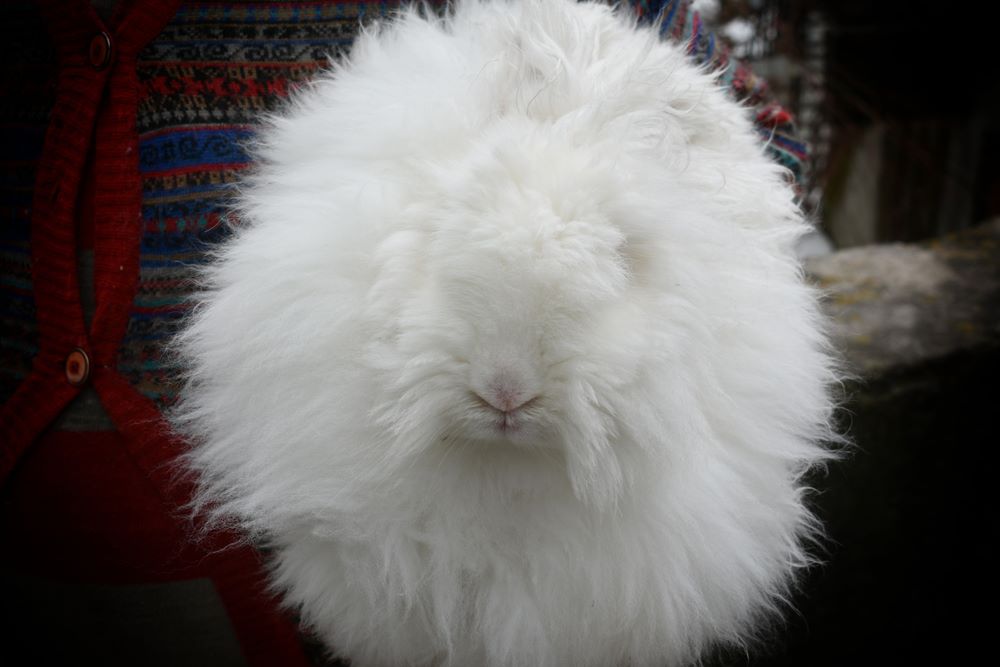
The Angora rabbit’s dense wool is an exceptional thermal insulator. This means heat dissipation is significantly impaired compared to short-haired breeds. Above 75 to 80 degrees Fahrenheit (24 to 27°C), any rabbit is at elevated heat stress risk. For an Angora rabbit in direct sunlight with no climate control, this threshold is reached faster, and the consequences escalate more quickly. Most US regions experience summer temperatures well above this threshold for months at a time. An outdoor hutch — even a shaded one — cannot reliably maintain the temperature range an Angora rabbit requires during a US summer.
Predator stress
Rabbits are prey animals with a strong fear response. The sight, sound, or scent of a predator — fox, raccoon, hawk, domestic dog, or cat — can trigger acute stress responses, including tonic immobility and cardiac events. Rabbits have died of fright without physical contact with a predator. An outdoor rabbit is exposed to predator cues nightly, producing chronic stress that compromises immune function and overall health even when the rabbit is physically secure behind fencing.
The Position of Angora Rabbit Care Authorities
The National Angora Rabbit Breeders Club and the IAGARB both specify indoor housing as the standard for Angora rabbit care. The IAGARB Standards of Care specify minimum cage dimensions for indoor wire-bottom enclosures — not outdoor hutches — as the baseline housing requirement for registered German Angoras. The consistent message from experienced Angora breeders across the US is that indoor housing with climate control is not optional for a breed with these specific coat requirements.
This reflects decades of accumulated experience from working breeders, not theoretical caution. The wool-specific risks described above are well known within the Angora breeding community because they are common — breeders have seen the consequences of outdoor housing at first hand.
What Indoor Housing for Angora Rabbits Looks Like
Indoor housing does not mean the rabbit lives in cramped conditions. It means a wire-bottom enclosure with a solid resting board, placed in a climate-controlled room, with regular free-roam time in a rabbit-proofed area.
Minimum enclosure dimensions for indoor Angora housing:
| Breed | Minimum Floor Space | Minimum Height | Source |
|---|---|---|---|
| English Angora | 24 × 30 inches (61 × 76 cm) | 18 inches (46 cm) | ARBA breed standard |
| Satin Angora | 24 × 30 inches (61 × 76 cm) | 18 inches (46 cm) | ARBA breed standard |
| French Angora | 30 × 36 inches (76 × 91 cm) | 18 inches (46 cm) | ARBA breed standard |
| Giant Angora | 36 × 30 inches (91 × 76 cm) minimum | 24 inches (61 cm) | ARBA breed standard |
| German Angora | 30 × 36 inches (76 × 91 cm) | 24 inches (61 cm) | IAGARB Standards of Care |
Every enclosure must include a solid resting board — a wooden board, rubber mat, or fleece pad — covering at least one-third of the floor area to prevent sore hocks on wire flooring.
The temperature range: 60 to 72 degrees Fahrenheit (16 to 22°C) is the ideal range. Below 50°F (10°C) or above 80°F (27°C) constitutes a risk condition that requires active management.
Free-roam time: Daily free-roam in a rabbit-proofed room or area is important for physical and mental well-being. During free-roam, the rabbit should be supervised to prevent access to electrical cords, toxic plants, and areas that cannot be checked for debris that could enter the coat.
For full housing specifications and setup guidance, see our Angora Rabbit Care Guide.

Supervised Outdoor Time: The Right Approach
The alternative to outdoor housing is not zero outdoor access. Supervised outdoor time in a secure exercise pen on appropriate days provides the environmental enrichment and physical space that outdoor living proponents are seeking — without the sustained risks of full outdoor housing.
Appropriate outdoor conditions for Angora rabbits:
- Dry weather only — no rain, no wet grass, no morning dew on the ground
- Temperatures between 60 and 75 degrees Fahrenheit (16 to 24°C)
- Shaded area available at all times
- Secure, covered exercise pen that prevents entry by predators and escape by the rabbit
- Direct supervision throughout the session
- Duration: 30 minutes to 2 hours, depending on conditions
Before outdoor time: Check the vent area and underside of the coat for any soiling or debris that could attract flies. Do not take an Angora rabbit outside if the vent area is damp or soiled.
After outdoor time: Check the coat thoroughly for debris, check the vent area, and do a brief comb-through to remove any plant material that has entered the wool. Address any debris immediately before it becomes embedded.
Seasonal limitations: In most US climates, safe outdoor time for Angora rabbits is limited to late spring and early fall days when temperatures are within range, humidity is low, and rain is not forecast. Summer heat and winter cold both exceed the safe window for most of the continental US.
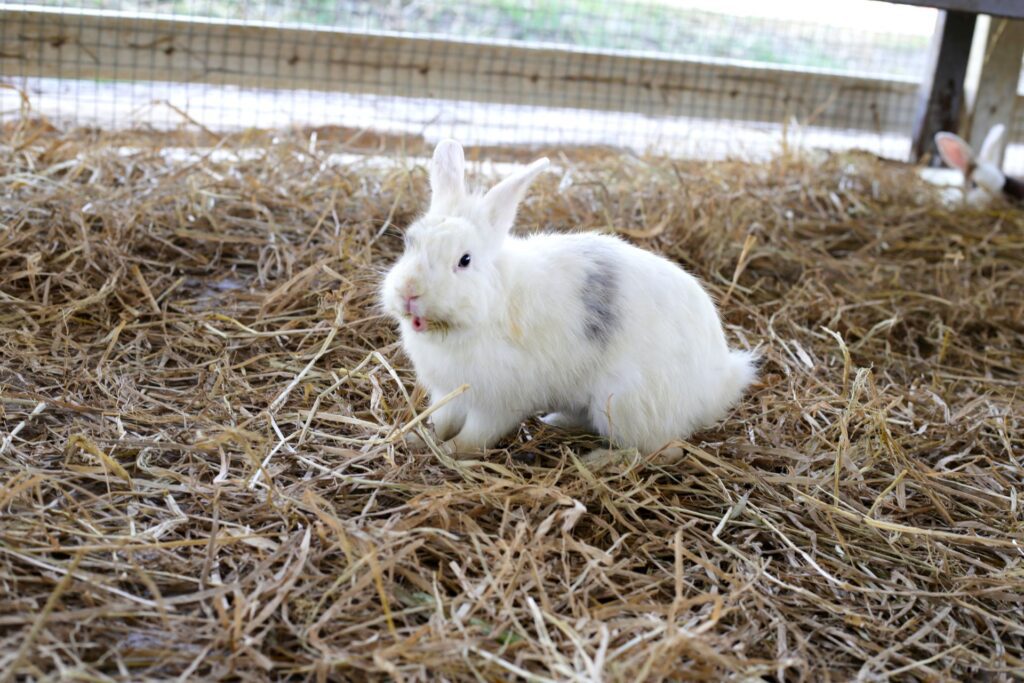
Breed-Specific Outdoor Risk Comparison
Not all Angora breeds are equally constrained by these concerns, though all share the core risks:
English Angora: Highest outdoor risk among Angora breeds. Full-body wool coverage, including the face, increases debris accumulation, facial wool felting risk from humidity, and monitoring difficulty. Most restricted of all Angora breeds for outdoor time.
French Angora: Clean face and higher guard hair content make the coat somewhat more debris-resistant than the English Angora. Still requires all the same outdoor precautions — the body wool is still dense and capable of felting.
Satin Angora: Similar outdoor risk profile to the French Angora. The satin-coated fiber, while lustrous, mats more readily than French Angora fiber in humid conditions.
Giant Angora: Large body mass makes heat stress onset faster and more severe. A non-molting coat means debris accumulation is continuous. High outdoor risk, particularly in warm climates.
German Angora: Non-molting coat, highest annual wool yield. The volume of wool in a German Angora’s coat in full growth makes outdoor debris accumulation particularly rapid. High outdoor risk.
FAQs
Can Angora rabbits live outside?
Not recommended, and for most US owners, impractical to manage safely. The wool coat feels in rain and moisture, flystrike risk is dramatically elevated by outdoor conditions, heat stress tolerance is reduced by the insulating coat, and grooming frequency requirements are incompatible with outdoor debris accumulation. Indoor housing with climate control is the standard recommended by Angora rabbit care authorities.
Can Angora rabbits go outside at all?
Yes — supervised outdoor time in a secure, covered exercise pen on dry days within the 60 to 75°F temperature range is appropriate and beneficial. This is different from full outdoor housing. Sessions should be directly supervised, and the coat should be checked for debris before and after.
What temperature is safe for Angora rabbits outside?
The safe outdoor temperature window for Angora rabbits is approximately 60 to 75 degrees Fahrenheit (16 to 24°C) on dry days. Above 75°F, heat stress risk increases. Below 50°F, cold stress risk increases for a wet or recently shorn rabbit. Neither extreme is as safely managed outdoors as indoors with climate control.
What happens if an Angora rabbit gets wet outside?
The wool coat felts on contact with water and agitation. A saturated coat cannot be combed out and, in most cases, must be clipped entirely. A wet Angora also loses body heat rapidly and is at acute hypothermia risk. Rain contact should be prevented entirely through covered housing and not taking the rabbit outside in wet conditions.
Is flystrike a bigger risk for Angora rabbits than other breeds?
Yes. The dense wool coat traps moisture, urine, and fecal matter around the vent area, creating conditions that are highly attractive to blowflies. Flystrike can progress from invisible to life-threatening in under 24 hours in warm weather. Indoor Angoras monitored during regular grooming sessions are at far lower risk than outdoor rabbits checked less frequently.
Do short-haired rabbits have the same outdoor restrictions?
No. Short-haired breeds — Rex, Dutch, Mini Lop, and similar — are considerably more suitable for outdoor housing than Angora breeds. They do not have the wool felting risk, their coats do not trap debris at the same rate, and their grooming requirements are less intensive. If outdoor rabbit housing is a priority, a short-haired breed is a more appropriate choice.
Conclusion
For Angora rabbits, the question of outdoor living is not a matter of preference or setup — it is a question of whether the specific care requirements of a high-maintenance wool breed can be met in an uncontrolled outdoor environment. For the vast majority of US owners, in the vast majority of US climates, the answer is that they cannot.
Indoor housing with climate control, regular grooming, and daily free-roam time provides everything an Angora rabbit needs. Supervised outdoor access on appropriate days adds environmental enrichment without the sustained risks of full outdoor housing.
For the complete Angora rabbit care framework, including indoor housing specifications, diet, grooming schedules, and health monitoring, see our Angora Rabbit Care Guide. For the health conditions specifically associated with outdoor exposure, see our Angora Rabbit Health guide.
The information in this article is for general educational purposes. For any health concern relating to your rabbit, consult a licensed veterinarian. See our disclaimer for full details.