English Angora Rabbit Lifespan: What to Expect and How to Maximize Every Year
The English Angora rabbit lives, on average, 7 to 10 years — occupying the lower portion of the broader 7 to 12 year range that applies to Angora breeds generally. This reflects the breed’s compact body size, which generally correlates with shorter lifespans in domestic rabbits compared to dwarf breeds, combined with the specific health demands of the English Angora’s coat — the most extensive and highest-maintenance of any Angora breed.
Understanding why the English Angora lands where it does in the lifespan range — and what determines whether an individual rabbit reaches 7 years or 10 — is the focus of this guide. The English Angora is the most rewarding of all Angora breeds to keep, and also the most demanding. Those two facts are directly connected, and both relate directly to its lifespan.
For a broader comparison of lifespan across all Angora breeds, see our Angora Rabbit Lifespan guide.
The English Angora at a Glance
- Weight: 5 to 7.5 pounds (2.3 to 3.4 kg)
- ARBA recognition: Yes — one of four ARBA-recognized Angora breeds
- Lifespan: 7 to 10 years
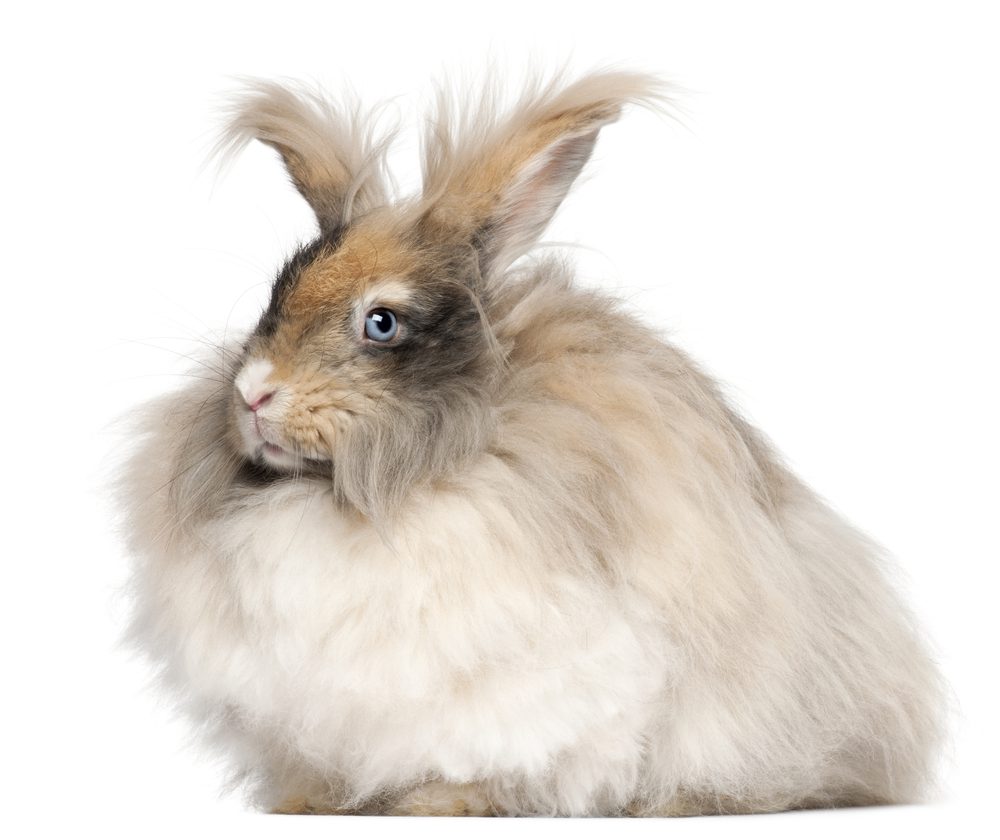
- Coat type: Full-body wool coverage including face, ears, and feet — the only Angora breed with complete facial furnishings
- Grooming frequency: Two to three times per week minimum; daily during molt
- Harvesting schedule: Every 90 to 120 days by plucking during natural molt or clipping
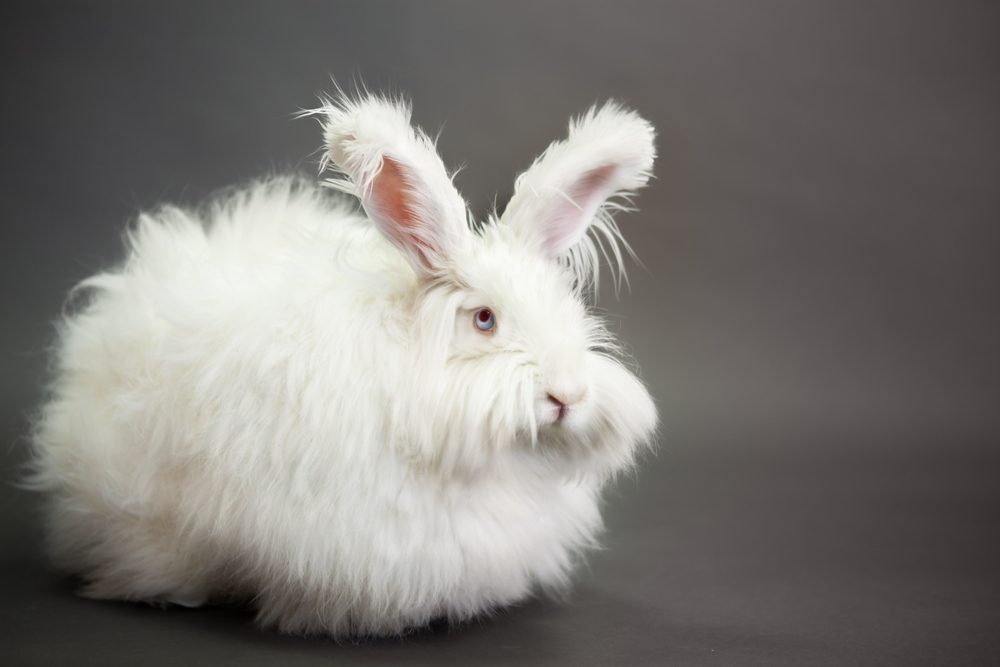
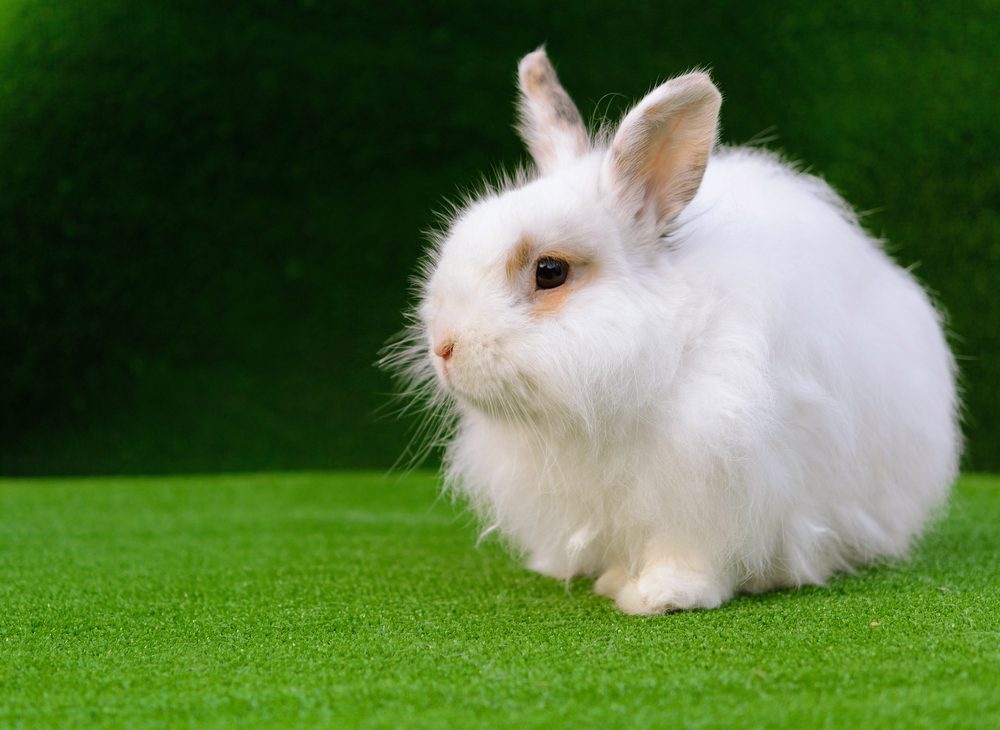
The English Angora is the oldest of the Angora breeds — the progenitor from which the French, Giant, and Satin Angoras were subsequently developed. It is the smallest of the ARBA-recognized Angora breeds, with a compact, rounded body and a coat that covers it so completely that the animal appears almost spherical when in full wool. It is the only Angora breed in which the wool covers the face fully, including pronounced facial furnishings and prominent ear tufts.
This complete facial coverage is the English Angora’s defining characteristic — and its primary lifespan variable. The facial wool that makes this breed visually extraordinary is also the source of its most distinctive health risk.
How the English Angora’s Coat Determines Lifespan
In most Angora breeds, the coat’s impact on lifespan operates primarily through wool block risk — the accumulation of ingested fiber in the digestive tract. This risk exists for all Angora breeds and is addressed through consistent grooming, unlimited hay, and regular harvesting.
In the English Angora, a second coat-related lifespan variable exists that no other Angora breed presents at the same level: facial wool that reaches the eyes.
The English Angora’s facial wool grows continuously, as all its wool does, at approximately 1 inch (2.5 cm) per month. Without regular trimming around the eyes, this wool makes direct contact with the eyeball — causing chronic irritation, conjunctivitis, secondary bacterial infection, and in neglected cases, corneal damage and blindness. As PetMD notes, dirt and debris caught in the fur around the eyes lead to infections in the eyes and surrounding skin, requiring prescription eye drops, oral antibiotics, and anti-inflammatory medications.
This is not a minor concern. An English Angora whose facial wool is neglected will experience chronic eye pain — a pain source that suppresses appetite, reduces grooming activity, and initiates a cascade of secondary health problems, including mat accumulation and elevated wool block risk. Eye infections require veterinary treatment. Recurrent or severe infections may cause permanent vision damage.
The practical implication: trimming the facial wool around the eyes is not a cosmetic task — it is a health necessity that belongs in every grooming session without exception. Any English Angora owner who cannot commit to this level of facial wool management should consider a French Angora — a breed with a clean face that eliminates this specific risk.
The ear wool presents a secondary challenge. Dense ear tufts trap debris, wax, and moisture in the ear canal, creating conditions for bacterial ear infections and ear mite infestations. Routine ear inspection and careful cleaning of the ear interior are part of English Angora maintenance in a way that does not apply to clean-faced, clean-eared breeds.
The Paradox of the English Angora’s Size and Lifespan
The English Angora presents an interesting paradox in rabbit lifespan science. Smaller rabbit breeds generally live longer than larger ones — a pattern consistent across domestic rabbit breeds as a whole. The English Angora is the smallest of the four ARBA-recognized Angora breeds, which would suggest a lifespan advantage. Yet it sits at 7 to 10 years, lower than the French Angora (7 to 12 years) despite being smaller.
The resolution of this paradox lies in the coat. The French Angora’s clean face and higher guard hair content make its coat substantially more resistant to mat formation and eye contact. The grooming demands of the English Angora’s near-pure underwool facial coat — which mats readily and requires more intensive management than any other Angora breed — create health risks that offset the body-size lifespan advantage.
In other words, the English Angora’s small size gives it the potential for a longer life. Its coat management demands are what most frequently prevent that potential from being realized.
An English Angora owner who provides meticulous facial wool care, consistent coat maintenance, unlimited hay, and regular veterinary attention can absolutely push their rabbit toward the upper end of the 7 to 10 year range — and some individuals exceed it. The question is whether the care commitment is consistently delivered.

The Five Key Factors for English Angora Longevity
1. Facial Wool Management — the Defining Variable
The English Angora’s lifespan is more directly tied to the quality of facial wool management than any other single factor. Inspect the facial wool at every grooming session. Trim any fiber that reaches the eyeball immediately. Maintain the wool around the eyes, nose, and chin at a length that keeps the face functional and the eyes clear.
The ear tufts require separate attention. Use a fine comb to work through the ear tuft wool at each session and inspect the interior of the ear for any dark buildup or debris that may indicate the early stages of ear mite infestation or bacterial ear infection.
2. Wool Block Prevention Through Grooming and Diet
The English Angora’s near-absence of guard hairs means the coat is almost entirely fine underwool — the fiber most easily ingested during self-grooming and most likely to accumulate in the digestive tract. This makes the English Angora more vulnerable to wool block per unit of coat length than breeds with higher guard hair content.
Unlimited timothy hay is the most important dietary wool block preventive. Two to three grooming sessions per week during maintenance periods and daily sessions during active molting remove loose fiber before it can be ingested. Weekly papaya enzyme supplementation (two to five tablets) is used by most experienced English Angora keepers as an additional measure.
For the complete wool block prevention and emergency protocol, see our Angora Rabbit Health guide.
3. Coat Harvest on Schedule
The English Angora molts naturally every three to four months — loosening fiber that can be harvested by hand-plucking or combing. Allowing the coat to extend beyond 90 to 120 days without harvest means the older fiber breaks down at the tips, increases mat formation substantially, and raises the volume of fiber available for ingestion during self-grooming. Harvest on schedule regardless of whether you intend to use the fiber.
4. Temperature Management
The English Angora’s dense, all-body wool provides exceptional cold-weather insulation — and equally exceptional heat retention. Above 75 to 80 degrees Fahrenheit (24 to 27 degrees Celsius), the rabbit is at risk of heat stress. Above 85°F (29°C), the risk is serious. Indoor housing with climate control is the practical standard. In warm US climates, a summer clip before the hottest months significantly reduces the heat load.
5. Annual Veterinary Care with Dental Focus
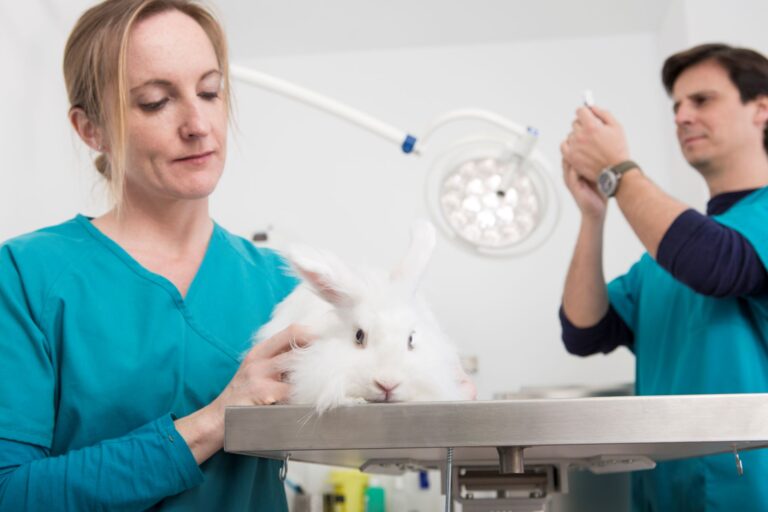
Dental disease is the most common cause of weight loss and reduced appetite in rabbits over four years of age. Annual dental examinations by a rabbit-experienced veterinarian allow early identification of molar spurs and incisor overgrowth before they become serious. The House Rabbit Society maintains a state-by-state directory of rabbit-experienced veterinarians across the United States.
Spaying female English Angoras is strongly recommended. Unspayed does have a high incidence of uterine cancer after three years of age, one of the most consistently preventable causes of premature death in domestic rabbits of all breeds.
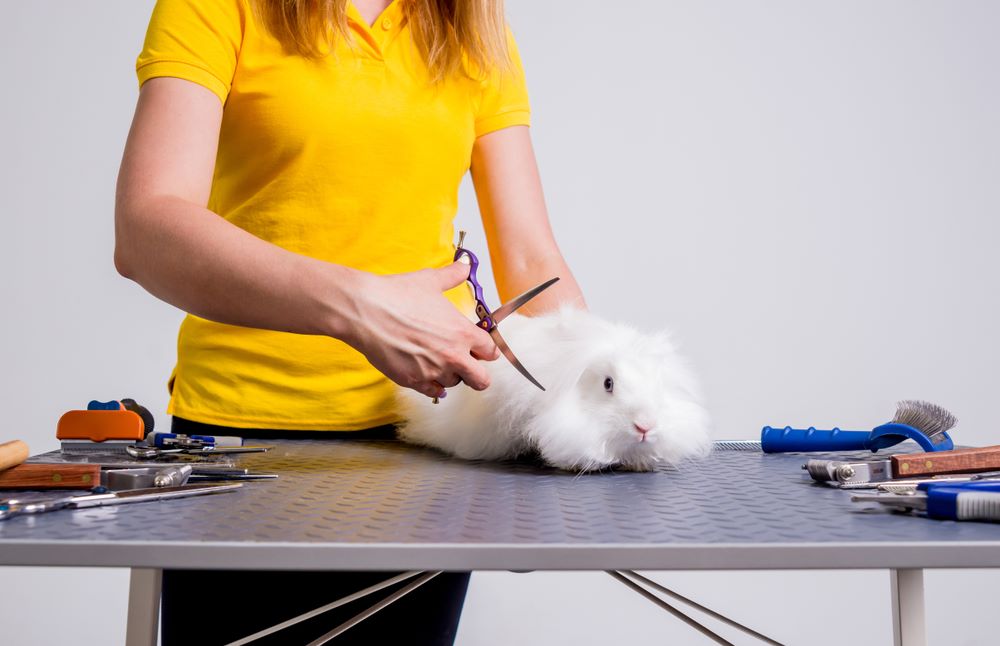
Grooming as a Lifespan Investment
English Angora rabbits are kept by people who are genuinely committed to the breed, both its visual beauty and the grooming relationship that maintaining that beauty requires. This relationship is not incidental to the rabbit’s health. It is healthy.
A well-groomed English Angora — one whose facial wool is kept clear of its eyes, whose coat is free of mats, whose harvesting schedule is maintained, and whose owner spends regular close time with the animal during grooming sessions — will be observed closely enough that any early health change is noticed promptly. Reduced appetite, early-stage sore hocks, the first sign of wool mites, the beginning of ear debris accumulation — all of these are visible during consistent grooming long before they become serious.
The grooming routine is effectively a health monitoring system. An English Angora owner who grooms twice or three times a week has their hands on the animal, their eyes on the skin, and their awareness on the animal’s appetite and droppings far more regularly than the owner of a short-haired breed who brushes weekly. This intimacy of care is a meaningful part of why well-managed English Angoras live healthier lives — the problems are seen and addressed early.
For the full grooming technique guide, see our Angora Rabbit Grooming guide.
Signs of a Healthy English Angora at Every Age
Young adult (1 to 4 years): Active during morning and evening periods. Appetite consistent — finishes daily pellet ration and eats hay throughout the day. Droppings round, uniform, and abundant. Eyes clear, bright, and free of discharge. Facial wool trimmed away from the eyes. Coat free of mats. Body condition good — ribs palpable but not visible through the coat.
Prime adult (4 to 7 years): Settled, less overtly energetic than younger rabbits but still engaged and alert. Continuing to eat and produce droppings normally. Annual dental exam increasingly important. Any unexplained weight loss at this stage warrants veterinary assessment for dental disease.
Senior (7 years and beyond): Slower-moving, resting more. The coat may become slightly thinner. Self-grooming may become less thorough — increase owner grooming frequency to compensate and maintain vent area hygiene to prevent flystrike. Veterinary examinations every six months at this stage. Housing modifications — lower-sided litter boxes, softer bedding, ramps — support comfort and mobility.
The English Angora and the Owner Commitment
It is worth naming clearly what owning an English Angora requires in comparison to other rabbit breeds, because the lifespan question is inseparable from it.
The English Angora is the highest-maintenance rabbit available in the domestic pet world. It requires more grooming time per week than any other breed. It has a coat-related eye risk that requires vigilance at every session. It requires coat harvesting every three to four months. Its fiber quality, coat density, and facial wool complexity make it unsuitable for owners who cannot commit to this level of care consistently.
That is not a criticism of the breed — it is context for anyone considering one. Owners who provide this level of care consistently will have rabbits that reach 9 and 10 years regularly. Owners who cannot sustain the commitment will have rabbits that develop chronic health problems from neglected coats, and whose lifespans reflect those problems.
The English Angora rewards its owners fully in proportion to the care they provide. For the owner who can meet the commitment, few domestic animals offer a richer combination of visual beauty, fiber reward, and bonding depth.
FAQs
How long do English Angora rabbits live?
English Angoras typically live 7 to 10 years. This is the lower portion of the 7 to 12 year range that applies to Angora breeds broadly, reflecting the English Angora’s medium body size and its high-maintenance coat demands. Well-managed individuals with meticulous facial wool care and consistent grooming can reach the upper end of this range and occasionally beyond.
Why does facial wool affect the English Angora’s lifespan?
The English Angora is the only Angora breed with complete facial wool coverage, including the area around the eyes. Wool that contacts the eyeball causes chronic irritation and infection that suppresses appetite, increases secondary health risks, and requires veterinary treatment. Consistent trimming of facial wool around the eyes at every grooming session is a health necessity for this breed — not a cosmetic choice.
Is the English Angora a good choice for a first rabbit owner?
Generally no. The grooming demands — particularly the facial wool management, the twice-to three-times weekly sessions, and the quarterly harvesting — exceed what most first-time rabbit owners anticipate or can sustain consistently. The French Angora is a better entry point for someone drawn to Angora breeds who is new to rabbit keeping.
What is the most common cause of early death in English Angora rabbits?
Wool block — accumulation of ingested fiber in the digestive tract — is the leading preventable cause of premature death across all Angora breeds, including the English. The English Angora’s near-absence of guard hair makes the coat fiber particularly fine and easily ingested during self-grooming. Prevention through grooming, unlimited hay, and regular harvesting is the most important lifespan protection available.
Does spaying or neutering an English Angora rabbit extend its life?
Yes, particularly for females. Unspayed does have a high rate of uterine cancer after three years of age — a major preventable cause of premature death in female rabbits of all breeds. Spaying eliminates this risk. Both spayed and neutered rabbits show reduced stress-related behavioral issues and are consistently associated with longer lifespans in domestic rabbit care studies.
At what age is an English Angora rabbit considered a senior?
Most English Angoras begin showing senior characteristics between six and eight years of age — slowing activity, longer rest periods, possible coat changes, and reduced self-grooming intensity. The transition is gradual and individual. From the seven years, veterinary examinations every six months rather than annually are appropriate.
Conclusion
The English Angora rabbit’s lifespan is, more than any other Angora breed, a direct reflection of the grooming care it receives. The eye contact risk unique to this breed, the high-volume underwool ingestion during self-grooming, the ear wool accumulation, and the quarterly harvest demands — all of these are managed or neglected one session at a time. An owner who manages them consistently will have a rabbit that reaches 9 to 10 years without serious health events. An owner who cannot sustain the commitment will have a rabbit whose coat-related problems compound progressively.
The English Angora’s extraordinary appearance — the most visually complete of all wool rabbits — is the visible output of extraordinary care. The two are not separable, and the lifespan sits exactly at the intersection between them.
For the full grooming technique guide specific to the English Angora’s facial wool demands, see our Angora Rabbit Grooming guide. For health conditions and prevention protocols relevant to all Angora breeds, see our Angora Rabbit Health guide.
The information in this article is for general educational purposes. For any health concern relating to your rabbit, consult a licensed veterinarian with rabbit experience. See our disclaimer for full details.