How Big Do Angora Rabbits Get? Complete Size Guide by Breed
Angora rabbits range in adult weight from 5 pounds to well over 10 pounds, depending on the breed — a span wide enough that the question “how big do Angora rabbits get?” has very different answers depending on which Angora breed you are asking about. The English Angora and the Giant Angora, both covered by that question, are separated by several pounds of body mass and significant differences in space requirements, care intensity, and handling practicality.
Understanding the size of each Angora breed before choosing one is important because size determines minimum enclosure dimensions, affects heat stress sensitivity, influences the weight of the grooming commitment, and sets expectations for how long the rabbit will take to reach full maturity. This guide covers verified adult weights for all five Angora breeds, the growth timeline to full size, the coat-size illusion that makes Angoras appear larger than they are, and what size means for housing and care.
All weight data is sourced from the American Rabbit Breeders Association and the International Association of German Angora Rabbit Breeders.
Angora Rabbit Size by Breed: Verified Adult Weights
English Angora
- Adult weight: 5 to 7.5 pounds (2.3 to 3.4 kg)
- ARBA recognized: Yes
- Time to full size: 6 to 8 months
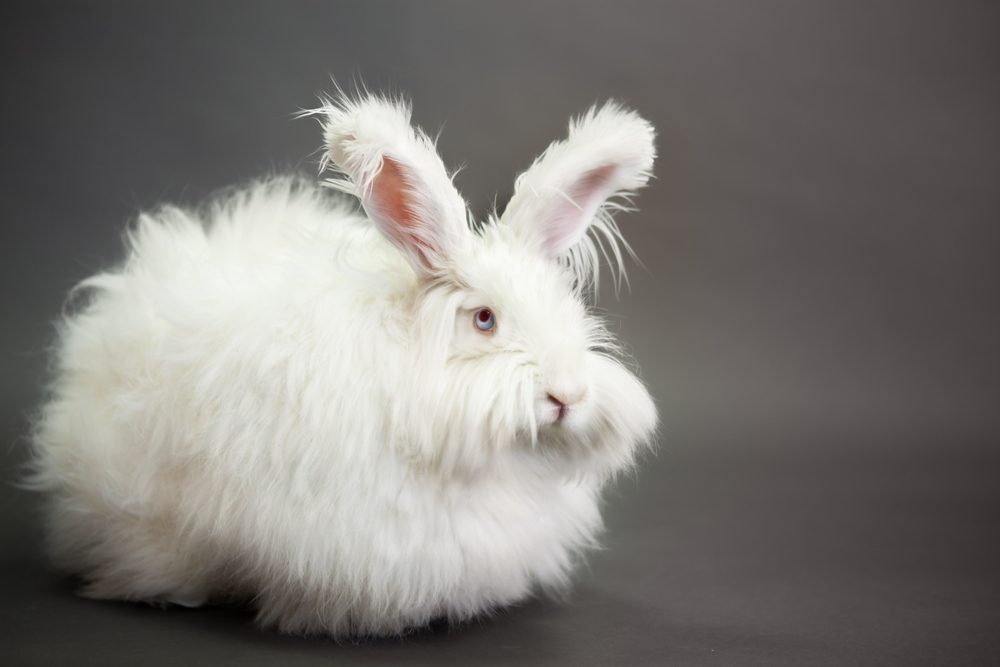
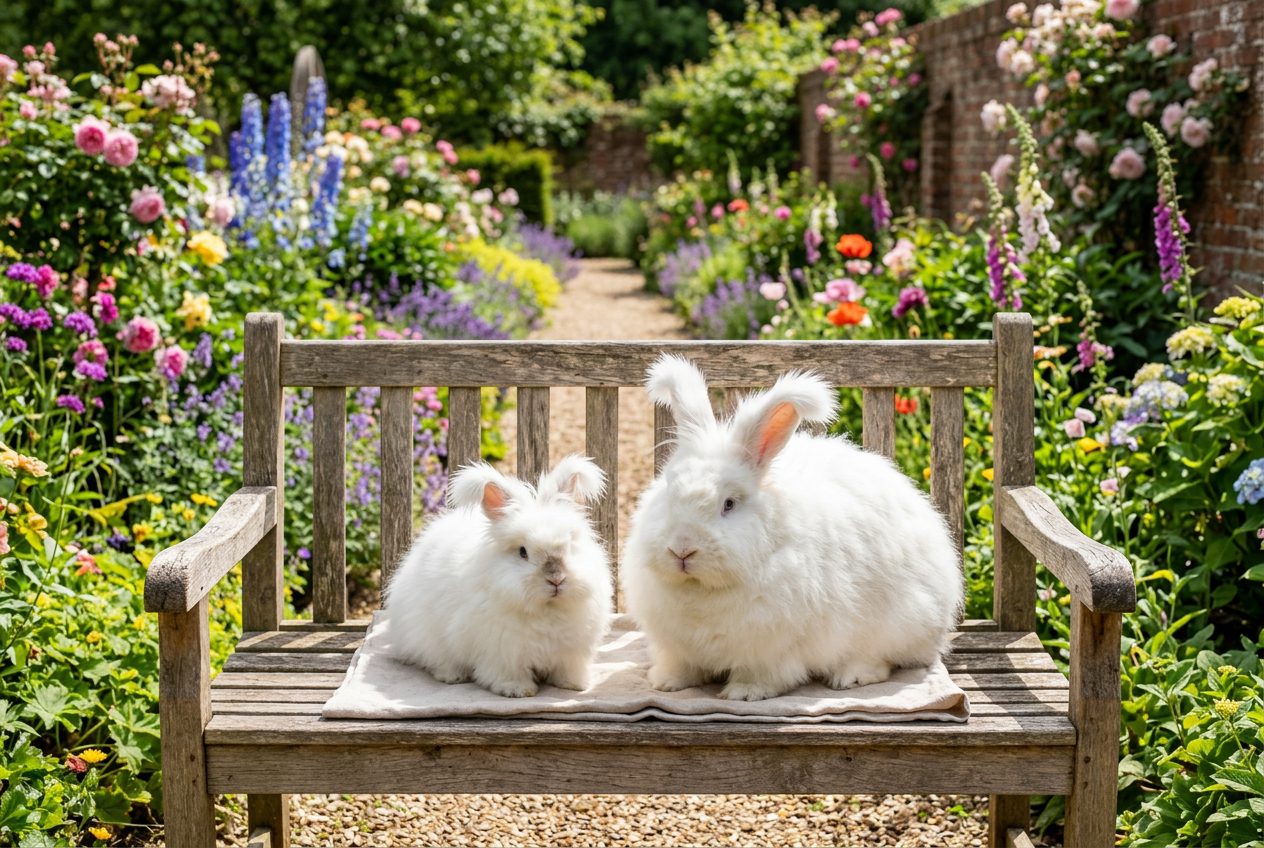
The English Angora is the smallest of the four ARBA-recognized Angora breeds. Its compact body and moderate weight make it practical for indoor living in a variety of home sizes, and its smaller body mass gives it a lifespan advantage over larger breeds. Despite its modest actual weight, the English Angora’s full-body wool coverage — including the face, ears, and feet — makes it appear substantially larger than it is when in full coat.
For a full breed profile, see our English Angora Rabbits page.
French Angora
- Adult weight: 7.5 to 10.5 pounds (3.4 to 4.8 kg)
- ARBA recognized: Yes
- Time to full size: 6 to 9 months
The French Angora is the largest of the molting Angora breeds and sits in the medium-to-large range of domestic rabbit sizes overall. Its clean face, ears, and front feet make it appear smaller than a fully wooled English Angora of similar body weight — a reminder that the coat significantly distorts visual size estimates for all Angora breeds.
For a full breed profile, see our French Angora Rabbits page.
Satin Angora
- Adult weight: 6.5 to 9.5 pounds (3 to 4.3 kg)
- ARBA recognized: Yes
- Time to full size: 6 to 8 months
The Satin Angora falls between the English and French Angoras in body weight, with a body type similar to the English Angora but with the semi-transparent, lustrous satin fiber coat that gives the breed its name. The satin coat is slightly less voluminous in appearance than the English Angora’s full underwool coat, though the actual body size difference is modest.
For a full breed profile, see our Satin Angora Rabbits page.
Giant Angora
- Adult weight: No maximum — bucks minimum 9.5 lb (4.3 kg), does minimum 10 lb (4.5 kg)
- ARBA recognized: Yes — only 6-class Angora breed
- Time to full size: Over 12 months — does take more than a year to reach full size, takes up to 18 months
The Giant Angora is the largest of the four ARBA-recognized Angora breeds, with no upper weight limit in the ARBA standard. Well-conditioned Giant Angoras commonly exceed 12 pounds (5.4 kg). The breed grows slowly — significantly more slowly than the molting Angora breeds — and this extended growth period means owners of Giant Angoras should not evaluate body condition against adult expectations until the rabbit is at least 12 to 18 months old.
The Giant Angora’s three-component coat — underwool, awn fluff, and awn hair — is dense and voluminous, making it appear even larger than its substantial body mass suggests. Combined with the mandatory 90-day shearing schedule and the breed’s heat sensitivity, the Giant Angora requires the most space of any ARBA-recognized Angora breed.
For a full breed profile, see our Giant Angora Rabbits page and our Huge Angora Rabbit guide.
German Angora
- Adult weight: 5.5 to 12 pounds (2.5 to 5.5 kg)
- ARBA recognized: No — governed by the IAGARB
- Time to full size: 8 to 12 months
The German Angora has a wide weight range reflecting the variation within the breed’s population. The IAGARB standard specifies a minimum registration weight alongside a wool production threshold — performance, not simply size, defines the German Angora standard. In practice, most well-bred German Angoras kept for fiber production fall in the 6 to 10 pound range.
For a full breed profile, see our German Angora Rabbit guide.
Size Comparison Table: All Five Angora Breeds
| Breed | Adult Weight | ARBA Recognized | Time to Full Size | Non-Molting |
|---|---|---|---|---|
| English Angora | 5–7.5 lb (2.3–3.4 kg) | Yes | 6–8 months | No |
| French Angora | 7.5–10.5 lb (3.4–4.8 kg) | Yes | 6–9 months | No |
| Satin Angora | 6.5–9.5 lb (3–4.3 kg) | Yes | 6–8 months | No |
| Giant Angora | 9.5 lb+ (no max) | Yes | 12–18 months | Yes |
| German Angora | 5.5–12 lb (2.5–5.5 kg) | No (IAGARB) | 8–12 months | Yes |
The Coat-Size Illusion: Why Angoras Look Bigger Than They Are
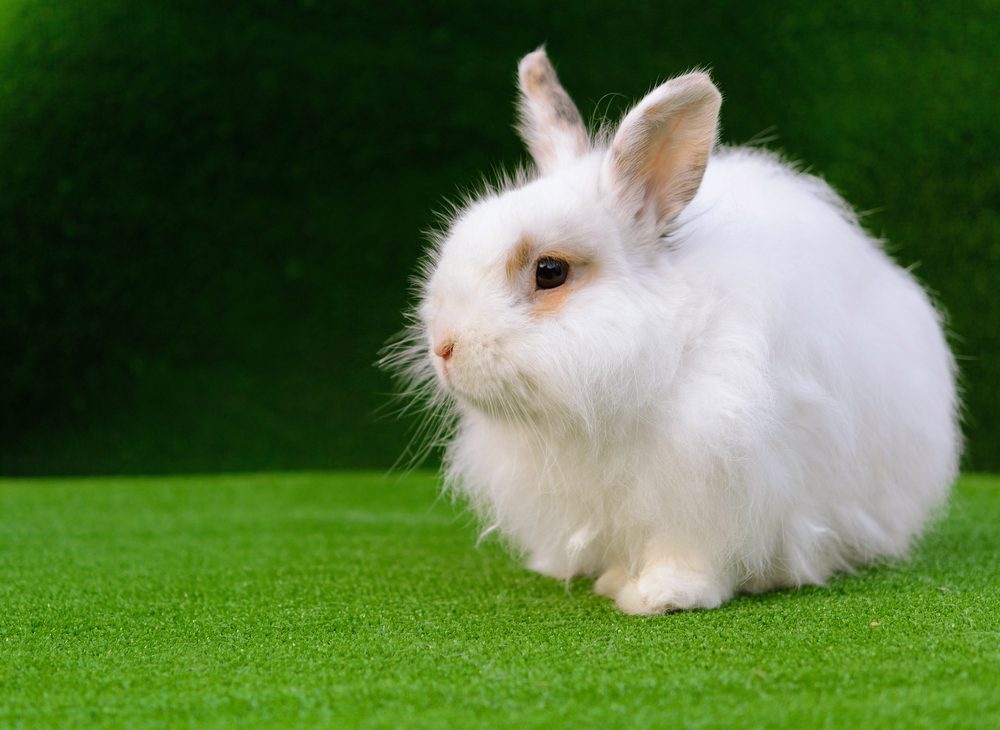
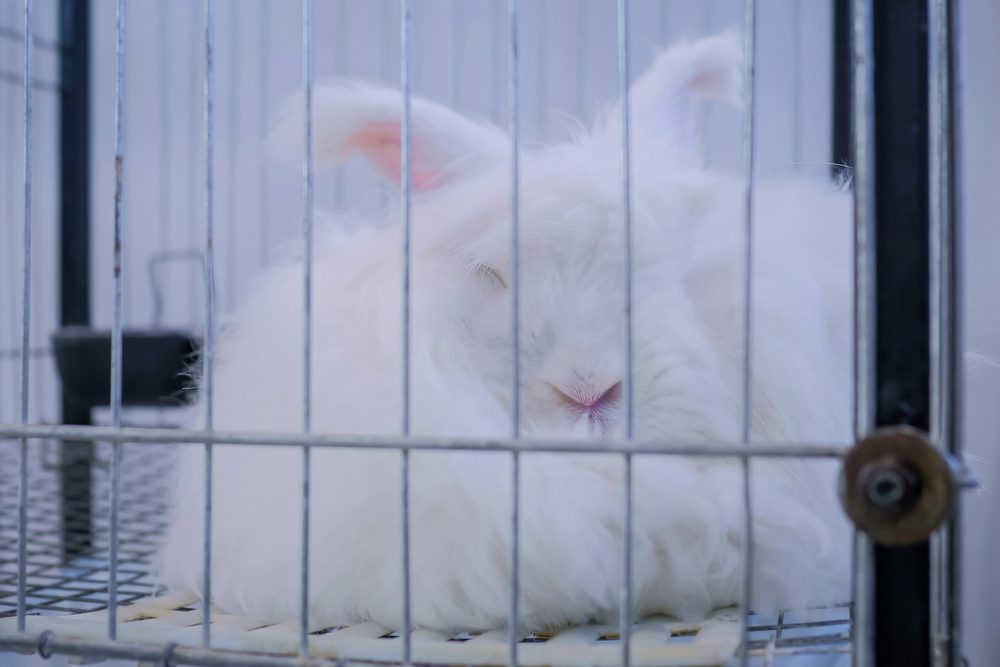
Every Angora rabbit in full coat appears substantially larger than it actually is. This is one of the most consistent surprises new owners experience when they see their rabbit freshly shorn for the first time — and one of the most important things to understand when evaluating size from images or at a show.
Angora rabbit fiber grows at approximately 1 inch (2.5 cm) per month. At the end of a 90 to 120-day growth cycle, the coat extends 3 to 4 inches from the skin on all sides of the body. For a rabbit with a body approximately 15 inches long, this means the full-coat silhouette can appear 8 to 10 inches wider than the actual animal beneath it. The entire visible form in photographs and at shows is largely coat, not body.
The practical implications of this are significant. A freshly shorn Giant Angora looks like a very different animal — smaller, leaner, and surprisingly angular — compared to the same rabbit in full coat. Owners who have not seen their rabbit shorn before the first clip are sometimes startled by how much of the perceived size was fiber rather than rabbit.
This illusion also affects housing planning. The enclosure size should be based on the rabbit’s actual body length and weight, not its full-coat appearance. A rabbit that appears enormous in photographs may have an actual body that requires the same floor space as a medium-sized non-Angora breed.
What Angora Rabbit Size Means for Housing
Minimum enclosure dimensions scale with the rabbit’s adult body size. All Angora rabbits require significantly more floor space than these minimums when possible — these represent the practical floor for acceptable care, not optimal conditions.
English Angora (5–7.5 lb): Minimum 24 × 30 inches floor space, 18 inches height.
French and Satin Angora (6.5–10.5 lb): Minimum 30 × 30 inches floor space, 18 inches height. A 30 × 36-inch enclosure is preferred and recommended by most Angora breeders for French Angoras.
Giant Angora (9.5 lb+): Minimum 36 × 30 inches floor space, 24 inches height. Given the breed’s large body mass and long coat, this is the minimum; larger enclosures significantly improve quality of life.
German Angora (5.5–12 lb): The IAGARB Standards of Care specify a minimum of 30 × 36 inches floor space and 24 inches height for individual German Angoras, with a minimum 7.5 square feet of usable floor area. It requires 30 × 48 inches with litters.
All Angora enclosures require a solid resting surface — a wooden board, rubber mat, or fleece pad — within the wire-bottomed cage to prevent sore hocks. Larger breeds with more body mass are at elevated sore hock risk and benefit most from adequate solid resting area. Daily free-roam time in a rabbit-proofed area is essential for all breeds — the enclosure is a home base, not the full living environment.
What Angora Rabbit Size Means for Heat Management
Body mass and coat density combine to determine an Angora rabbit’s heat sensitivity. Larger, denser-coated breeds are at greater risk from high temperatures than smaller breeds. All Angora breeds face elevated heat stress risk above 75 to 80 degrees Fahrenheit (24 to 27 degrees Celsius), but the risk is not equal across breeds.
The Giant Angora — the largest body mass with one of the densest coats — is the most heat-sensitive of all Angora breeds and requires the most consistent temperature management. Giant Angora owners in warm US climates typically keep their rabbits in air-conditioned spaces throughout the warm months. The mandatory 90-day shearing schedule provides some heat management benefit, but a freshly shorn Giant Angora still generates considerable body heat from its large muscle mass.
The English Angora’s smaller body mass gives it somewhat greater heat tolerance relative to larger breeds, but its full-body wool coverage — including the face — can trap heat around the head in a way the clean-faced French Angora does not experience.
For all breeds: frozen water bottles placed inside or against the cage during warm months, fans circulating air without blowing directly at the rabbit, and indoor climate-controlled housing are the practical heat management tools for US owners.
Growth Timeline: When Do Angora Rabbits Reach Full Size?
Most Angora rabbits reach adult body size by six to nine months of age. However, there is meaningful variation between breeds:
Molting breeds (English, French, Satin Angora): These breeds typically reach their full body size within six to nine months. The coat reaches its full adult density and fiber quality over the first two years of life — the first-harvest juvenile coat is usually less dense than subsequent adult coats.
Non-molting breeds (Giant Angora, German Angora): These breeds grow more slowly. Giant Angora does typically take over a year to reach their full mature size, and bucks up to 18 months. Do not compare a Giant or German Angora’s body weight at nine months to the adult ARBA standard — the breed matures more slowly than the molting Angoras, and body weight at nine months may still be well below the adult range without indicating a health problem.
Evaluating whether a Giant or German Angora is at a healthy weight for its age requires knowing the individual rabbit’s age in months and comparing to breed-appropriate growth curves, not to adult standards. If uncertain, consult a rabbit-experienced veterinarian.
Size, Handling, and Practicality
The size of an Angora rabbit has practical consequences for handling that new owners sometimes underestimate.
A 10 to 12-pound Giant Angora in full coat is a substantial animal. Combined with the coat’s volume, these rabbits can be physically challenging to hold securely — particularly for children, older owners, or people with limited upper body strength. Giant Angoras have calm temperaments that suit handling, but their size means that an unsupported or startled rabbit dropping from height can suffer serious injury. Rabbit bones are fragile relative to body mass — a fall from table height can be fatal for any rabbit, and the Giant Angora’s body mass makes such a fall particularly dangerous.
The English and French Angoras’ more moderate size makes them more practical for most household configurations, including those with older children who have been taught proper rabbit handling. The Giant Angora is best suited to adult households or experienced rabbit keepers who are comfortable with large animals.
Regardless of breed, all rabbits must be supported fully at the hindquarters when held. A rabbit whose hindquarters are unsupported will kick powerfully to regain its footing — a kick powerful enough to fracture its own spine if not caught by the holder’s other hand.
FAQs
How much does an Angora rabbit weigh?
Adult Angora rabbit weight ranges from 5 to 7.5 pounds for the English Angora, 7.5 to 10.5 pounds for the French Angora, 6.5 to 9.5 pounds for the Satin Angora, and 9.5 pounds or more (no maximum) for the Giant Angora. German Angoras range from 5.5 to 12 pounds. All figures are for adult animals at full body size.
Do Angora rabbits look bigger than they are?
Yes — significantly. The Angora’s continuously growing wool coat adds several inches of volume around the entire body when in full coat. The actual rabbit beneath the fiber is often notably smaller than the full-coat silhouette suggests. New owners who see their rabbit shorn for the first time are frequently surprised by how much of the perceived size was fiber rather than body.
What size is a Giant Angora rabbit?
The Giant Angora is the largest ARBA-recognized Angora breed, with no upper weight limit in the breed standard. Does must weigh a minimum of 10 pounds and bucks 9.5 pounds at full maturity. Well-conditioned Giant Angoras commonly exceed 12 pounds. The breed grows slowly, with does taking over a year and bucks up to 18 months to reach full size.
How big is an Angora rabbit compared to a regular rabbit?
Angora rabbits are medium to large domestic rabbits. The English Angora at 5 to 7.5 pounds is comparable in actual body size to a medium-sized Dutch rabbit. The Giant Angora at 9.5 pounds and above is comparable to a New Zealand or Flemish Giant in the lower weight ranges. The key distinction is that the Angora’s coat makes it appear considerably larger than its actual body mass.
When is an Angora rabbit fully grown?
Most Angora breeds reach adult body size by six to nine months. The Giant Angora is an exception — does take over 12 months and bucks up to 18 months to reach full adult size. German Angoras also mature more slowly than the molting breeds, typically reaching full size by eight to 12 months.
What size enclosure does an Angora rabbit need?
Minimum floor space is 24 × 30 inches for English Angoras, 30 × 30 to 30 × 36 inches for French and Satin Angoras, and 36 × 30 inches or larger for Giant Angoras. German Angoras require a minimum of 7.5 square feet per the IAGARB Standards of Care. All enclosures must allow the rabbit to take three full hops in any direction and stand upright without touching the ceiling. Larger is always better.
Is a bigger Angora rabbit harder to care for?
Yes, in most practical respects. Larger Angoras require more enclosure space, are more physically demanding to handle, generate more body heat, and are therefore more heat-sensitive, produce more waste, and typically consume more food. The Giant Angora also has the highest annual wool yield of any ARBA-recognized breed, which means the quarterly shearing sessions involve more fiber and take more time than for smaller breeds.
Conclusion
Angora rabbits span a wide size range — from the compact English Angora at 5 to 7.5 pounds to the Giant Angora with no upper weight limit. Understanding the actual body size of each breed, rather than the inflated visual impression created by a full coat, is the foundation of realistic planning for enclosure space, handling, heat management, and long-term care.
If you are undecided between breeds, body size is one practical filter worth applying early. An English or French Angora is manageable for most adult households. The Giant Angora suits experienced rabbit keepers with adequate indoor space and a commitment to large-animal handling. The German Angora suits owners focused on maximum fiber production, who do not require ARBA show eligibility.
For a full side-by-side comparison of all Angora breeds, including fiber yield, grooming demands, and temperament, see our Types of Angora Rabbits guide.