Can Rabbits Swim? What Every Rabbit Owner Needs to Know
How we researched this guide: In October 2026 we checked the facts in this article against Rabbit.org, University of Huddersfield Repository and Wikipedia, and corrected or removed anything we could not verify. Our sources are listed at the end. See our editorial policy. Last reviewed: October 2026.
Quick answer: Rabbits can swim if they have to, but they don’t like it and it isn’t safe. Water frightens them, can push them into shock and chills them. A wet Angora coat is also very hard to dry. Never put a rabbit in water for fun or to bathe it.
Yes — rabbits can swim. They are capable of paddling through water using their powerful hind legs, and wild rabbits do sometimes cross water when necessary to escape predators or move between habitats. Swimming is a physical capability that all domestic rabbits share.
But whether rabbits can swim is a very different question from whether they should. For domestic rabbits — and for Angora rabbits in particular — water exposure ranges from mildly stressful to genuinely dangerous depending on the circumstances. Understanding that distinction is the purpose of this article.
How Rabbits Swim: The Physical Mechanics
Rabbits are not aquatic animals. Their bodies are optimized for terrestrial movement — specifically for the explosive, asymmetric gait they use to cover ground rapidly on land. The powerful hind legs that drive that movement can also generate a paddling motion in water, but inefficiently and at high physical cost.
When a rabbit enters water, it uses its hind legs to propel itself forward while the front legs provide some stabilization. This is an instinctive response, not a trained behavior. A rabbit placed in water will paddle — but it will be working hard to do so. Unlike true swimming animals, rabbits have no streamlining adaptations, no water-resistant coat oils, and no webbing between the toes. They tire quickly in water and can exhaust themselves rapidly in deeper or moving water.
The dense coat of any rabbit — and particularly the full-body wool of an Angora breed — becomes heavily waterlogged within moments of submersion. A waterlogged coat adds significant weight, compounds the effort required to stay afloat, and dramatically accelerates heat loss through evaporative cooling. A rabbit that appears to be swimming fine can enter serious physical difficulty faster than most owners anticipate.
Why Water Is Particularly Dangerous for Angora Rabbits
For owners of Angora rabbits, the swimming question has an additional dimension that applies to no other domestic rabbit type: a wet Angora coat felts irreversibly.
Angora rabbit fiber — particularly the near-pure underwool of the English Angora — felts on contact with water and agitation. Water penetrates the entire coat to the skin, and even gentle movement causes the fiber to mat and compress into a dense, matted layer that cannot be combed out. A fully wet Angora coat is, in most cases, a ruined coat that must be clipped entirely to allow fresh fiber to grow in.
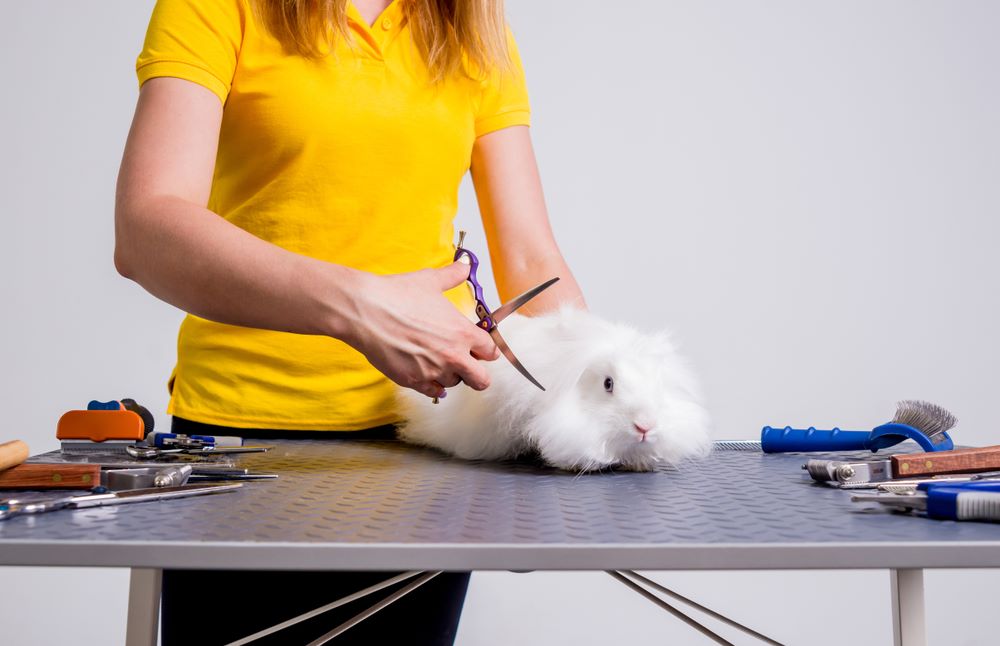
This is why rabbit care experts strongly advise against bathing rabbits, and Angoras most of all. As covered in our Angora Rabbit Grooming guide, even spot-cleaning with a damp cloth must be followed by immediate drying with a cool-setting blower to prevent felting from spreading. Full submersion — even in a shallow bath — is never appropriate for an Angora rabbit of any breed.
The consequences of getting an Angora rabbit wet extend beyond coat damage:
Hypothermia: A wet rabbit loses body heat rapidly. Angora rabbits, despite their apparently voluminous coats, are acutely vulnerable to chilling when wet because matted, waterlogged wool provides essentially no insulation. A wet Angora rabbit exposed to room temperature air can become hypothermic faster than a short-haired rabbit in the same conditions.
Stress and shock: Rabbits are prey animals with a strong fear response. Sudden water immersion is a significant stress event. An acutely frightened rabbit can enter a state of shock — heart rate spikes, adrenaline floods the system, and in severe cases, cardiac events can occur. Severe fear can push a rabbit into shock, and shock can be fatal.
Skin infection: A wet Angora coat that does not dry completely and rapidly against the skin creates warm, moist conditions ideal for bacterial skin infections and flystrike during warm months. This risk is substantially elevated compared to shorthaired breeds because of the coat’s ability to trap moisture close to the skin.
Do Rabbits Like Water?
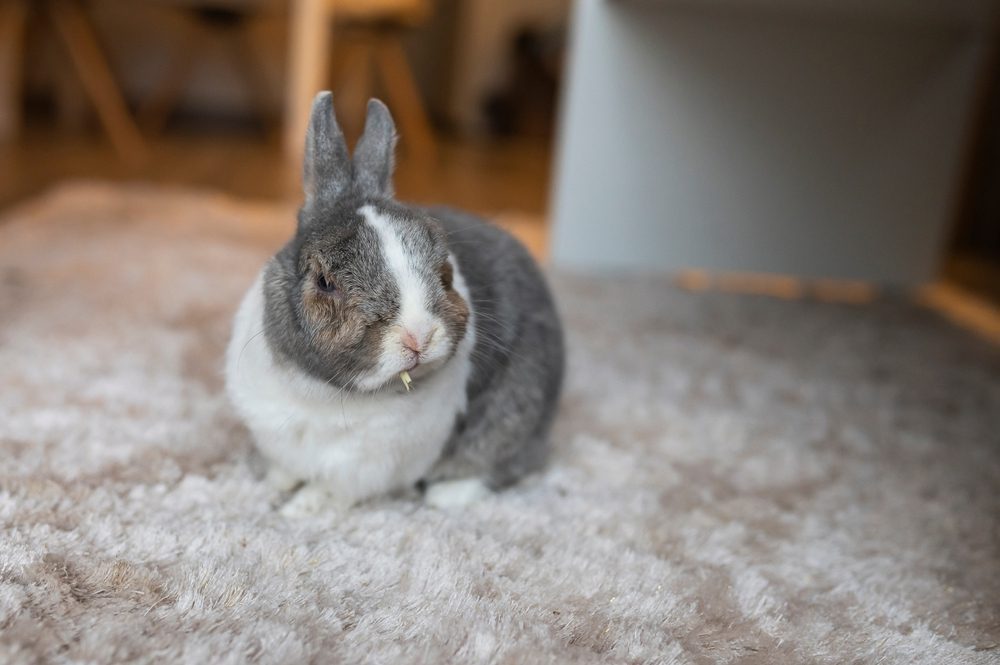
The vast majority of domestic rabbits, regardless of breed, do not like water and actively avoid it. This is consistent with their evolutionary history — rabbits are prey animals that instinctively seek dense ground cover and burrows for safety, not open water where they are exposed and slowed. A rabbit’s first reaction to unexpected water contact is typically alarm, followed by an attempt to escape.
There are occasional individual exceptions — domestic rabbits occasionally show curiosity about shallow water in warm weather, and some tolerate their paws being wet without distress. These are individual personality traits, not breed characteristics, and they do not indicate that the rabbit is enjoying a positive experience in the way an aquatic-adapted animal would.
Rabbits that appear calm during water exposure are often in a state of tonic immobility — a fear-induced paralysis response that can be mistaken for relaxation. A rabbit that goes still and limp when placed in water is not comfortable; it is exhibiting a survival-mode stress response. This distinction is important for any owner who has seen their rabbit appear unperturbed by a bath.
When Rabbits Encounter Water: Wild vs. Domestic
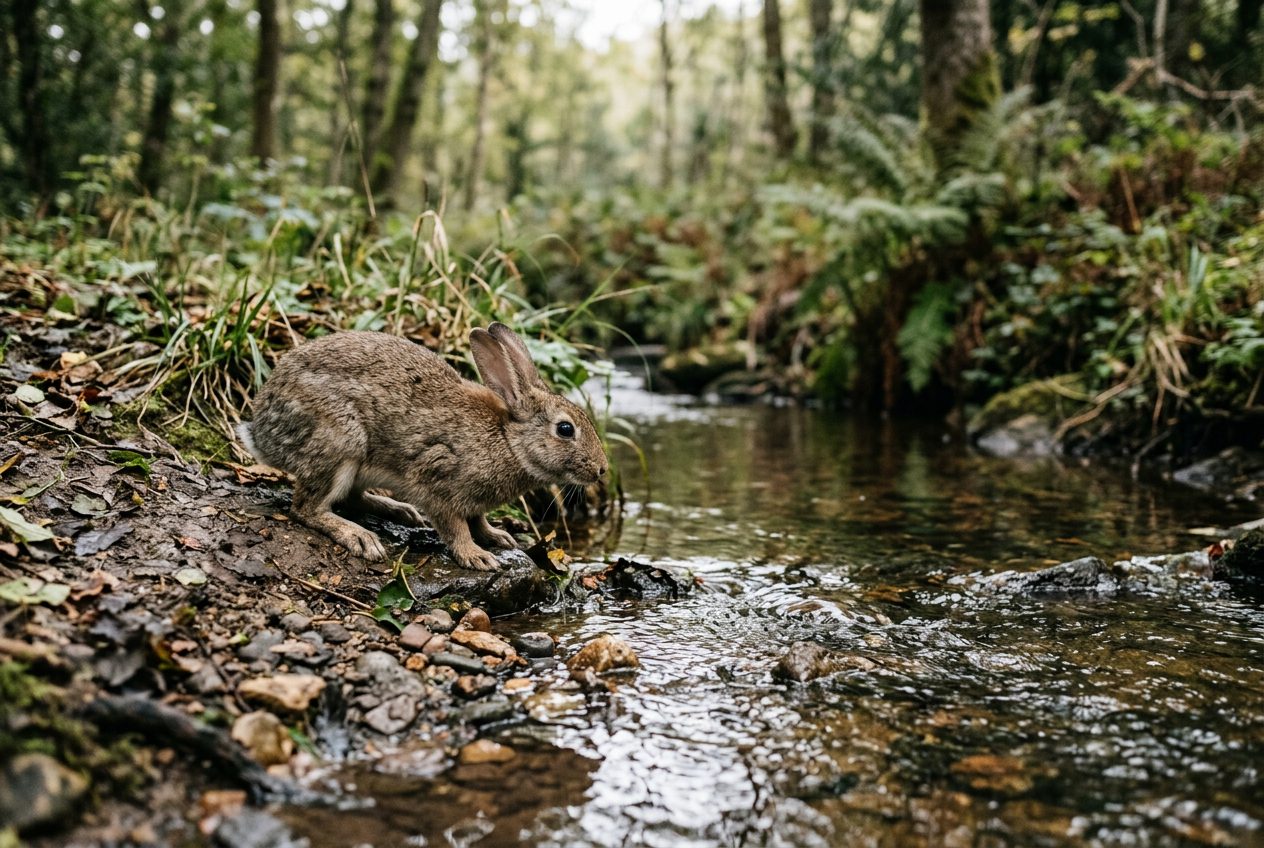
Wild rabbits cross water when necessary — escaping floods, navigating between habitats, or evading predators. This is a survival behavior under duress, not a recreational activity. Wild rabbits emerge from water and dry rapidly in open air and sunlight, shaking and grooming to restore coat structure. Their coat, while dense, is primarily a flyback or rollback fur type with natural water-resistance properties very different from the ultra-fine Angora wool.
Domestic rabbits that accidentally fall into water — in garden ponds, swimming pools, or bathtubs — need immediate removal, drying, and monitoring. Any rabbit that has been submerged, particularly in cold water, should be dried as completely as possible with a warm towel and monitored for signs of hypothermia (shivering, lethargy, weakness) and respiratory distress for several hours following the incident.
For Angora rabbits, an accidental submersion is a grooming emergency in addition to a health emergency. Once the rabbit is stable, safe, and warm, the coat must be assessed. In most cases of full submersion, the affected coat will need to be clipped as soon as the rabbit has recovered from any immediate physiological effects.
Can You Bathe an Angora Rabbit?
No. This is one of the clearest categorical prohibitions in Angora rabbit care.
Angora rabbits should never be bathed. The coat will feel. The rabbit will be stressed. The risk of hypothermia is real and rapid. No health or hygiene situation requires bathing an Angora rabbit — the solution to any localized soiling is always spot-cleaning followed by immediate drying, or in cases of significant contamination, clipping the affected area.
If an Angora rabbit has a soiled vent area, this should be addressed with a damp cloth applied to that specific area only, dried immediately with a cool-setting blower, and the surrounding wool trimmed if necessary. The rabbit should not be placed in water under any circumstances.
If you are ever in doubt about how to address a specific hygiene situation on your Angora rabbit, consult a rabbit-experienced veterinarian rather than attempting to bathe the animal.

Safe Hydration: Drinking Water Needs
While water immersion is harmful to rabbits, drinking water is essential. All rabbits must have access to fresh, clean water at all times. Domestic rabbits that become dehydrated experience rapid deterioration in gut motility — one of the primary contributing factors to GI stasis, which is the most common serious digestive emergency in pet rabbits.
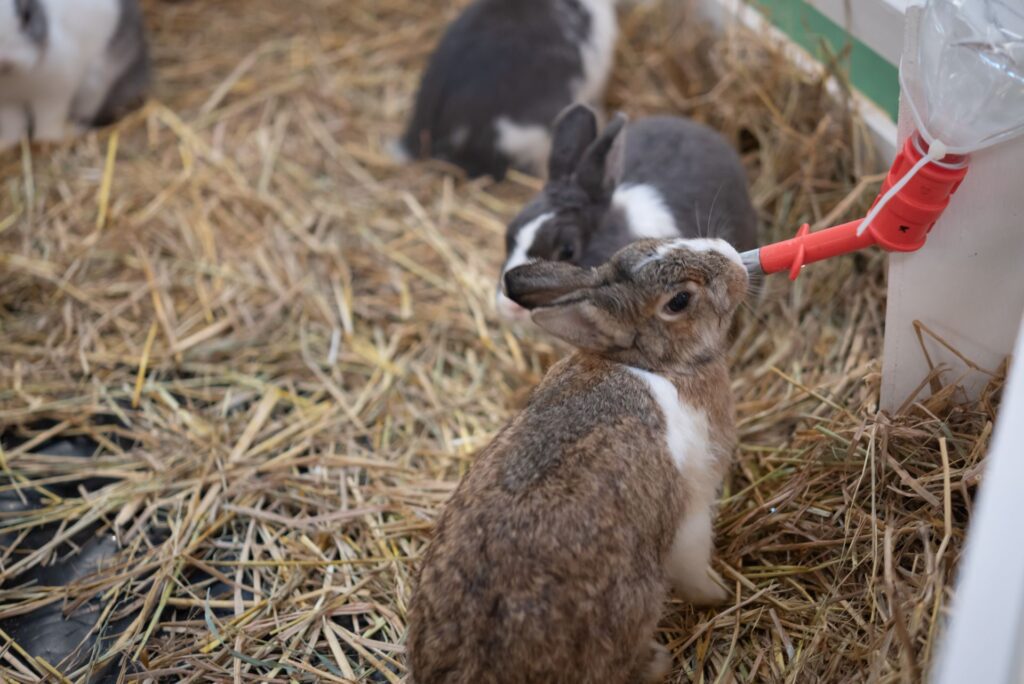
For Angora rabbits specifically, the water delivery method matters. Sipper bottles keep the chin and chest wool dry — a rabbit drinking from a bowl may get wool wet around the chin and chest, creating local matting around the drinking area. Most experienced Angora rabbit owners use sipper bottles or crock-style heavy bowls positioned in ways that minimize wool contact with the water surface. Monitor the sipper bottle function daily — the ball valve can stick without a visible indication, cutting off the rabbit’s water supply.
FAQs
Can rabbits swim?
Yes — rabbits can paddle through water using their hind legs. This is an instinctive survival capability, not a learned or enjoyable behavior. Domestic rabbits tire rapidly in water and are vulnerable to hypothermia and stress. Wild rabbits occasionally cross water under duress but are not aquatic animals.
Do rabbits like water?
Most domestic rabbits actively dislike water contact and will attempt to avoid it. Individual exceptions exist, but the apparent calm some rabbits show during water exposure is often tonic immobility — a fear paralysis response — rather than genuine comfort.
Can you bathe an Angora rabbit?
No. Angora rabbits must never be bathed. The wool coat felts on contact with water and agitation, creating irreversible matting that, in most cases, requires the entire coat to be clipped. Bathing also causes hypothermia risk and significant stress. Spot-cleaning with a damp cloth followed by immediate cool-air drying is the only acceptable approach to localized soiling.
What happens if an Angora rabbit accidentally gets wet?
Remove the rabbit from the water immediately, dry it as thoroughly as possible with a warm towel, and apply a grooming blower on a cool setting to dry the coat. Monitor for hypothermia — shivering, lethargy, weakness — for several hours. Once the rabbit has stabilized, assess the coat for felting. Areas that have fully felted will need to be clipped.
Can I let my rabbit play near a pool or pond?
No. Outdoor enclosures near water features create accidental drowning risk. A rabbit usually cannot climb out of a steep-sided pool on its own, and a rabbit that falls in and cannot immediately find the edge will exhaust and drown. Always rabbit-proof outdoor spaces to prevent access to any standing or moving water.
Should rabbits drink from bowls or bottles?
Both are acceptable, but water delivery should keep the Angora rabbit’s wool as dry as possible. Sipper bottles prevent wool contact with the water surface entirely. If using a bowl, choose a heavy ceramic crock placed low enough to minimize splash contact with the chin and chest wool.
Conclusion
Rabbits can swim as a survival ability, but water immersion is stressful, tiring, and potentially dangerous for any domestic rabbit. For Angora rabbits specifically, water contact carries the additional consequences of irreversible coat felting and rapid hypothermia — making it a situation to prevent entirely rather than manage after the fact.
Keep Angora rabbits dry, provide clean drinking water in a method that minimizes wool contact, and treat any accidental water exposure as a care priority requiring immediate response.
For guidance on spot-cleaning and the absolute prohibition on bathing Angora rabbits, see our Angora Rabbit Grooming guide. For health monitoring relevant to any water-related incident, see our Angora Rabbit Health guide.
The information in this article is for general educational purposes. For any health concern relating to your rabbit, consult a licensed veterinarian. See our disclaimer for full details.
Sources
- Rabbit.org. Grooming (Dr. Carolynn Harvey DVM), checked October 2026.
- Rabbit.org. Why You Should Never Trance a Rabbit, checked October 2026.
- University of Huddersfield Repository. Trancing Rabbits: Relaxed hypnosis or a state of fear? (McBride et al., 2006), checked October 2026.
- Wikipedia. Angora rabbit, checked October 2026.
This guide is for general information and is not a substitute for advice from a vet. Read our disclaimer.