Can Rabbits Eat Cauliflower? What Owners Need to Know About Gas
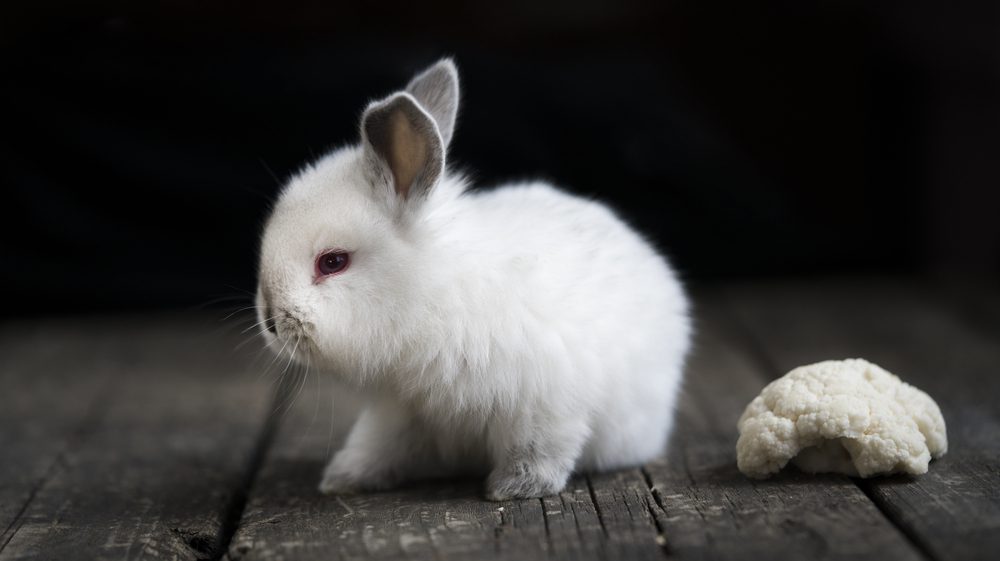
Yes — rabbits can eat cauliflower. It is not toxic, and small quantities are tolerated well by most rabbits. However, cauliflower is one of the vegetables that warrants specific caution for rabbit owners, because of a physiological characteristic that makes gas production in rabbits significantly more serious than it is in most other animals.
This guide covers what makes cauliflower different from other vegetables, which parts of the plant are safest, how much is appropriate, and why the gas concern matters more for rabbits than owners often realize.
Why Cauliflower Requires Specific Caution for Rabbits
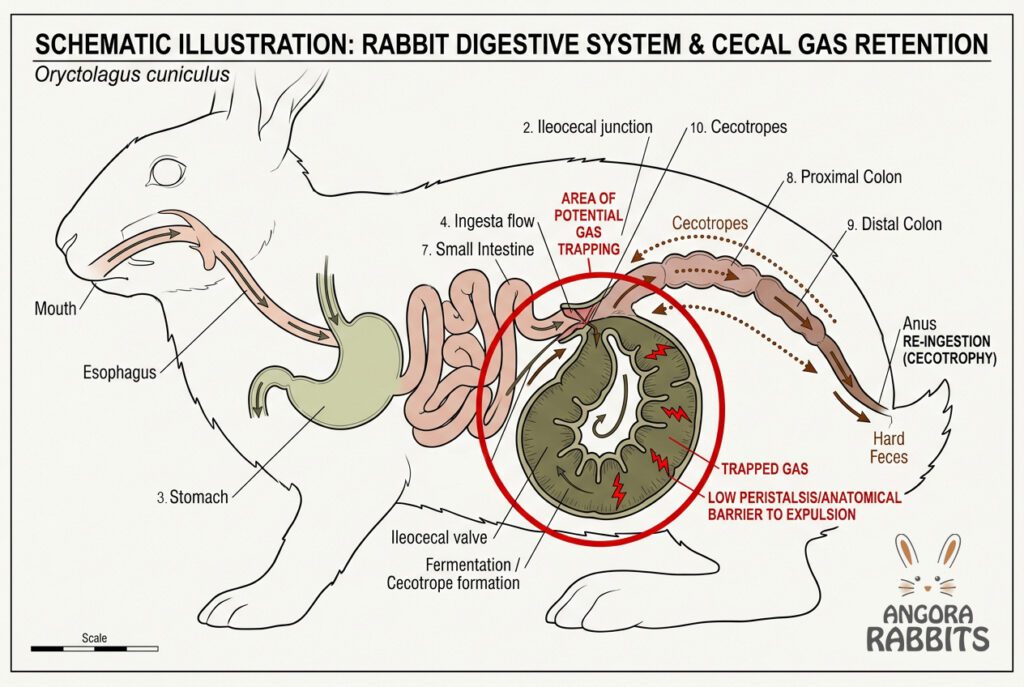
Cauliflower is a cruciferous vegetable — a member of the same plant family as broccoli, cabbage, Brussels sprouts, and kale. Cruciferous vegetables contain glucosinolates and raffinose, a complex sugar that the rabbit’s own digestive enzymes cannot break down. When raffinose reaches the rabbit’s cecum — the fermentation chamber where much of digestion occurs — bacteria ferment it, producing gas as a byproduct.
For most mammals, gas is managed through belching and flatulence. Rabbits cannot belch. Their digestive tract is a one-way system with limited ability to move gas in either direction. Gas that accumulates in the cecum or intestines causes pressure and pain. In significant quantities, gas accumulation contributes to GI stasis — a dangerous slowing or stopping of gut motility that is the most common urgent health emergency in domestic rabbits.
This does not mean cauliflower must be completely avoided. It means the quantity matters more for cauliflower than for lower-gas vegetables, and that any rabbit showing signs of digestive discomfort after eating cauliflower should not be given more.
Which Parts of the Cauliflower Plant Are Safest?
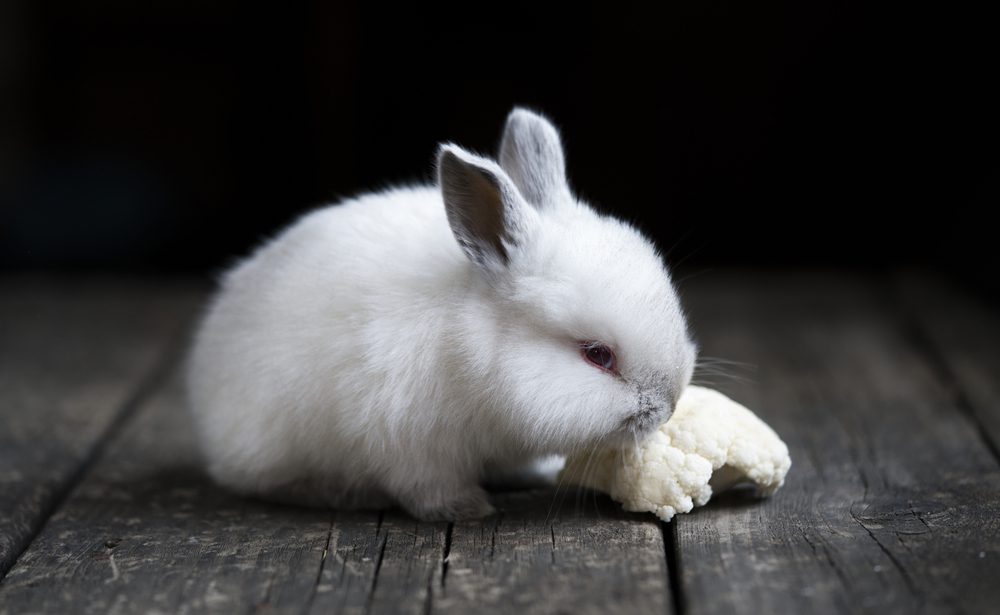
Cauliflower florets (the white head): Safe in small quantities, but the primary source of the gas concern due to higher raffinose concentration. Offer sparingly.
Cauliflower leaves: The green outer leaves are the most appropriate part of the cauliflower plant for rabbits. They have a higher fiber content than the white florets, lower raffinose concentration, and a nutritional profile more similar to leafy greens. If offering cauliflower, the leaves are the preferred choice.
Cauliflower stalks: Safe in small quantities. Lower gas potential than the florets, higher fiber than the white head. Can be offered in modest amounts.
The practical recommendation: Cauliflower leaves can be incorporated into the regular leafy green rotation more readily than the white florets. The florets are the part most associated with gas and should be treated as an occasional small addition rather than a regular vegetable.
Nutritional Profile: What Cauliflower Offers
Cauliflower does provide genuine nutritional value. It contains vitamin C, vitamin K, folate, and some fiber. Vitamin K supports healthy blood clotting and bone maintenance. Vitamin C, while not required in the diet of rabbits to the extent it is in humans (rabbits synthesize their own), provides antioxidant activity.
The fiber content of cauliflower is modest compared to hay — the primary dietary fiber source for all rabbits — and should not be counted as a meaningful fiber contribution. Cauliflower is a supplement to the diet, not a foundation of it.
For Angora rabbits specifically, no vegetable provides the protein content required to support continuous wool growth. That requirement is met by the pellet ration — minimum 17% protein — and cannot be replaced by vegetable supplementation regardless of the vegetable’s nutritional profile.
How Much Cauliflower Can a Rabbit Have?
For the florets: a piece approximately the size of two thumbnails, offered no more than once or twice per week, and only if the rabbit shows no signs of digestive discomfort afterward. This is a cautious treat quantity, not a dietary vegetable quantity.
For the leaves: a small handful can be incorporated into the daily leafy green mix without the same level of caution as the florets, provided the rabbit’s digestion is normal, and no gas-related discomfort is observed.
Baby rabbits under three months should not receive cauliflower in any form. Their developing digestive systems are particularly vulnerable to gas accumulation.
Signs of Gas Discomfort in Rabbits
Because rabbits cannot expel gas normally, gas buildup presents differently than in most pets. Signs that a rabbit may be experiencing gas pain or early GI stasis include:
- Hunched posture — the rabbit sits tightly hunched rather than in its normal relaxed position. This indicates abdominal discomfort.
- Tooth grinding — audible or visible teeth grinding (bruxism) is a pain indicator in rabbits.
- Reduced or absent droppings — any significant reduction in dropping quantity or complete absence of droppings indicates gut motility has slowed.
- Pressing the abdomen against the floor — a rabbit lying flat with its belly pressed down is often in pain.
- Refusal to eat — a rabbit that stops eating after receiving cauliflower may be experiencing digestive discomfort.
- Visibly distended abdomen — in more advanced cases, the belly may appear swollen or feel hard when gently palpated.
Any of these signs following cauliflower feeding warrants removing cauliflower from the diet immediately and monitoring closely. If a rabbit has not produced droppings for 12 hours or shows signs of acute distress, contact a rabbit-experienced veterinarian immediately. GI stasis is a medical emergency that cannot be safely managed at home beyond its earliest stages.
Cauliflower vs. Other Vegetables: A Comparison
Not all vegetables carry the same gas risk. Comparing cauliflower to other commonly offered vegetables helps put the caution in context:
- Low gas risk vegetables — romaine lettuce, cilantro, parsley, dandelion greens, arugula, endive, bok choy. These form the core of the daily leafy green rotation and can be offered in normal quantities.
- Moderate gas risk vegetables — broccoli (particularly the florets), Brussels sprouts, cabbage. The same cruciferous family as cauliflower. Treat with similar caution — small quantities, not daily, monitor after introduction.
- Higher gas risk — cauliflower florets, large quantities of any cruciferous vegetable.
- Safe root vegetables (treat quantities) — carrot, small amounts of parsnip.
- Avoid entirely — onion family (toxic), avocado (toxic), potato, iceberg lettuce in large quantities, anything with seeds or pits that contain cyanogenic compounds.
The daily leafy green rotation should be built around the low-gas-risk vegetables. Cauliflower, broccoli, and cabbage are supplementary additions rather than daily staples.
Cauliflower and Angora Rabbits: The GI Stasis Connection
For Angora rabbit owners, the GI stasis risk associated with cauliflower carries particular weight. Angora rabbits already face elevated GI stasis risk from wool block — the accumulation of ingested fiber in the digestive tract. Any additional factor that reduces gut motility or causes gas accumulation compounds this existing vulnerability.
An Angora rabbit experiencing wool block and gas simultaneously is in a significantly more dangerous situation than one experiencing either condition alone. For this reason, Angora rabbit owners should be more conservative than average with cruciferous vegetables, including cauliflower — smaller quantities, less frequent offering, and immediate discontinuation at the first sign of digestive discomfort.
The core Angora rabbit diet — unlimited hay, measured high-protein pellets, daily low-gas leafy greens — provides all necessary nutrition without meaningful GI stasis risk. Cauliflower is an optional supplement that requires ongoing monitoring, not a dietary necessity.
For the full Angora rabbit nutrition framework, see our Angora Rabbit Care Guide.
How to Introduce Cauliflower Safely
Step 1: Choose the leaves over the florets for first introduction — they are better tolerated by most rabbits.
Step 2: Wash the cauliflower thoroughly to remove any pesticide residue. Choose organic varieties where available.
Step 3: Offer a very small quantity — one small leaf or a thumbnail-sized piece of floret — as the only new food that day.
Step 4: Monitor droppings and behavior for 24 hours. Healthy droppings are round, abundant, and uniform. Any reduction in droppings, any behavioral change suggesting discomfort, or any change in eating habits is a reason to pause.
Step 5: If no adverse response is observed after 24 hours, cauliflower leaves can be incorporated into the leafy green mix on an occasional basis. Continue monitoring after each offering.
Do not introduce cauliflower at the same time as any other new food. If a digestive response occurs, you need to be able to identify the cause.
FAQs
Can rabbits eat cauliflower?
Yes — cauliflower is not toxic to rabbits. The primary concern is its potential to produce gas, which rabbits cannot expel normally. Small quantities of the leaves are safest; the white florets should be offered very sparingly and monitored carefully.
Can rabbits eat cauliflower leaves?
Yes — cauliflower leaves are the safest part of the cauliflower plant for rabbits. They have higher fiber and lower raffinose content than the white florets. They can be incorporated into the daily leafy green rotation more readily than the florets.
Why does cauliflower cause problems for rabbits?
Cauliflower is a cruciferous vegetable containing raffinose, a complex sugar that gut bacteria ferment to produce gas. Unlike most animals, rabbits cannot belch. Gas that accumulates in the digestive tract causes pain and can contribute to GI stasis — a dangerous slowing of gut motility that requires veterinary treatment if it progresses.
How much cauliflower can a rabbit eat?
Cauliflower florets: a thumbnail-sized piece, once or twice a week at most, with careful monitoring afterward. Cauliflower leaves: a small amount incorporated into the daily leafy green mix, with ongoing monitoring. Baby rabbits under three months should not receive cauliflower in any form.
What are better vegetable choices than cauliflower for daily feeding?
Romaine lettuce, cilantro, parsley, dandelion greens, arugula, endive, and bok choy are all low-gas leafy greens that form a sound daily vegetable rotation without the same GI risk as cruciferous vegetables.
What should I do if my rabbit seems uncomfortable after eating cauliflower?
Remove cauliflower from the diet immediately. Ensure unlimited hay is available to support gut motility. Monitor droppings closely — any absence of droppings for 12 hours or signs of acute distress (hunched posture, tooth grinding, distended abdomen) require immediate contact with a rabbit-experienced veterinarian.
Conclusion
Cauliflower is safe for rabbits in small quantities and is not toxic, but it occupies a different category from the leafy greens that form the core of a rabbit’s daily vegetable intake. The gas production associated with cruciferous vegetables is a genuine and specific concern for an animal that cannot expel gas normally, and for Angora rabbits, where GI stasis risk is already elevated by wool block, this caution is doubly warranted.
The cauliflower leaves are the preferable option over the florets, can be used as part of the leafy green rotation with appropriate monitoring, and represent a more suitable choice than the white head for regular offering. Both parts should be introduced carefully, with 24-hour monitoring, and discontinued at any sign of digestive discomfort.
For the full Angora rabbit diet framework and the complete list of safe and unsafe foods, see our Angora Rabbit Care Guide. For related diet articles, see our guides on Can Rabbits Eat Carrots? and Can Rabbits Eat Grapes?.
The information in this article is for general educational purposes and does not constitute veterinary advice. For any dietary concern relating to your rabbit, consult a licensed veterinarian. See our disclaimer for full details.