
Satin Angora Rabbit: Complete Breed Profile, Care Guide, and What US Owners Need to Know
How we researched this guide: In October 2026 we checked every fact about the Satin Angora against the breed standard summaries published by the National Angora Rabbit Breeders Club (the ARBA specialty club), ARBA’s list of recognized varieties, and veterinary and reference sources. Each fact links to its source, and all sources are listed at the end. See our editorial policy. Last reviewed: October 2026.
Satin Angora Rabbit: The Short Answer
Quick answer: The Satin Angora is an ARBA-recognized Angora breed known for wool with a glossy sheen. It weighs 6.5 to 10 lb and has a clean face like the French Angora. It was developed in Canada in the late 1970s. Its wool mats more readily than other Angoras, so daily combing is recommended.
At a Glance
| Satin Angora | |
|---|---|
| ARBA recognized | Yes, in white and colored varieties (ARBA variety list) |
| Senior weight | 6.5 to 10 lb for bucks and does (NARBC) |
| Ideal weight | 8 lb (NARBC) |
| Face and ears | No furnishings on the face, ears or feet. Ears may be plain or slightly tufted at the tips (NARBC, Wikipedia) |
| Wool | Fine, soft and silky, with a sheen from nose to tail (NARBC) |
| Origin | Developed in Ontario, Canada, in the late 1970s (Wikipedia) |
History
According to Wikipedia, the Satin Angora was developed in the late 1970s by Mrs. Meyer of Holland Landing, Ontario, Canada, who crossed French Angoras with rabbits of the Satin breed.
Appearance
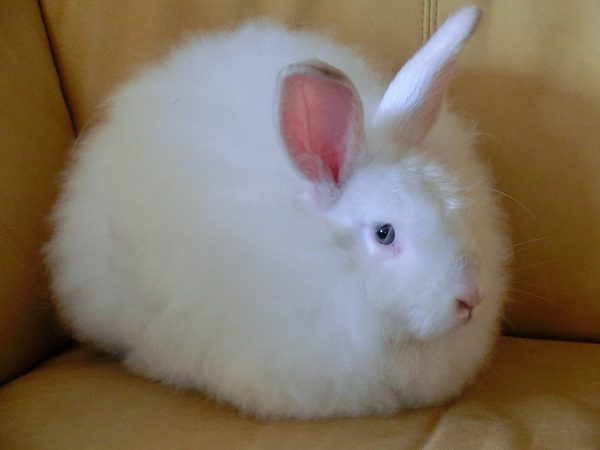
The breed standard calls for a medium-length body with good width and depth, and an oval head with a broad forehead that narrows a little at the muzzle. Ears may be plain or slightly tufted, with tufts only at the tips. Like the French Angora, the Satin has no wool furnishings on its face, ears or feet.
The Satin Wool
Satin Angora wool is fine, soft and silky, and the standard says its sheen should be visible over the whole body, from nose to tail. Wikipedia explains that the shine comes from a semi-transparent outer layer on each hair that reflects light.
Spinners notice two things. The wool is said to be stronger for spinning, but its slipperiness can make it harder to spin. Satins also tend to produce less wool than other Angora breeds.
Grooming a Satin Angora
The fine, slippery wool mats more readily than other Angora coats, so Wikipedia notes that daily combing is recommended. Short, gentle daily sessions are easier on you and the rabbit than long sessions once a week.
- Comb in sections, from the tips of the wool toward the skin.
- Check the belly, armpits and bottom, where mats form first.
- Never pull out mats. Ask a vet or experienced groomer for help.
- See our Angora grooming guide and brush guide.
Summer warning: long-haired rabbits are at higher risk of flystrike. The PDSA advises checking every rabbit daily in warm weather to make sure it is clean, dry and free of fly eggs. If you see maggots or eggs, call a vet straight away.
Colors
ARBA recognizes the Satin Angora in white and colored varieties, each shown in its own classes.
Is the Satin Angora Right for You?
The Satin Angora suits owners who love its shine and are happy to comb most days. Spinners who want a lustrous fiber may enjoy it, as long as they are ready for a slippery spin. Compare all five breeds in our types of Angora rabbits guide, and see what Angoras cost.
FAQs
How big does a Satin Angora get?
Senior Satin Angoras weigh 6.5 to 10 lb, with an ideal of 8 lb, according to the National Angora Rabbit Breeders Club.
Why is Satin Angora wool shiny?
Each hair has a semi-transparent outer layer that reflects light, giving the wool its satin sheen.
Who developed the Satin Angora?
It was developed in the late 1970s by Mrs. Meyer of Holland Landing, Ontario, Canada, by crossing French Angoras with Satin rabbits.
How often should I groom a Satin Angora?
Daily combing is recommended, because the fine, slippery wool mats more readily than other Angora coats.
Does the Satin Angora have wool on its face?
No. Like the French Angora, it has no wool furnishings on its face, ears or feet.
Sources
- National Angora Rabbit Breeders Club. Satin Angora Rabbits, checked October 2026.
- Kansas State University 4-H. ARBA Recognized Breeds and Varieties (updated December 2024).
- PDSA. Flystrike in rabbits, checked October 2026.
- Wikipedia. Angora rabbit, checked October 2026.
This guide is for general information and is not a substitute for advice from a vet. Read our disclaimer.