Angora Rabbit Grooming: The Complete Technique Guide
How we researched this guide: In October 2026 we checked the facts in this article against National Angora Rabbit Breeders Club, RSPCA, RSPCA South Australia, IAGARB and Rabbit.org, and corrected or removed anything we could not verify. Our sources are listed at the end. See our editorial policy. Last reviewed: October 2026.
Quick answer: Most Angoras need a thorough groom two to three times a week, plus quick daily checks of the belly, bottom and feet. Use a wide-tooth comb and a blower on a cool setting, never pull out mats, and harvest the wool every few months by plucking or shearing.
This article contains affiliate links. As an Amazon Associate, we earn from qualifying purchases, at no additional cost to you. We only recommend products we have researched. See our full Affiliate Disclosure for details.
Grooming is not optional for Angora rabbit owners. It is the single most important thing you do for your rabbit’s health — more consequential, day to day, than diet, housing, or any other aspect of care. A neglected Angora coat creates conditions for wool block, mat-related skin damage, and flystrike. A well-maintained coat greatly reduces the risk of all three.
This guide covers every aspect of Angora rabbit grooming: the tools required, the complete step-by-step technique, how to handle mats at every stage, how to use a blower, breed-specific differences, and how to train a rabbit to accept grooming from an early age. It also covers scent gland cleaning and nail trimming — tasks that belong in every grooming session.
This article works alongside our Angora Rabbit Care Guide, which covers the broader picture of diet, housing, and health management.
Why Grooming Matters More for Angoras Than Any Other Rabbit
All domestic rabbits groom themselves continuously by licking their coat. Unlike cats, rabbits cannot vomit — everything ingested must pass through the digestive system completely, or it accumulates and causes a blockage. In short-haired breeds, the volume of fiber ingested during self-grooming is manageable. In Angora rabbits, the volume is substantially higher, and the individual fibers are far longer — long enough to interlock into a mass that cannot pass through the digestive tract.
The result is wool block: an accumulation of fiber in the stomach and intestines that creates a full feeling, suppresses appetite, and eventually halts gut motility entirely. Untreated, it can be fatal. A rabbit that stops eating or pooping for 12 hours needs a vet. It is also largely preventable through consistent grooming that removes loose fiber before the rabbit can ingest it.
Beyond wool block, matted fiber pulls painfully on the rabbit’s skin, restricts movement, traps moisture, and in warm months creates the warm, moist conditions that attract egg-laying flies — the entry point for flystrike.
Regular grooming greatly reduces all three risks. It is not a cosmetic task.
Essential Grooming Tools
Every Angora rabbit owner needs the following tools. All are available through pet supply retailers or online.
The Blower — Most Important Tool in the Kit
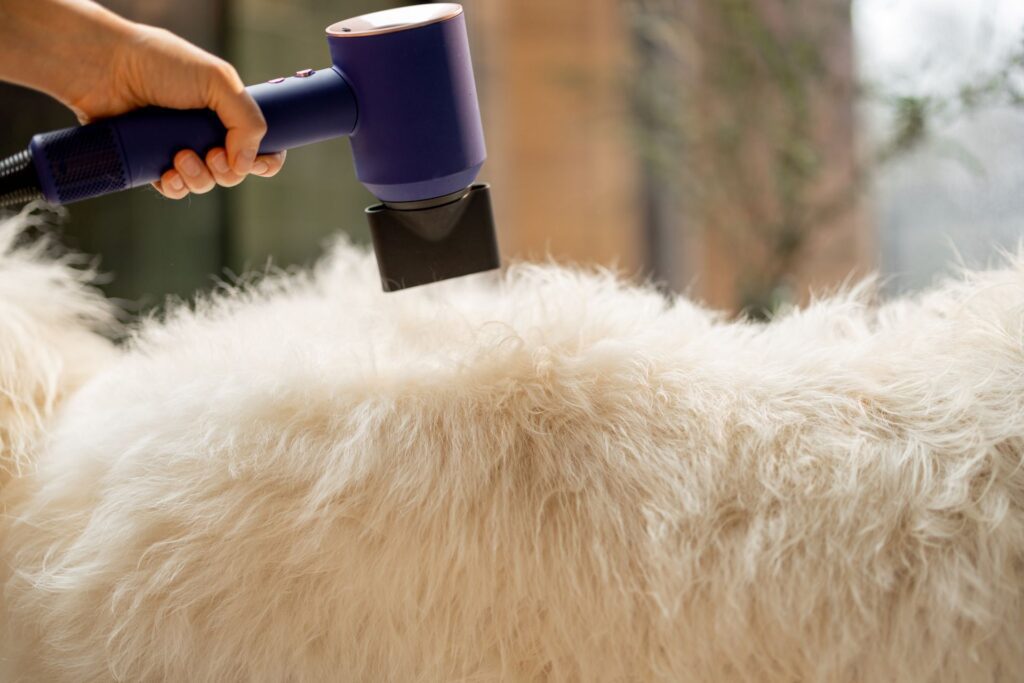
A pet grooming blower — also called a forced-air dryer — is the single most important piece of equipment for serious Angora rabbit grooming. Many experienced breeders consider it more valuable than any brush or comb.
A blower directs a concentrated stream of cool air through the coat, opening it from skin to tip. This accomplishes several things no brush can match: it removes loose fiber, skin dander, and debris from deep in the coat; it reveals early-stage felting and mat formation at the skin level before they become visible on the surface; and it separates the fiber thoroughly so that subsequent combing takes a fraction of the time it would otherwise require.
The critical rule: never use hot air on an Angora rabbit. Cool or room-temperature air only. Heated air dries the skin, damages the fiber, and raises body temperature — dangerous in a breed already prone to heat stress. Always use the cool setting. Avoid directing the blower into the rabbit’s eyes or ears.
For owners with one or two rabbits who do not show or spin fiber, a blower is optional — regular combing alone is effective. For anyone managing multiple rabbits, producing show coats, or harvesting fiber for spinning, a blower dramatically reduces grooming time and produces a higher quality coat. View on Amazon
Wide-Tooth Steel Comb
The primary working tool for Angora coat maintenance. A steel comb with rounded-tip teeth reaches from the surface of the coat to the skin, working through the fiber without scratching. Use the wide-tooth side for the main body coat and any area with potential mat formation. View on Amazon
Small Pet Select Hair Buster Comb
Specifically designed for rabbits and small pets, the Hair Buster uses rounded tine tips and a rubberized sleeve that traps loose fiber during combing. It is highly effective during molting periods for capturing loosening fiber, and gentle enough for regular maintenance sessions. Its blunted tips protect the delicate skin beneath an Angora coat. View on Amazon
Hertzko Self-Cleaning Slicker Brush
A self-cleaning slicker brush is useful for finishing the outer coat after comb work, removing surface debris between deeper grooming sessions, and working through areas of light tangling. The retractable bristles release captured hair with a single button press — a practical feature during longer sessions. View on Amazon
Kaytee Pro Nail Trimmer
Small, precise nail clippers designed specifically for rabbits and small animals. Angora rabbit nails require trimming every four to six weeks — overgrown nails catch on cage wire, alter foot placement, and increase sore hock risk. View on Amazon
Blunt-Nosed Scissors
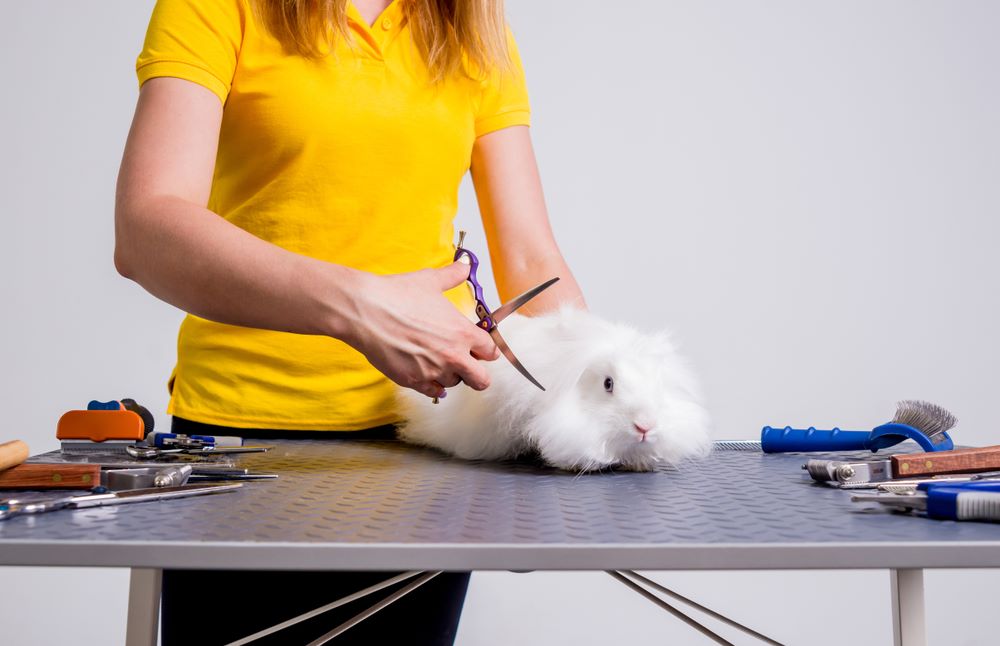
For cutting out mats that cannot be safely combed free. Blunt tips reduce the risk of skin injury if the rabbit moves during cutting. Keep a pair in the grooming kit at all times. View on Amazon
Mat Splitter
A mat splitter has recessed blades that slice through mat cores without requiring scissors near the skin surface. It is the safest tool for breaking down dense mats before attempting to remove them. View on Amazon
Grooming Table or Non-Slip Mat
A grooming table at waist height reduces back strain during longer sessions and gives the rabbit a stable, defined surface associated with grooming. Many experienced breeders use a grooming table exclusively. Lap grooming is also effective and preferred by some owners — the choice depends on the rabbit’s personality and the owner’s preference. View on Amazon
Grooming Frequency by Breed
Grooming requirements vary significantly between Angora breeds:
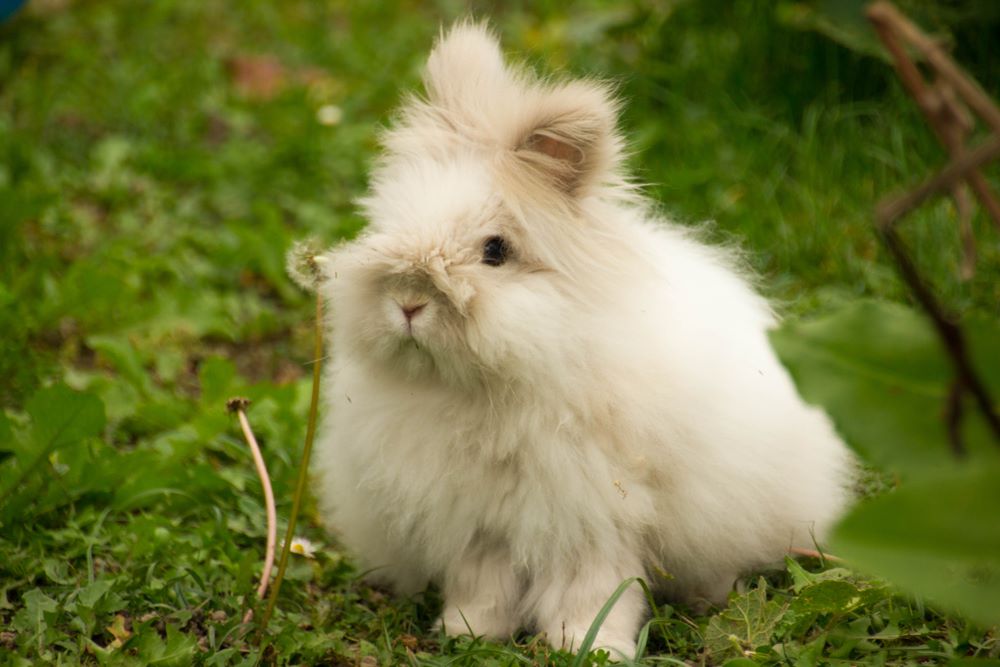
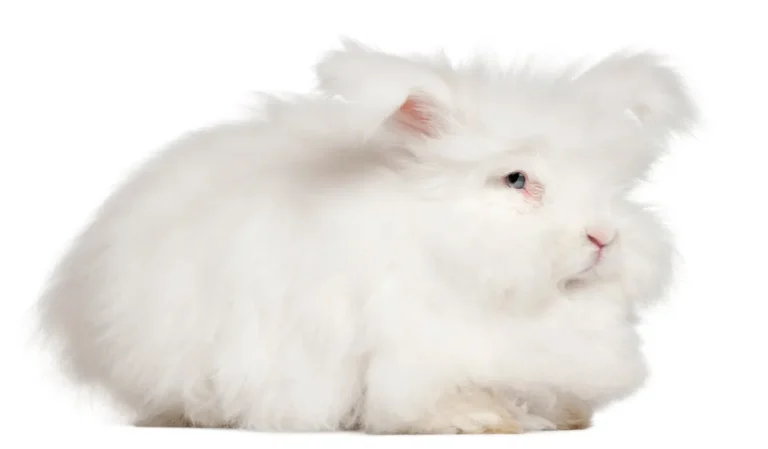
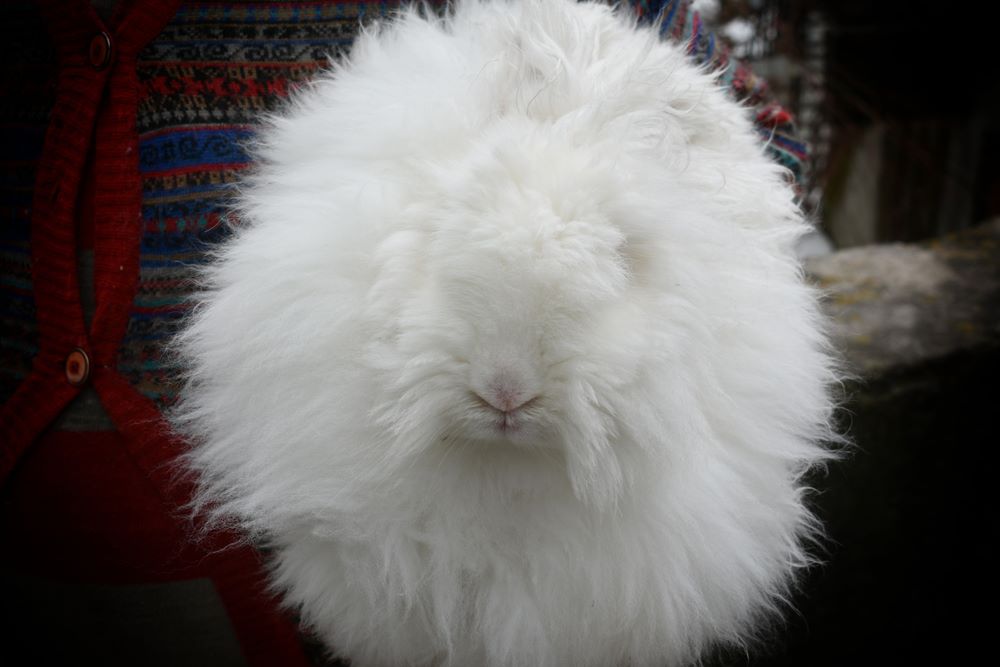
English Angora: Two to three times per week minimum. The full-body wool coverage — including face, ears, and feet — and the near-absence of guard hair make this the highest-maintenance coat of all Angora breeds. Daily attention is required during active molting. The facial wool must be checked and trimmed at every session to keep it clear of the eyes.
French Angora: Two to three times per week. The clean face reduces maintenance complexity compared to the English. The guard hair content makes the coat more mat-resistant, but regular combing of the belly, base of tail, and behind the ears remains essential.
Satin Angora: Daily combing is the standard recommendation from experienced Satin breeders. The satin gene produces a semi-transparent, smooth fiber shaft that is prone to slipping past guard hairs and creating mats at the skin level — particularly in young Satins developing their first adult coat. Some experienced Satin breeders clip the coat at six to eight weeks to encourage a more manageable growth pattern.
Giant Angora: Two to three times per week between mandatory 90-day clip cycles. The three-component coat — underwool, awn fluff, and awn hair — requires systematic working-through at each session. The coat does not molt naturally and must be clipped without exception.
German Angora: In well-bred lines meeting IAGARB standards, grooming between 90-day clips should be minimal — the coat should remain free-falling and mat-free for the full clip cycle. If matting appears before 90 days, coat quality or management conditions need review. The 90-day shearing schedule is mandatory regardless.
Step-by-Step Grooming Technique
Before You Begin
Set up your grooming area before bringing the rabbit out. Have all tools within reach. Choose a consistent location — a grooming table, a stable surface, or your lap — and use it every session. Consistency reduces stress for the rabbit and builds the association between the location and the grooming routine.
If using a blower, start it at a distance before bringing the rabbit close. Allow the rabbit to hear and acclimatize to the sound before directing the airflow at the coat.
Step 1 — Visual Inspection
Before touching the coat with any tool, run your hands gently over the entire rabbit. Feel for areas of resistance, dense patches, or unusual texture. Identify the location of any mats before starting. Check the vent area for soiling, the eyes for any discharge, and the ear interiors for debris or wax buildup.
Step 2 — Blow-Out (If Using a Blower)
With the blower set to cool, direct the airflow through the coat in sections. Begin on the back, working systematically toward the sides, belly, and legs. Watch for debris being expelled and for felted spots forming at skin level — these appear as small, tight tangles rising to the surface as the blower separates the fiber around them. Pick them off with your fingers as you go.
Do not blow the blower directly into the face or ears. Work around the head carefully. For English Angoras with full facial coverage, use the fingers to separate and inspect the facial wool manually.
Step 3 — Begin Combing: Underside First
A common approach among experienced Angora breeders, who often learn from groups such as the National Angora Rabbit Breeders Club, is to begin grooming on the underside of the rabbit’s belly first.
The belly, inner legs, vent area, and base of the tail are the highest-mat-formation areas on any Angora rabbit. These areas rub against the cage floor and the rabbit’s own body repeatedly throughout the day. By addressing them first, when the rabbit is fresh, and you have full attention and energy, you eliminate the most critical areas before fatigue sets in.
To access the belly: hold the rabbit gently with one hand, supporting the hindquarters, tilting it back slightly. Never hold a rabbit by the scruff or ears, and never keep it on its back for long. A rabbit that goes still on its back is usually frozen with fear, not relaxed. Keep belly work short, then let the rabbit settle in a comfortable position.
Work the comb through the belly wool in short strokes from the tip of the fiber toward the skin. Never drag a comb from the skin outward through a long Angora coat — this direction creates painful pulling on the follicles and risks tearing the skin.
Step 4 — Back, Sides, and Legs
Once the belly is complete, move to the back. Part the coat with your free hand and work through it in sections, using the comb from tip to skin. Pay specific attention to the area at the base of the tail, behind the front legs, and behind the ears — all high-friction locations where fiber rubs against itself and mats form most readily.
Work methodically through the sides and then the legs. Leg wool on English and Giant Angoras requires careful attention — the fiber is shorter and more prone to felting at the skin level than the main body coat.
Step 5 — The Face (English Angora and Giants)
The facial wool of English Angoras requires more care than any other area. Use fingers — not tools — to part and inspect the wool around the eyes first. Any fiber touching the eyeball must be removed immediately using blunt scissors. Chronic eye irritation from wool contact leads to infection.
For the remainder of the facial wool, use a fine comb or the fine-tooth side of a dual-pitch comb to work carefully through the cheek and chin wool. Keep sessions here brief — the face is the most sensitive area and the most likely to cause resistance if handled roughly.
Step 6 — Finish with the Slicker Brush
Once the comb has worked through the full coat, use the slicker brush lightly over the surface to smooth the outer fiber, lift any remaining debris, and check that no areas were missed. The slicker brush is a finishing tool, not a primary mat-removal instrument — using it aggressively on an Angora coat can damage the fiber.
Handling Mats
Mats fall into two categories that require different responses.
Webbed mats — early-stage, still relatively open and flexible — can be felt as soft resistance when the comb encounters them. Work with the fingers first: tease the mat gently from the edges inward, separating the fiber without pulling. Once loosened, the fine-tooth comb can work through what remains. This is the correct response to any mat caught in the early stage.
Solid mats — dense, compressed, fully felted — cannot be combed or fingered apart without causing pain. The correct response is to cut them out. Before cutting, always feel firmly through the mat for the skin surface underneath. Angora rabbit skin is thin and tears easily — knowing exactly where the skin is before scissors go near it is non-negotiable. Once located, hold the mat base firmly, slide the scissors between the mat and the skin, and cut from below upward. Never cut toward the rabbit’s body.
A mat splitter is an alternative to scissors for moderately dense mats — it slices the mat into sections without requiring the blade to come close to the skin. Use it before scissors where possible.
After cutting out a mat, inspect the skin underneath for redness, irritation, or any sign of fly larvae. Any skin concern warrants veterinary attention.
Using a Blower: Detailed Guidance
If purchasing a blower, look for an animal-specific forced-air dryer with variable speed control and a true cool-air setting. Dog grooming blowers are widely available and work well for Angora rabbits. Avoid shop vacuums on the blow function — they work, but are large and loud, which creates unnecessary stress.
The technique: position the blower hose or nozzle two to four inches from the coat. Move it steadily and continuously — do not hold it stationary in one area, as even cool air concentrates uncomfortably when directed at a fixed point. Work in the same systematic order as manual combing: belly, back, sides, legs.
Watch the coat as you blow. The fiber should open fully, allowing visibility to the skin. Any area that does not open easily indicates fiber that has begun to felt at the skin level. Work those areas gently with the fingers or comb immediately — early-stage felts blown to the surface are far easier to remove than mats that have developed over several days.
After blowing, the coat will be fully separated and slightly elevated. This is the ideal state for combing — the blower has done most of the separation work, and the comb simply needs to work through the remaining structure from tip to skin.
Plucking vs. Clipping
Plucking is the harvesting method for molting breeds — English, French, and Satin Angoras. When the coat begins to loosen naturally, the loosening fiber can be gently pulled free with the fingers. The fiber that is ready to release comes away easily with gentle, steady pressure in the direction of growth. Fiber that has not loosened resists — do not force it. Plucking yields longer, uncut fiber of higher spinning quality than clipping, because the full length of the staple is preserved without second cuts.
Clipping is required for non-molting breeds — Giant and German Angoras — and is used as an option for any breed when the coat has overgrown beyond 90 to 120 days, when mat accumulation requires a fresh start, or when an owner prefers it for practical reasons.
For clipping, always blow out the coat thoroughly before starting. Use clippers with blades sharp enough to cut through fine Angora fiber — standard pet clippers designed for coarser dog and cat coats often perform poorly on Angora wool. Work in smooth single passes to minimize second cuts. Second cuts — short pieces created by re-cutting the same area — reduce the quality of harvested fiber and shed back into the coat, increasing wool block risk.
Clip carefully in the armpit and groin areas where loose skin folds create a risk of nicking. Take these areas slowly.
After clipping, give the rabbit a thorough brush-out to remove all cut fiber from the coat and skin surface before returning it to the enclosure. Ingested second cuts increase wool block risk.
For a dedicated article on the clipping question, see our Can Angora Rabbits Be Shaved? guide.
Scent Gland Cleaning
Angora rabbits have two scent glands located in small pockets on either side of the vent area. These pockets collect a dark, waxy secretion that, if left uncleaned, builds up into a firm deposit with a strong odor. In Angora rabbits, the dense wool in the vent area can trap this secretion and create conditions for skin irritation and bacterial growth.
Inspect the scent gland pockets at every grooming session. If a buildup is present — visible as a dark, compressed, sunflower-seed-shaped deposit — remove it with a cotton swab or folded paper towel. The deposit typically lifts out cleanly in one piece. No cleaning solution is required for routine maintenance.
This step is often overlooked by new Angora owners. Include it as a standard part of every session.
Nail Trimming
Nail trimming belongs in the grooming routine every four to six weeks. Overgrown nails catch on cage wire, alter the rabbit’s gait, and increase sore hock pressure over time.
Use small animal nail clippers — the Kaytee Pro Nail Trimmer is a reliable, purpose-built option. Hold the rabbit securely with one hand and extend one foot at a time. In light-colored nails, the pink quick (the vein inside the nail) is visible — clip the clear tip only, well short of the quick. In dark-colored nails, clip only the very tip conservatively, as the quick is not visible.
If the quick is accidentally nicked, apply styptic powder or corn starch to the nail tip to stop bleeding. The rabbit will show discomfort briefly but the wound is minor. Trim the remaining nails and reward calmly.
View Kaytee Pro Nail Trimmer on Amazon
Training a Rabbit to Accept Grooming
Grooming training should begin at eight weeks of age — even before the kit’s coat requires significant maintenance. The goal at this age is not coat care but trust-building and desensitization to handling.
Keep early sessions under five minutes. Place the kit on the grooming surface, touch it calmly all over, introduce the sound of tools without using them, and end with a small treat. Repeat every two to three days. By the time the coat requires real work — at three to four months — the rabbit has already accepted the grooming routine as a normal, non-threatening part of its life.
For adult rabbits with no prior grooming experience, proceed in the same way but expect a longer desensitization period. Begin with sessions that involve only handling — no tools — until the rabbit settles. Add tools one at a time over several weeks. Never restrain a struggling rabbit hard enough to cause panic or injury. If a session is going badly, stop, calm the rabbit, and try again later. A brief, successful session is more valuable than a long, confrontational one.
Consistency matters more than session length. A rabbit groomed on a fixed schedule, in the same location, by the same person, in the same order, becomes progressively calmer over time. Irregular, unpredictable sessions produce a rabbit that remains chronically anxious about grooming.
Breed-Specific Grooming Notes
English Angora: The face is the defining challenge. Facial wool that reaches the eyes must be trimmed at every session without exception. The complete body wool — including feet — requires more grooming time per session than any other breed. This breed is best suited to owners who have handled Angora rabbits before or who commit fully to learning the grooming routine from an experienced breeder before bringing one home.
French Angora: The most beginner-accessible Angora coat. The clean face eliminates facial wool management. The guard hair content makes mats less likely to form, and when they do form, they are easier to work through than the near-pure underwool of the English Angora. Weekly thorough sessions with brief maintenance checks between them are sufficient for most French Angoras outside of molt periods.
Satin Angora: Requires daily combing due to the fiber’s tendency to slip and mat, particularly in young rabbits developing their first full adult coat. The luster that makes Satin fiber visually exceptional is produced by the same smooth shaft structure that creates matting risk. Some experienced Satin breeders clip the juvenile coat at six to eight weeks to establish a more manageable growth pattern from the start.
Giant Angora: The three-component coat structure — underwool, awn fluff, and awn hair — requires working through systematically at each session. The mandatory 90-day clip schedule means there is no option to allow the coat to exceed its practical maximum length. Owners who miss a clip cycle face a significantly more challenging grooming situation as the coat begins to break down and mat at the tips.
German Angora: Well-bred German Angoras require minimal grooming between shearing cycles — the breed standard specifically selects for this quality. A coat that requires frequent intervention between 90-day clips is a signal to evaluate breeding stock quality, not to increase grooming labor as a substitute.
FAQs
How long does a grooming session take?
For a French Angora in good coat condition, a thorough session takes 20 to 40 minutes. English Angoras in full show coat can take 45 to 90 minutes. During active molting, sessions take longer regardless of breed. Regular grooming reduces session time significantly — a coat that is maintained consistently requires far less labor per session than one that is done infrequently.
Can I bathe my Angora rabbit?
No. Angora rabbits should not be bathed. Water soaks the dense wool completely, causing it to felt on contact with any friction. Drying an Angora coat completely without felting is extremely difficult, even with professional equipment. Wet wool against the skin also creates a risk of chilling and hypothermia. If a localized area of the coat is soiled, spot-clean with a slightly damp cloth and dry immediately with the blower on a cool setting. For any significant contamination, clip the affected area and allow the new coat to grow in cleanly.
What is the right order to groom an Angora rabbit?
Belly first, then back, sides, legs, and finally the face (English Angoras). Beginning with the underside ensures the highest-mat-formation areas are addressed when attention is freshest.
How do I know if a mat should be combed or cut?
If the mat can be pulled apart with your fingers — if it separates and has some give — it is a webbed mat that can be worked through with fingers and comb. If it feels like a solid, compressed mass that does not give at all when pressed, it must be cut out. Never force a comb through a solid mat.
My rabbit fights every grooming session. What should I do?
Do not power through a struggling rabbit. Stop the session, allow the rabbit to settle in its enclosure, and begin again with shorter, lower-intensity sessions focused on handling rather than grooming. Use high-value treats — a small piece of apple or dried papaya — only during and immediately after grooming. Consult a rabbit-experienced veterinarian to rule out any underlying pain or skin condition that may be causing the resistance.
When should I start grooming a young Angora rabbit?
At eight weeks old — before the coat needs it. The purpose at this age is desensitization and trust-building, not coat maintenance. Short, calm, treat-rewarded sessions from eight weeks produce a rabbit that accepts grooming without resistance by the time the coat actually requires it.
Does grooming frequency affect wool quality for spinning?
Yes. A well-groomed, regularly blown coat produces longer, cleaner, more consistently graded fiber than a neglected coat that is periodically clipped. Vegetable matter — hay, shavings, debris — accumulates in unblown coats and degrades fiber quality. Second cuts from re-clipping already-cut areas reduce staple length. Owners who produce fiber for spinning find that investment in grooming discipline pays dividends in fiber yield and quality.
Conclusion
Angora rabbit grooming is a learned skill. The first sessions are the most difficult — both for the owner learning the technique and for the rabbit learning to accept it. Within a few months of consistent practice, most Angora rabbits settle into grooming as a routine part of their day, and most owners develop an efficient, confident technique that takes a fraction of the time early sessions required.
The foundation is simple: work systematically, start from the underside, move from fiber tip toward skin, handle mats at the earliest possible stage, and maintain a consistent schedule. Every element of the technique exists to protect the rabbit from discomfort and to make the process as efficient as possible for the owner.
For the full picture of Angora rabbit care beyond grooming, see our Angora Rabbit Care Guide. For guidance on the best brushes and tools for Angora coats in more detail, see our Best Brush for Angora Rabbits guide.
Sources
- National Angora Rabbit Breeders Club. A Beginners Guide to Angoras, checked October 2026.
- RSPCA. Handling Rabbits – How To Pick Up a Rabbit, checked October 2026.
- RSPCA South Australia. Grooming tips for woolly and long-haired rabbits, checked October 2026.
- IAGARB. Grooming the German, checked October 2026.
- Rabbit.org. Gi Stasis – The Silent Killer, checked October 2026.
- PDSA. Flystrike in rabbits, checked October 2026.
This guide is for general information and is not a substitute for advice from a vet. Read our disclaimer.