Can Angora Rabbits Be Shaved? The Complete Answer for Every Situation
Yes — and for some Angora breeds, shaving is not a choice but a care requirement.
This is the part most articles on this topic miss entirely. The answer to “can Angora rabbits be shaved?” is not a simple yes or no. It depends on which breed you have, why you are considering it, and what you plan to use in place of routine grooming. For Giant Angora and German Angora rabbits — breeds that do not naturally molt — the coat must be clipped every 90 days without exception. For English, French, and Satin Angoras, shaving is an appropriate response in specific situations, including severe mat accumulation, heat management in summer, wool block emergencies, and rescue situations where a neglected coat needs a fresh start.
What shaving is never appropriate for is as a substitute for regular grooming. Clipping the coat down does not eliminate the grooming requirement — it resets the clock. The new coat grows back within weeks, and the same grooming schedule applies from that point forward.
This article covers when shaving is appropriate, when it is not, how to do it safely, what tools are required, and how coat removal fits into the broader care picture for each Angora breed.
The Fundamental Difference: Molting vs. Non-Molting Breeds
Understanding whether your Angora breed naturally sheds its coat is the foundation for answering every question about shaving.
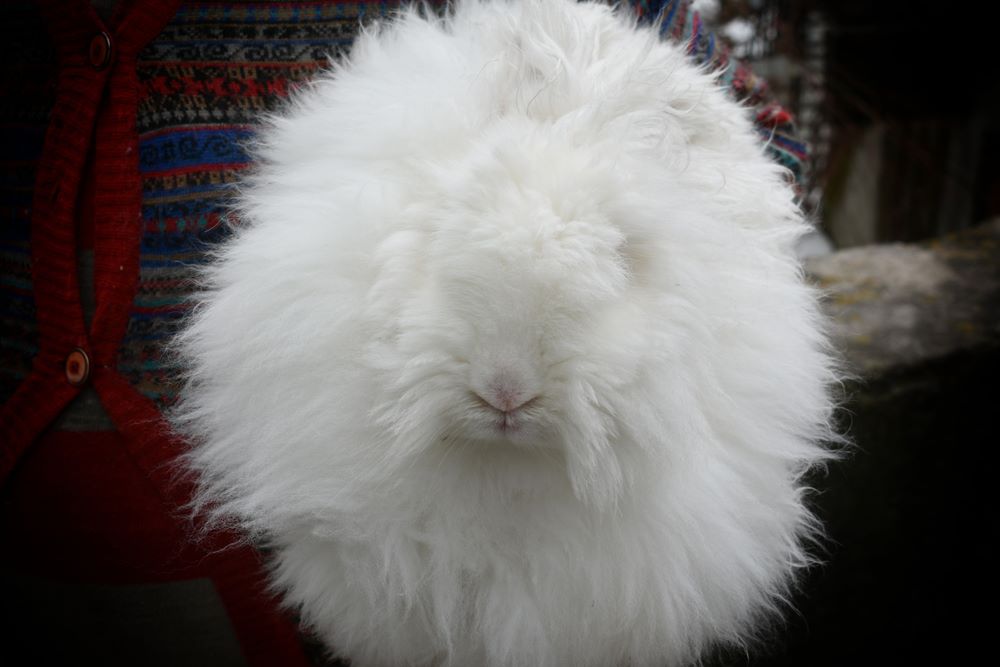
Molting breeds — English, French, and Satin Angoras — shed their coats naturally every three to four months. During this process, the older fiber loosens from the follicle while the new fiber grows beneath it. The loosening fiber can be harvested by hand-plucking, combing, or clipping. Because these breeds shed naturally, the coat can be removed without clippers if the timing is right. Clipping is one option — not the only one.
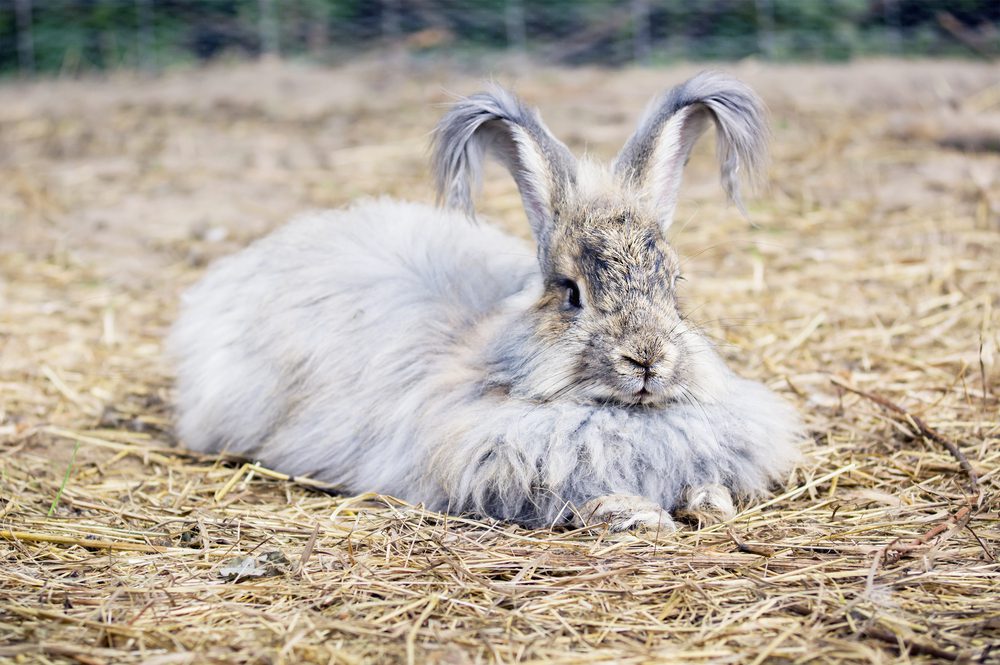
Non-molting breeds — Giant Angora and German Angora — do not shed their coats under any circumstances. The fiber grows continuously without a natural release cycle. The only way to remove it is by cutting. For these breeds, shearing every 90 days is a mandatory health requirement, not an elective procedure. A Giant Angora or German Angora that is never sheared will develop progressively worsening coat breakdown, extreme mat formation, and dangerously elevated wool block risk. According to the IAGARB Standards of Care, the 90-day shearing cycle for German Angoras is non-negotiable.
When Shaving Is Appropriate
For Non-Molting Breeds: Every 90 Days
Every Giant Angora and German Angora rabbit must be sheared on a 90-day schedule. This is not optional. The coat grows at approximately 1 inch (2.5 cm) per month. Beyond 90 days, the older fiber begins to break down at the tips, increases mat formation risk significantly, and elevates wool block risk as the rabbit grooms and ingests more deteriorating fiber.
Shearing a Giant or German Angora is standard husbandry — the equivalent of nail trimming in short-haired breeds. Experienced owners of these breeds carry out the procedure at home routinely.
For Any Breed: Severe Mat Accumulation
When a coat has developed extensive solid mats — whether from a lapse in grooming, a rescue situation, or an illness that prevented maintenance — shearing down to start fresh is often the kindest and most practical solution. Attempting to comb out a severely matted Angora coat causes significant pain, risks skin injury, and takes hours even for experienced groomers.
The National Angora Rabbit Breeders Club Beginner’s Guide states clearly that for solid mats that cannot be pulled apart with the fingers, cutting is the correct approach. When mats cover a significant portion of the body, shearing the full coat and allowing it to grow back cleanly — while establishing proper grooming from week one — is far preferable to a prolonged and painful recovery process.
For Molting Breeds: Summer Heat Management
Angora rabbits are highly susceptible to heat stress. The dense wool coat that provides exceptional cold-weather insulation becomes a heat trap in summer. Temperatures above 75 to 80 degrees Fahrenheit (24 to 27 degrees Celsius) are dangerous for Angora rabbits, and temperatures above 85°F (29°C) can be fatal.
A summer clip — shearing the coat shorter than normal before the hottest months — is a legitimate and widely practiced management strategy for molting breeds, particularly in warm US climates. Many experienced breeders clip their English, French, and Satin Angoras down to 1 to 2 inches in late spring, allowing the full coat to grow back in time for autumn. This significantly reduces heat stress risk through the summer months.
For Wool Block Emergencies
Wool block — the accumulation of ingested fiber in the digestive tract — is a medical emergency for Angora rabbits. When a rabbit shows early wool block signs, the immediate response includes shearing all remaining long fiber from the coat to eliminate the source of ongoing fiber ingestion. This applies to any breed, regardless of whether the rabbit normally molts. Removing the coat stops new fiber from being ingested, while other interventions address the blockage. See our Angora Rabbit Care Guide for the full wool block emergency protocol.
For Rescue or Neglect Cases
An Angora rabbit arriving in a severely neglected state — coat matted close to the skin, fiber contaminated throughout, grooming history unknown — almost always needs a full clip before any other care can proceed. This is not punitive; it is a reset that allows the owner to assess skin condition, establish a baseline, and begin a proper grooming routine with a manageable coat.
When Shaving Is Not Appropriate
As a substitute for regular grooming. Clipping the coat down does not remove the grooming requirement. Within two to three weeks, the new coat is long enough to begin matting without maintenance. Within eight weeks, the coat is at the length where serious mat formation becomes possible again. Owners who clip because grooming is difficult and then fail to maintain the growing coat are no better off — and may have forfeited the fiber quality benefit that plucking a molting coat provides.
As a casual intervention without a plan. Shaving an Angora rabbit without understanding how to care for the regrowth sets up failure. Before shearing, establish the grooming schedule that will maintain the new coat from week one of regrowth. Have the tools, know the technique, and commit to the frequency appropriate for your breed.
On a rabbit that is unwell or in shock. Shearing stresses the rabbit and removes the coat that provides temperature regulation. A rabbit that is already ill or stressed should not be sheared unless it is part of an emergency treatment protocol directed by a veterinarian.
On a rabbit in cold conditions without a housing plan. A freshly shorn Angora rabbit loses its primary insulation. In cold temperatures — below 50°F (10°C) — a shorn rabbit needs warm indoor housing and monitoring for chilling. Plan shearing around seasonal temperatures.
How to Safely Shear an Angora Rabbit
Tools Required
Scissors — Sharp, short-bladed scissors are the most controllable option for home shearing. Many experienced breeders prefer scissors over electric clippers because they are quieter, produce less heat, and allow more precise control near sensitive areas like the armpits and groin. Use blunt-nosed scissors in high-risk areas. View on Amazon
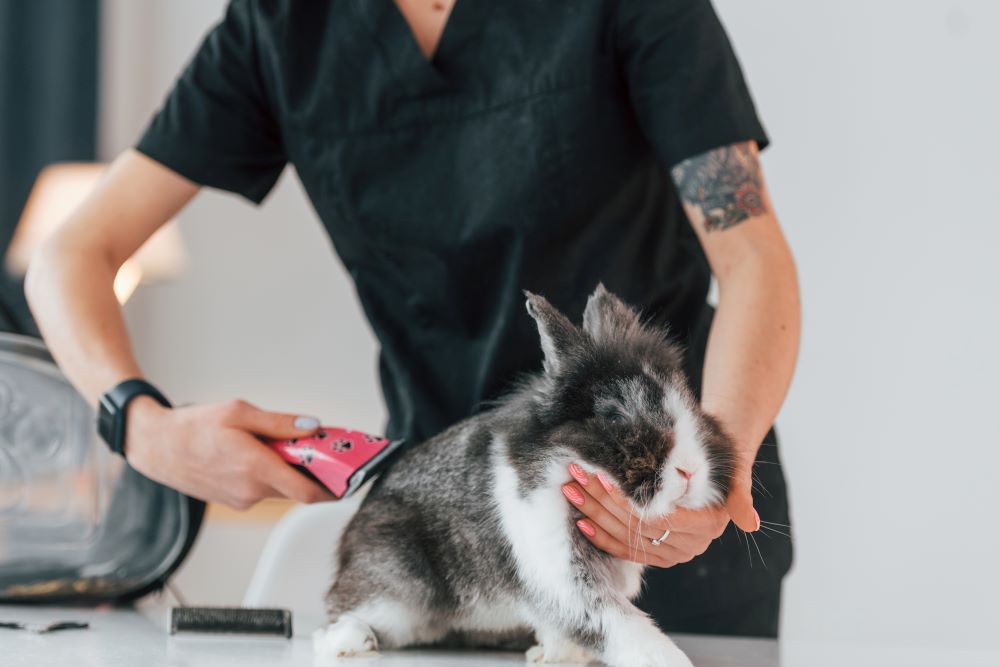
Electric clippers (optional) — If using clippers, invest in a quality set — standard pet clippers designed for dog and cat coats often clog or perform poorly on the fine, dense fiber of Angora wool. Monitor blade temperature continuously; clipper blades heat up rapidly and can burn the rabbit’s thin skin. Stop and cool the blades against an ice pack or use Clipper Cool spray every few minutes. Never allow blades to feel more than warm against your own skin before returning them to the coat. View on Amazon
Small Pet Select Hair Buster Comb — For preparation and post-shear cleanup, the Hair Buster removes loose fiber and reveals the coat structure before you begin cutting. View on Amazon
Hertzko Self-Cleaning Slicker Brush — For a final pass after shearing to remove cut fiber from the coat and skin before the rabbit grooms itself. View on Amazon
Preparation
Blow out the coat thoroughly before beginning — never shear a coat that has not been blown out or combed through. The blower removes loose fiber and debris, exposes mat locations, and opens the coat so you can see exactly where the skin lies. Attempting to shear a coat blind to its structure increases the risk of nicking the skin significantly.
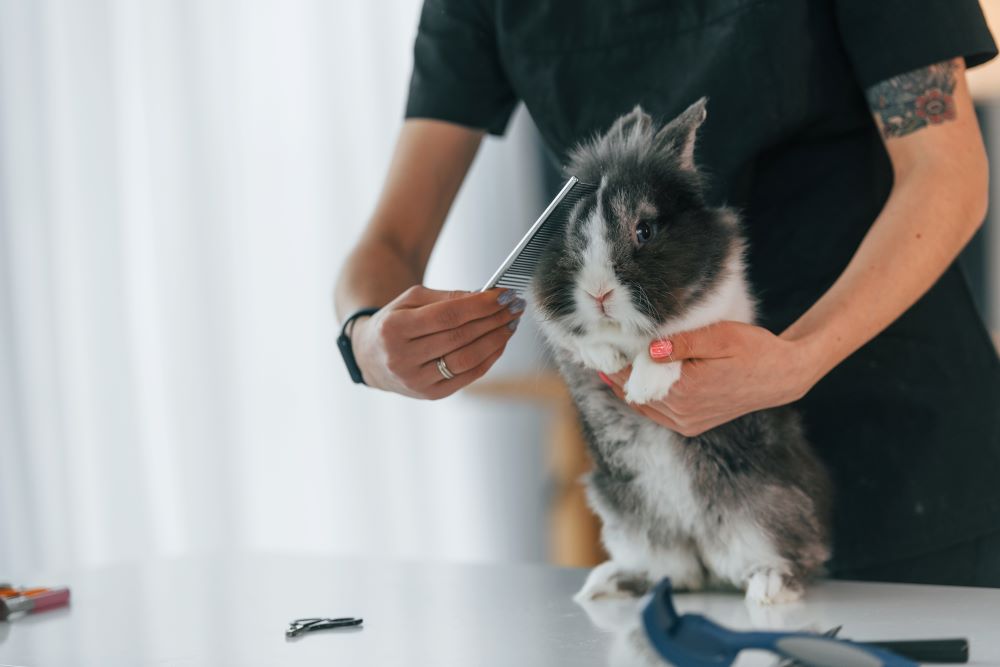
If using scissors, blow out first, then use a comb to part the fiber in sections as you work.
Step-by-Step Shearing Technique
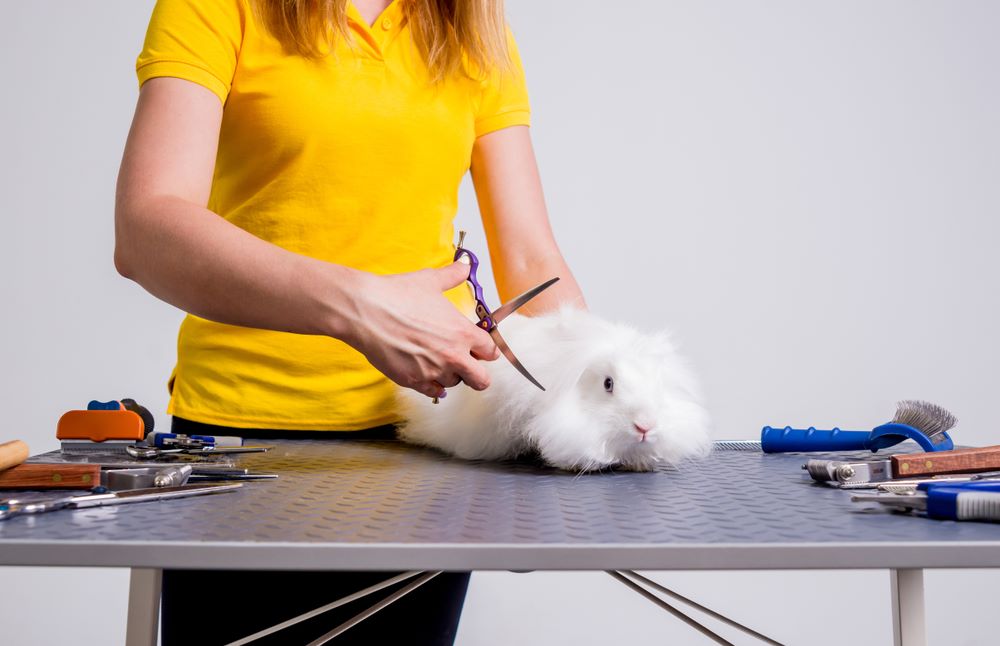
Set the rabbit on a grooming table with a non-slip surface. Have all tools within reach. Work methodically through the coat — do not begin in a random location and work wherever seems easiest. A systematic approach ensures no areas are missed.
Starting position: Gently tilt the rabbit back to access the belly first. Clip the belly and vent area before moving to the main body. These areas have loose, folded skin and require the most care — work slowly, feel for skin folds before cutting, and use blunt scissors here.
Back and sides: Grasp small sections of fiber, hold them away from the body, and cut parallel to the skin surface. Cut in a single smooth pass — re-cutting the same area creates second cuts (short fiber pieces) that remain in the coat and are more easily ingested during self-grooming. Leave approximately 0.5 to 1 inch (1.5 to 2.5 cm) of fiber rather than shearing completely to the skin, particularly in cold conditions.
Legs: Work carefully. The skin on the inner legs and between the toes is thin and particularly prone to accidental nicking. Use small scissors and go slowly.
Face (English Angora): Use small blunt scissors and work section by section. Never clip toward the face — always cut outward, away from the eyes and nose. Keep scissors away from the whiskers, which are sensory organs.
Critical safety rule: Before every cut, feel firmly for the skin surface beneath the fiber with your free hand. Angora rabbit skin is thin, loose, and tears easily. Knowing exactly where the skin is before scissors or clippers are applied is the single most important safety measure in shearing.
After Shearing
Give the rabbit a thorough brush-out with the slicker brush immediately after shearing. This removes all cut fiber pieces from the coat and skin before the rabbit is returned to its enclosure. A rabbit placed in its enclosure without this step will groom itself and ingest the cut fiber — exactly what you are trying to prevent.
Monitor the rabbit closely for two to four hours after shearing for any signs of chill or stress. A shorn rabbit in normal room temperatures (above 65°F / 18°C) will regulate comfortably. In cooler conditions, monitor body temperature and provide additional warmth as needed.
Fiber Quality: Plucking vs. Shearing
For owners who harvest and use Angora fiber, the harvesting method affects the quality and usability of the resulting wool.
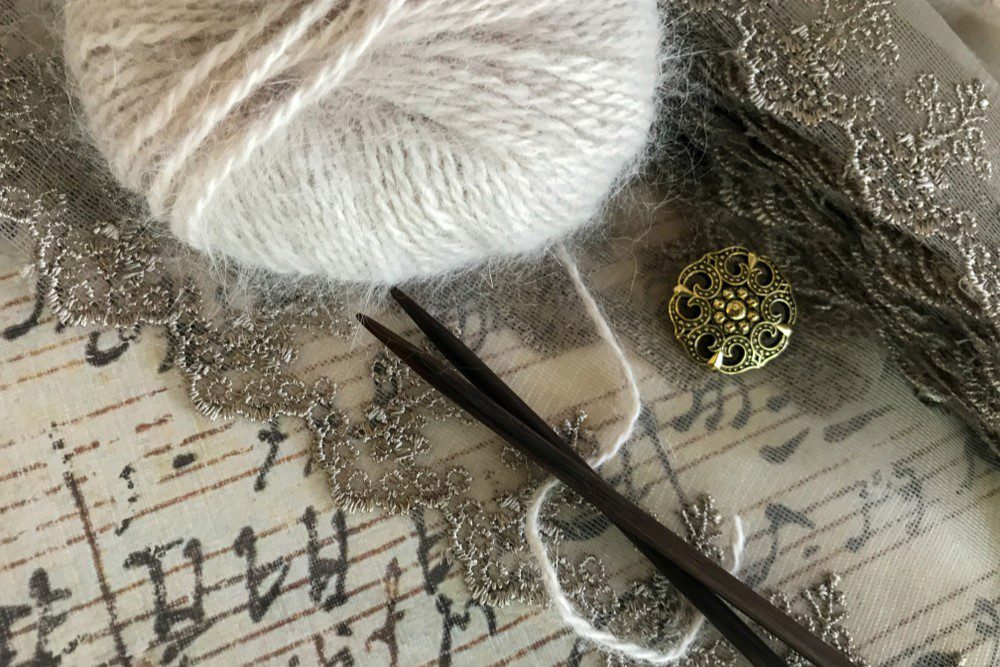
Plucked fiber from a molting coat is harvested at its full natural length — the fiber tip is uncut, and the staple has a natural taper. This produces the highest spinning quality because there are no cut ends and no second cuts mixed in. Hand spinners who work with pure Angora consistently prefer plucked fiber.
Sheared fiber contains cut ends on one side of every staple and inevitably includes some second cuts — short pieces from re-cutting. The fiber is still usable for spinning and blending, but requires more preparation (separating and discarding second cuts) before it is ready to work with. Many experienced breeders shear most of the coat and pluck only the prime back and shoulder wool for the best results.
For Giant and German Angoras — breeds where shearing is the only option — the fiber is entirely sheared, but these breeds compensate with much higher annual yields than molting breeds.
The National Angora Rabbit Breeders Club harvesting guide notes that first-quality fiber from the back and upper sides is best plucked when possible, while lower-quality areas are appropriately handled by clipping.
Shaving and the Coat’s Regrowth
The Angora coat grows back at the same rate regardless of how it was removed — approximately 1 inch per month. A fully shorn rabbit will have a coat requiring regular grooming maintenance within two to three weeks, and will be at standard grooming intensity within six to eight weeks.
The coat that grows back after clipping tends to come in evenly — all fiber at approximately the same length — which some owners find easier to manage during the early regrowth phase than a coat in mid-molt with fiber at varying lengths.
Begin grooming the regrown coat as soon as there is enough length to work with — typically from two to three weeks after shearing. Do not wait until the coat is long before starting; early maintenance prevents the mat formation that shearing was intended to resolve.
FAQs
Is it cruel to shave an Angora rabbit?
No — when done correctly and for appropriate reasons, shearing is not harmful and causes no pain. For Giant and German Angoras, failing to shear is far more harmful than shearing, as an unmanaged coat leads to severe mat formation, skin damage, and wool block risk. For molting breeds, shearing during a molt or clipping a severely matted coat is a welfare measure, not a harmful intervention. The key is doing it correctly — with the right tools, at the right blade temperature, using proper technique.
Will the fur grow back after shaving?
Yes, always. Angora rabbit fiber grows at approximately 1 inch per month regardless of how the previous coat was removed. A fully shorn rabbit will have a coat that needs grooming maintenance within weeks and a full coat within three to four months.
Can I shave my Angora rabbit in summer to keep it cool?
Yes, and many experienced owners do exactly this. A summer clip is a legitimate heat management strategy, particularly in warm US climates where indoor temperatures regularly exceed 75°F (24°C). Clip in late spring before the hottest months arrive. A shorter coat — 1 to 2 inches — still provides some skin protection while significantly reducing heat retention.
My Angora rabbit has severe mats — should I shave?
If the mats are widespread and solid — the kind that cannot be separated with the fingers — shearing the affected areas or the full coat and starting fresh is the recommended approach. Attempting to comb out extensive solid mats causes significant pain. Shear, allow the coat to regrow, and establish a consistent grooming routine from the beginning of regrowth to prevent recurrence.
Can I use regular dog clippers on my Angora rabbit?
With caution. Standard pet clippers designed for coarser dog and cat hair often clog, pull, or perform poorly on the fine, dense fiber of Angora wool. If using clippers, choose a quality set with sharp blades, monitor blade temperature continuously, and have a blade cooling method — an ice pack or Clipper Cool spray — available throughout the session. Many experienced Angora breeders prefer sharp scissors over electric clippers for exactly this reason.
Does shaving affect fiber quality?
Yes. Shearing produces fiber with cut ends and inevitably includes some short second cuts mixed in, which reduces spinning quality compared to plucked fiber from a naturally molting coat. For pet owners who do not spin fiber, this is irrelevant. For fiber producers, the preferred approach is to pluck the prime back and shoulder wool when the coat is molting and clip the rest.
How often does a Giant Angora need to be sheared?
Every 90 days without exception. The Giant Angora does not molt, and the coat must be cut to prevent mat accumulation, coat breakdown, and wool block risk. Missing a shearing cycle creates significantly more work and greater risk at the next session.
Conclusion
The question of whether Angora rabbits can be shaved has a clear, practical answer: yes, in specific circumstances, and for non-molting breeds, it is a required practice that must happen every 90 days. Understanding when shearing is appropriate — and when it is not — is the distinction that matters.
Shaving is never a shortcut to avoiding grooming. It is a legitimate tool for heat management, mat rescue, wool block emergencies, and mandatory coat removal in non-molting breeds. The new coat that grows back requires the same consistent grooming care as the coat that was removed.
For the complete grooming technique guide — including how to work through mats, how to use a blower, and breed-specific frequency requirements — see our Angora Rabbit Grooming guide. For the full picture of Angora rabbit care beyond coat management, see our Angora Rabbit Care Guide.