How Much Do Angora Rabbits Cost? Complete 2026 Price and Ownership Guide
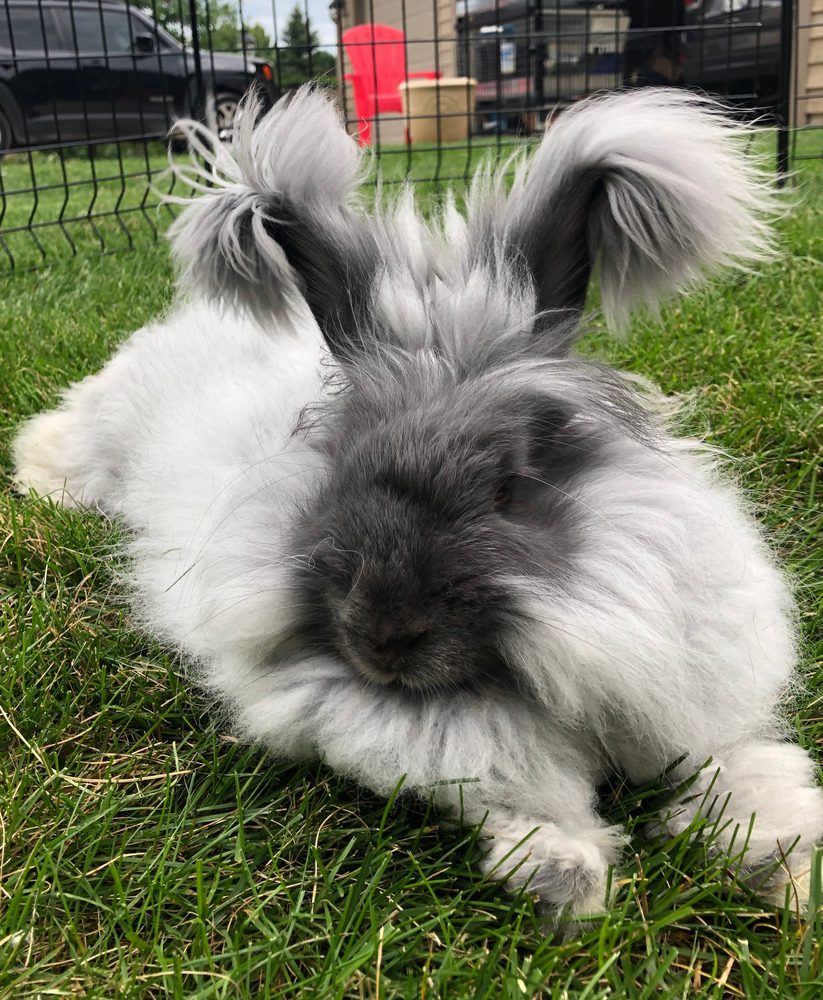
The purchase price of an Angora rabbit ranges from $50 to $600, depending on breed, quality, and source. But the purchase price is the smallest component of the total cost of Angora rabbit ownership. The ongoing costs — grooming tools, feed, housing, veterinary care, and the quarterly or semi-annual grooming equipment maintenance — represent a significantly larger financial commitment that prospective owners need to understand before acquiring a rabbit.
This guide provides verified current US market prices for all five Angora breeds, a complete breakdown of first-year costs, ongoing annual costs, and an honest assessment of where the Angora rabbit’s cost profile differs from other pet rabbit breeds.
Purchase Price by Breed and Quality
Angora rabbit prices in the US vary by breed, registration status, quality category (pet, fiber, or show), and source. The following ranges reflect current 2026 US market conditions from reputable breeders and rescue organizations.
Purchase Price Table
| Breed | Pet / Fiber Quality | Show Quality | Registered Pedigree |
|---|---|---|---|
| English Angora | $50–$150 | $150–$400 | $200–$500+ |
| French Angora | $50–$150 | $150–$350 | $175–$450+ |
| Satin Angora | $75–$175 | $175–$400 | $200–$500+ |
| Giant Angora | $75–$200 | $200–$500 | $250–$600+ |
| German Angora | $100–$250 | $250–$600 | $300–$700+ |
What drives price within each breed:
Pet/Fiber Quality
Healthy animals without show-quality conformation or documented pedigree. Appropriate for first-time Angora owners, fiber producers not pursuing ARBA registration, and household companions. Most buyers start here.
Show Quality
Animals that meet or approach ARBA breed standards for conformation, wool density, and type. Requires show experience to evaluate accurately — attending an ARBA show before purchasing show-quality animals is strongly recommended.
Registered Pedigree
Animals with documented lineage registered through ARBA (for English, French, Satin, Giant) or IAGARB (for German Angora). The pedigree itself adds cost and is most relevant for breeding programs where genetic lineage affects offspring quality and registrability.
Rescue and Adoption
Angora rabbits available through rescue organizations or the House Rabbit Society network typically cost $25 to $75 in adoption fees — significantly below breeder prices. The trade-off is unknown lineage, potentially compromised coat condition from neglect, and adjustment periods that benefit experienced owners. Rescue is a genuinely good option for experienced Angora keepers and a challenging starting point for first-time owners.
First-Year Setup Costs
The first year of Angora rabbit ownership involves one-time setup costs on top of the purchase price. These are costs that do not recur annually after the initial purchase.
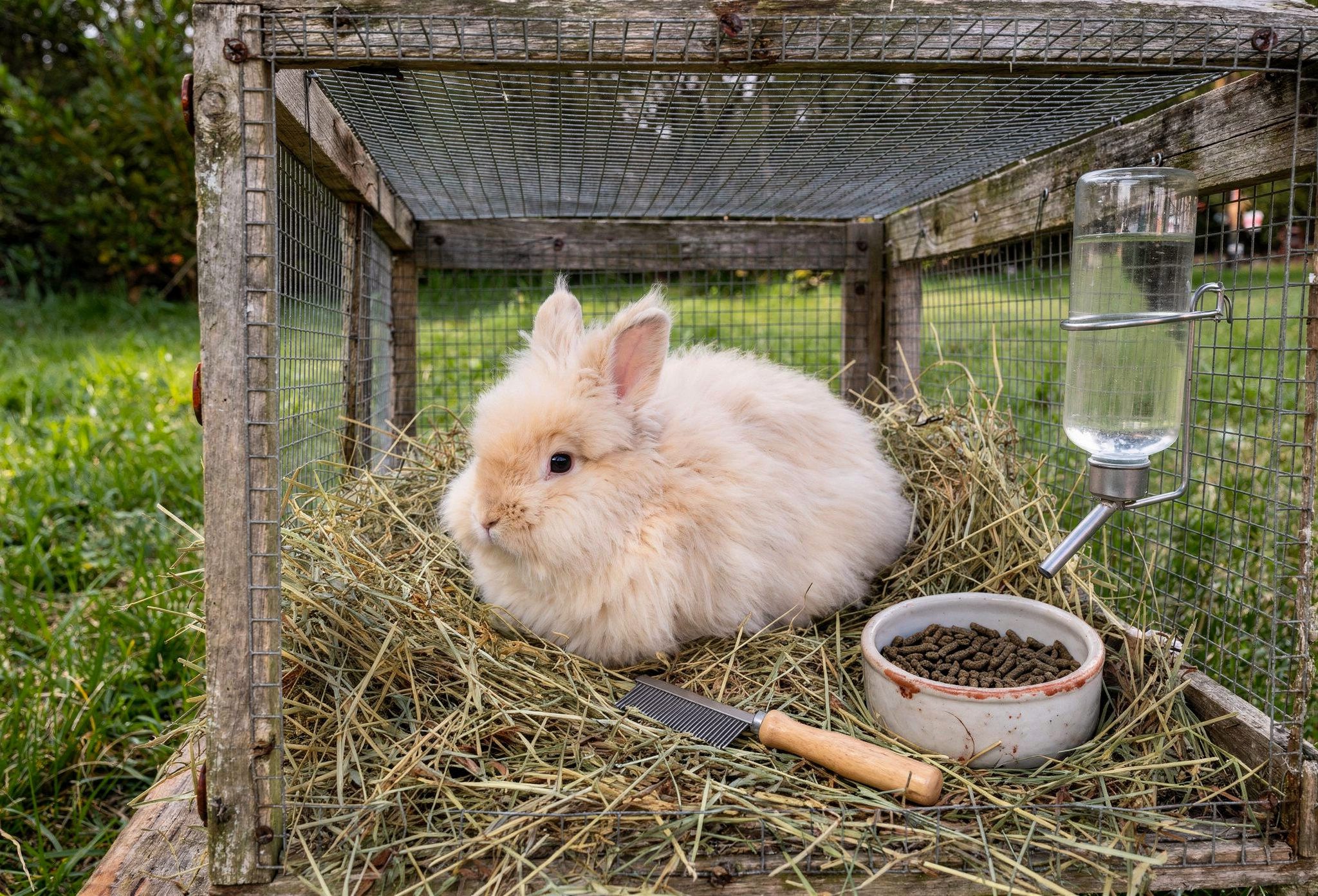
Enclosure and Housing
| Item | Cost Range | Notes |
|---|---|---|
| Wire enclosure (indoor) | $60–$200 | Minimum dimensions per breed — see Angora Rabbit Habitat guide |
| Solid resting board | $10–$30 | Mandatory — prevents sore hocks on wire floors |
| Hide box / shelter | $15–$40 | Required for psychological wellbeing |
| Water bottle or crock | $8–$20 | Sipper bottle preferred to keep Angora wool dry |
| Hay rack | $10–$25 | Keeps hay off the enclosure floor and out of the coat |
| Litter box | $10–$25 | For litter-trained rabbits |
| Housing subtotal | $113–$340 | Required for psychological well-being |
Grooming Equipment
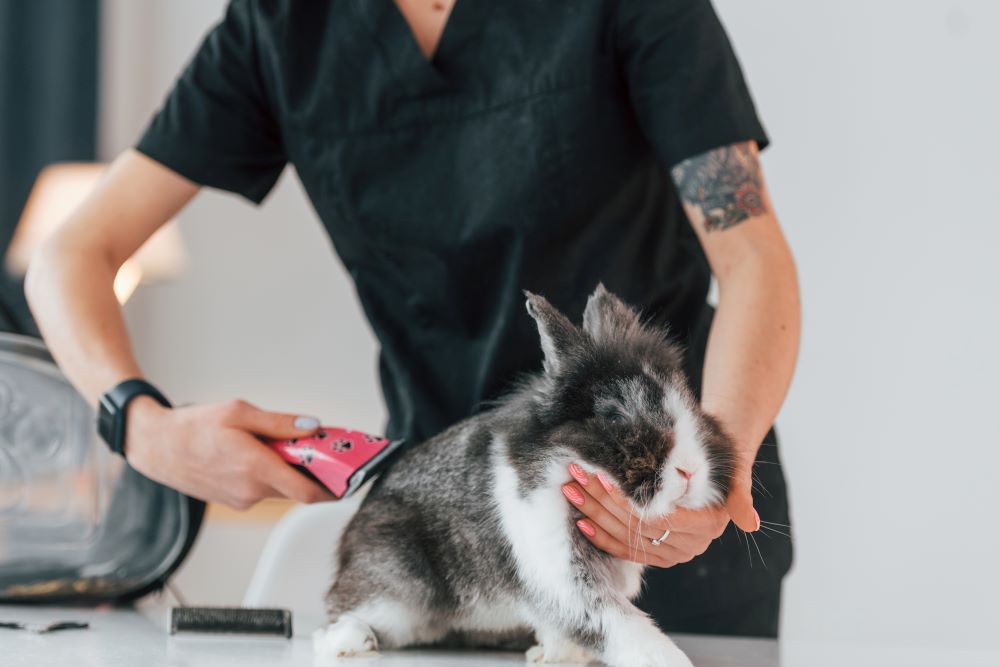
This is where Angora rabbit setup costs diverge most significantly from other rabbit breeds. The grooming tools required for an Angora coat are more specialized and more expensive than generic pet brushes.
| Item | Cost Range | Notes |
|---|---|---|
| Small Pet Select Hair Buster Comb | $15–$20 | Primary maintenance comb — essential for all Angora breeds |
| Hertzko Self-Cleaning Slicker Brush | $12–$18 | Surface finishing brush — used after comb work |
| Blunt-nosed grooming scissors | $8–$20 | Required for mat removal and English Angora facial wool |
| Nail clippers (small animal) | $8–$15 | Trimmed every 4–6 weeks |
| Pet grooming blower | $150–$400 | Optional for new owners; increasingly important for longer coats and multiple rabbits |
| Grooming subtotal (without blower) | $43–$73 | One-time cost |
| Grooming subtotal (with blower) | $193–$473 | Recommended for serious fiber producers |
For full product details and recommendations, see our Best Brush for Angora Rabbits guide.
First Veterinary Visit
A health assessment by a rabbit-experienced veterinarian within the first week of ownership is strongly recommended for any new Angora rabbit.
| Item | Cost Range | Notes |
|---|---|---|
| Initial wellness examination | $45–$90 | Identifies any pre-existing conditions |
| Spay (doe) | $150–$300 | Strongly recommended — eliminates uterine cancer risk after age 3 |
| Neuter (buck) | $75–$150 | Reduces territorial behavior |
| Veterinary setup subtotal | $45–$540 | Spaying/neuter are one-time cost |
First-Year Setup Cost Summary
| Category | Low Estimate | High Estimate |
|---|---|---|
| Purchase price (pet/fiber quality) | $50 | $250 |
| Housing and enclosure | $113 | $340 |
| Grooming equipment (without blower) | $43 | $73 |
| First vet visit + spay/neuter | $45 | $540 |
| First-year setup total | $251 | $1,203 |
A realistic first-year budget for a single pet-quality Angora rabbit with a basic grooming kit and spaying/neutering is approximately $400 to $800, depending on local veterinary costs and whether a blower is purchased.
Ongoing Annual Costs
After the first year, the recurring annual costs of Angora rabbit ownership are more predictable.
Annual Cost Breakdown
| Expense | Annual Cost Range | Notes |
|---|---|---|
| Timothy hay | $120–$240 | Unlimited supply required — primary diet component |
| High-protein pellets (17% min.) | $96–$180 | Approximately $8–$15 per month |
| Fresh vegetables | $60–$120 | Daily leafy greens |
| Treats (occasional) | $12–$30 | Fruit and vegetable treats |
| Bedding and litter | $60–$120 | Replaced regularly |
| Annual veterinary wellness exam | $45–$90 | Dental assessment increasingly important after age 4 |
| Grooming tool replacement/maintenance | $20–$60 | Comb and brush replacement as needed |
| Blower filter replacement | $10–$30 | If blower is owned |
| Emergency veterinary fund (recommended reserve) | $200–$500 | GI stasis treatment: $200–$1,000+ |
| Annual ongoing total | $623–$1,370 | Excluding emergencies |
The Emergency Veterinary Cost Reality
GI stasis — the most common serious health emergency in Angora rabbits — can cost $200 to $1,500 to treat, depending on severity, geographic location, and whether surgical intervention is required. Wool block, dental emergencies, and E. cuniculi treatment are additional potential costs in the $150 to $600 range per incident.
Pet insurance for rabbits is available from several US providers, including Nationwide and ASPCA Pet Health Insurance. Premiums range from $15 to $40 per month, depending on coverage level. For owners without pet insurance, maintaining a dedicated emergency fund of $500 to $1,000 is the practical alternative.
How Angora Rabbit Costs Compare to Other Rabbit Breeds
The Angora rabbit costs more to own than any short-haired rabbit breed at every level:
| Cost Category | Short-Haired Rabbit | Angora Rabbit | Why the Difference |
|---|---|---|---|
| Purchase price | $20–$100 | $50–$600 | Specialty breed, smaller breeding population |
| Grooming tools | $15–$30 | $43–$473 | Specialized comb, blower for Angora wool |
| Grooming time | 15–30 min/week | 2–6 hrs/week | Wool block and dental risks are slightly elevated |
| Professional grooming | Rarely needed | $40–$80 per session if outsourced | Angora coat complexity requires specialist handling |
| Feed costs | Similar | Similar | Same dietary requirements |
| Veterinary costs | Similar | Slightly higher | Wool block and dental risks slightly elevated |
The primary additional cost of Angora rabbit ownership is not financial — it is the time investment of consistent grooming. Two to three full grooming sessions per week of 30 to 90 minutes each represent 2 to 6 hours per week across the rabbit’s 7 to 12 year lifespan. This time commitment is the correct lens through which to evaluate Angora rabbit ownership costs, alongside the financial figures.
Can Angora Rabbits Offset Their Costs Through Wool Sales?
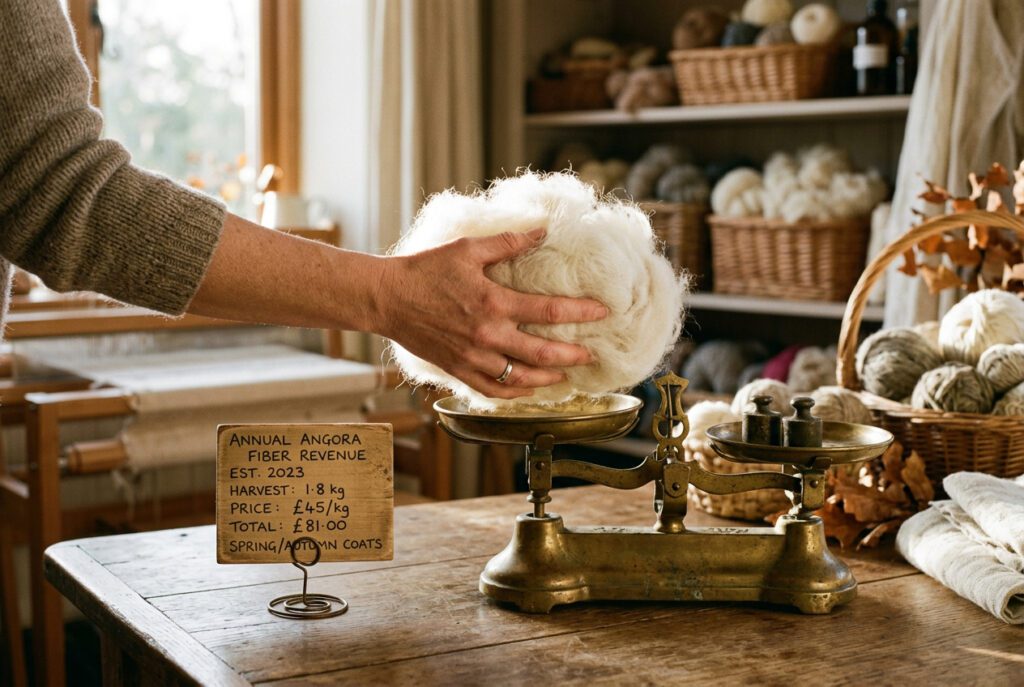
For owners keeping Angora rabbits for fiber production, wool sales can partially or fully offset ongoing ownership costs.
| Breed | Annual Yield | Price Per Oz (Raw) | Estimated Annual Revenue |
|---|---|---|---|
| English Angora | 12–16 oz | $10–$16 | $120–$256 |
| French Angora | 12–16 oz | $8–$14 | $96–$224 |
| Satin Angora | 6–12 oz | $12–$20 | $72–$240 |
| Giant Angora | 32–80 oz | $6–$10 | $192–$800 |
| German Angora | 24–48 oz | $8–$12 | $192–$576 |
A well-managed German or Giant Angora producing at the upper end of its yield range can generate $400 to $800 per year in raw fiber sales — enough to offset most or all annual feed and supply costs. For the full fiber production economics, see our Raising Angora Rabbits for Wool guide.
FAQs
How much does an Angora rabbit cost to buy?
Pet and fiber quality Angora rabbits range from $50 to $250, depending on breed. Show-quality animals range from $150 to $600. German Angoras and Giant Angoras typically command higher prices due to smaller breeding populations and higher fiber production standards. Rescue adoption costs $25 to $75.
What is the total first-year cost of owning an Angora rabbit?
A realistic first-year budget — including purchase price, enclosure setup, basic grooming tools, and initial veterinary care — ranges from approximately $400 to $800 for a single pet-quality rabbit. Adding spay or neuter surgery and a grooming blower brings the upper range to approximately $1,200.
What is the annual cost of keeping an Angora rabbit?
Ongoing annual costs for a single Angora rabbit range from approximately $620 to $1,370, excluding emergency veterinary expenses. The highest recurring costs are hay ($120–$240), pellets ($96–$180), and the annual wellness veterinary examination ($45–$90).
Are Angora rabbits more expensive to keep than other rabbits?
es — primarily due to grooming tool costs and the significant time investment of consistent grooming. Feed costs are similar to those of other rabbit breeds. Veterinary costs are slightly higher due to wool block and dental disease risk. The grooming time commitment of 2 to 6 hours per week is the highest additional cost relative to short-haired breeds.
Can I make money from an Angora rabbit’s wool?
Yes, particularly with German and Giant Angoras, which produce 24 to 80 ounces of fiber per year at $6 to $12 per ounce raw. A productive German Angora can generate $200 to $576 per year in fiber sales, offsetting a meaningful portion of annual costs. English and Satin Angoras produce less fiber but command higher prices per ounce for the fineness and luster of their wool.
Is pet insurance worth it for an Angora rabbit?
For owners who would pursue full veterinary treatment for a GI stasis or dental emergency — which can cost $500 to $1,500 — pet insurance at $15 to $40 per month provides meaningful financial protection. For owners comfortable maintaining a dedicated $500 to $1,000 emergency fund instead, self-insurance is a reasonable alternative.
Conclusion
The honest cost of an Angora rabbit is substantially higher than the purchase price suggests. A single pet-quality Angora rabbit costs approximately $400 to $800 to set up in the first year, $620 to $1,370 annually to maintain, and requires 2 to 6 hours of grooming time per week for its entire 7 to 12 year lifespan. These are not hidden costs — they are inherent to the breed’s wool coat and should be factored into any ownership decision before a rabbit is acquired.
For owners who can commit to both the financial and time investment, the Angora rabbit offers something no other pet provides: a high-value, renewable fiber resource, an extraordinarily beautiful animal, and a grooming relationship that is genuinely bonding when approached consistently and with the right tools.
For sourcing guidance and what to look for when buying, see our Where to Buy an Angora Rabbit guide. For the complete care framework that underpins all ongoing costs, see our Angora Rabbit Care Guide.
The information in this article is for general educational purposes. Prices are current estimates for the US market as of 2026 and may vary by region and supplier. See our disclaimer for full details.