The Huge Angora Rabbit: A Complete Guide to the Giant Angora Breed
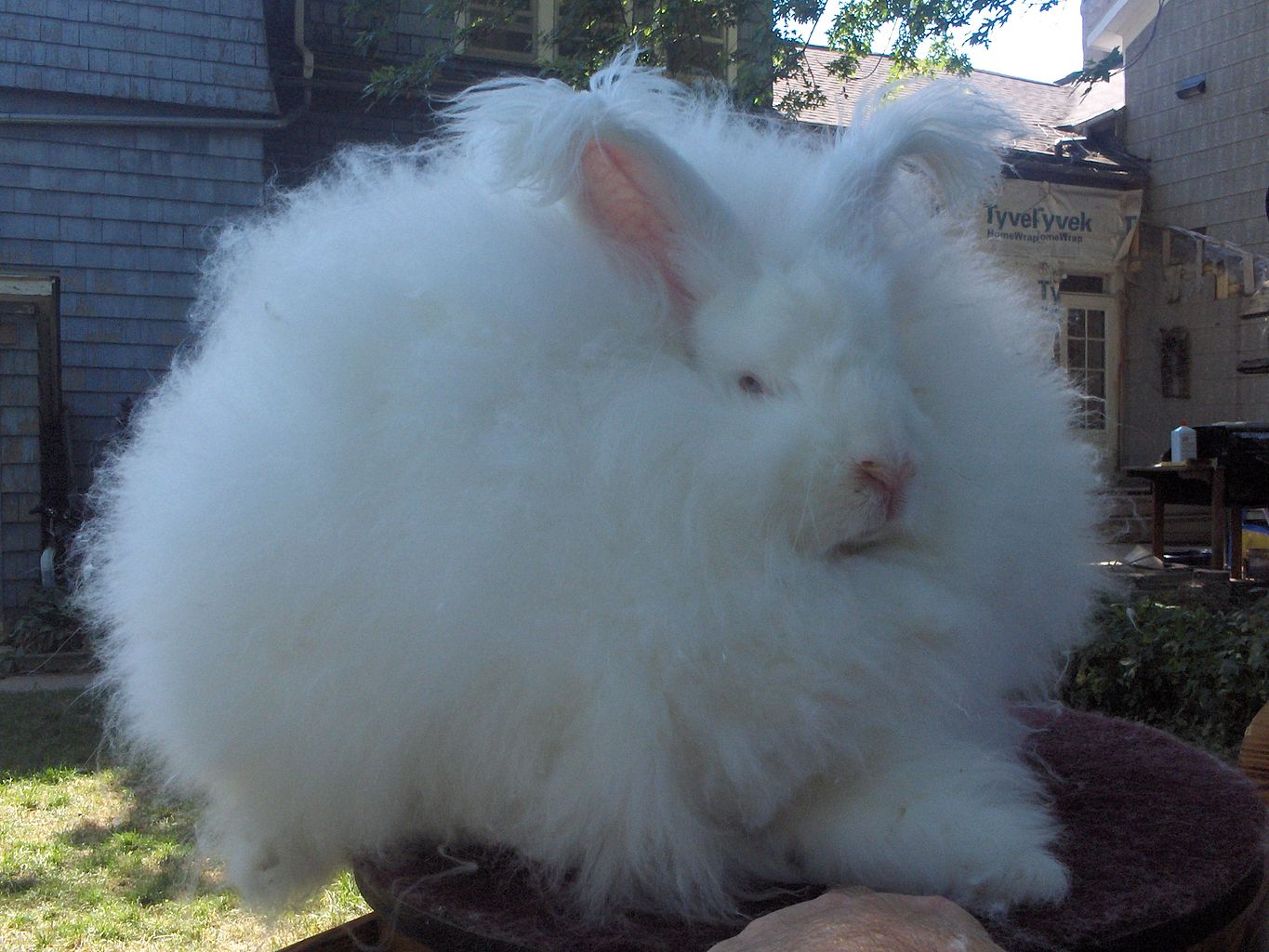
When people search for a huge Angora rabbit, they are almost always looking for information about one specific breed: the Giant Angora. It is the largest of the four Angora breeds recognized by the American Rabbit Breeders Association, the only Angora shown in six weight classes, and the highest-producing wool rabbit in the ARBA show system. It is also genuinely enormous — with no upper weight limit and individuals regularly exceeding 12 pounds under a coat so dense it can obscure the animal’s true body size entirely.
This guide covers everything a prospective or current Giant Angora owner needs to know: the breed’s history and origin, its physical characteristics, coat structure, grooming requirements, diet, housing, health considerations, and what separates it from every other Angora breed.
History and Origin of the Giant Angora
The Giant Angora is not an ancient breed. It is a distinctly American creation, developed in the second half of the 20th century by a single breeder with a specific purpose.
Louise Walsh of Taunton, Massachusetts, began her breeding program with the goal of creating a large Angora rabbit that would qualify for ARBA recognition as a wool-producing breed. The obstacle she faced was that ARBA had previously declined to recognize the German Angora — at the time the highest-producing Angora wool breed — on the grounds that its body type was too similar to the English Angora. This is documented in the Angora rabbit entry on Wikipedia, which draws from the ARBA Standard of Perfection.
Walsh’s response was to engineer a fundamentally different body type. She crossed German Angoras with French Lops and Flemish Giants — both large commercial-type breeds — to add substantial frame, bone structure, and body weight to the German Angora’s non-molting, high-yield wool genetics. After nearly three decades of selective breeding to fix the desired traits — large commercial body, three-component non-molting coat, gentle temperament, and consistent wool yield — she successfully petitioned ARBA for recognition. The ARBA Giant Angora breed page confirms the breed was developed specifically as a wool producer with a three-component coat that must be shorn, as the breed does not molt. ARBA officially recognized the Giant Angora in 1988, making it the first new Angora breed accepted by ARBA in many decades.

Physical Characteristics
- Weight: No maximum weight. Bucks must weigh a minimum of 9.5 pounds (4.3 kg). Must weigh a minimum of 10 pounds (4.5 kg). Many quality individuals significantly exceed these minimums.
- Body type: Commercial — long, oval-shaped body with good depth and width, broad forehead, slightly narrower muzzle
- Coat coverage: Full body, with forehead tufts (head trimmings) and cheek furnishings on the face, and lightly fringed, well-tasseled ears
- Coat structure: Three fiber types — underwool, awn fluff, and awn hair
- Molting: Does not naturally molt — must be shorn every 90 days
- ARBA recognized colors: Ruby-Eyed White and Chestnut (Chestnut accepted at the 100th ARBA Convention in 2023)
- Show classification: 6-class — the only Angora breed shown in six weight divisions
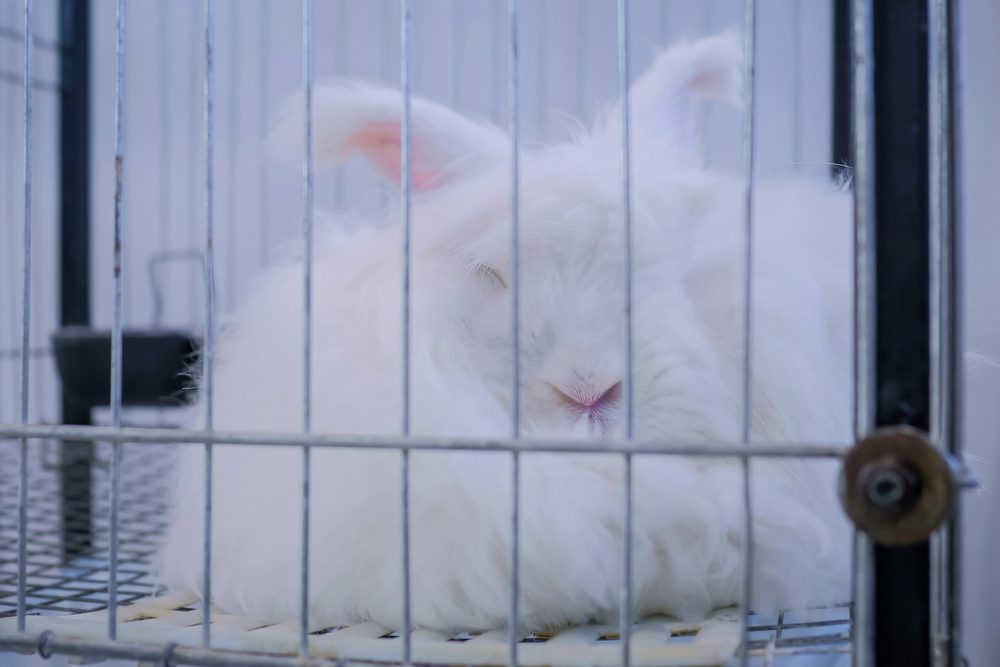
The Giant Angora’s body is a commercial type — wide, heavily boned, and well-muscled, built to support maximum wool production. When viewed without the coat, the body structure is substantial and unmistakably different from the compact English Angora or the large-framed but less dense French Angora. When viewed in full coat, the animal can appear almost architecturally round — the dense three-component wool obscuring the body contours entirely.
The head is oval in appearance, broad across the forehead, and slightly narrower at the muzzle. Bucks carry heavier forehead tufts and cheek furnishings than do — a characteristic the ARBA standard notes specifically. The ears are lightly fringed and well tasseled. The Giant Angora is the only Angora shown in six classes, meaning it is judged in junior, intermediate, and senior divisions for both bucks and does — unlike the four-class structure used for English, French, and Satin Angoras.
The Three-Component Coat: What Makes It Unique
The Giant Angora’s coat structure is shared only with the German Angora among all Angora breeds. It consists of three distinct fiber types that must be present in the correct balance for the coat to receive full points at an ARBA show.
Underwool is the dominant component. It is medium-fine, soft, delicately waved, and carries a gentle shine. It forms the bulk of the harvested fiber and is the primary driver of wool weight at each shearing. The ARBA standard and the National Angora Rabbit Breeders Club (NARBC) both specify that underwool must be dominant over the other two fiber types.
Awn Fluff sits above the underwool. It is a stronger, wavy wool with a characteristic hooked or curved tip — a guard hair tip on a wool-type fiber. It is found between the underwool and the awn hair layers and contributes body and structure to the coat.
Awn Hair is the outermost component — straight, strong guard hairs that protrude above the surface of the coat. The awn hair must be present and evident in a correct Giant Angora coat. Too little awn hair produces a coat that lacks structure and mats more readily. Too much produces a coarser, stiffer coat that scores poorly on texture.
This three-component architecture is what distinguishes the Giant Angora coat from the predominantly underwool coats of the English, French, and Satin Angoras. The result is a coat that is somewhat easier to manage than the all-underwool English Angora coat — the awn hair helps keep the coat from collapsing and felting — but still requires strict maintenance on a 90-day shearing schedule.
In judging Giant Angoras at ARBA shows, the majority of points are awarded for wool — covering density, texture, and length. General type — body conformation, head, ears, eyes, feet, and legs — accounts for the remaining points. This weighting reflects the breed’s primary purpose as a wool producer.
Wool Production
The Giant Angora is the highest-producing wool rabbit among the four ARBA-recognized Angora breeds. A well-maintained individual from a productive line typically yields 28 to 40 oz (790 to 1,130 g) of wool per year across four shearing cycles. Some exceptional individuals exceed this range.
For comparison, a productive English Angora yields 10 to 16 oz (280 to 450 g) per year, and a French Angora yields 16 to 20 oz (450 to 570 g) per year. The Giant Angora can yield two to three times the annual output of the English or French at its best.
The Giant Angora does not naturally molt. The coat grows continuously until it is shorn. This means the owner controls the entire harvest — there is no molting window and no opportunity to hand-pluck. Every harvesting cycle requires clipping to the skin, followed by a 90-day regrowth period before the next shearing.
Newly shorn Giant Angoras should be monitored carefully for temperature regulation in the weeks immediately following clipping. The dense coat provides significant insulation, and its sudden removal leaves the animal temporarily more vulnerable to temperature extremes, particularly cold. Many experienced breeders keep small coats or coverings for their rabbits for the first week or two post-shearing, particularly in cooler months.
Grooming Requirements
Grooming the Giant Angora between shearings is less intensive than maintaining an English Angora — the three-component coat resists matting better than an all-underwool coat — but it is not optional.
Between shearings: Two to three times per week is the recommended grooming frequency. The areas most prone to matting are the armpits, the area between the rear legs, and the base of the ears. These should be specifically targeted at each grooming session. A wide-tooth steel comb worked from the tip of the fiber toward the skin is the primary tool. A slicker brush can be used to finish the outer coat after combing.
Facial furnishings and ear fringes must be kept clear of the eyes and free of debris. The forehead tufts and cheek furnishings can trap hay, food particles, and bedding if not monitored. Trim facial wool as needed to keep it from contacting the eyes.
The 90-day shearing schedule is non-negotiable. Allowing the coat to grow beyond 90 days causes the fiber to begin breaking down — the tips of older growth tangle with new growth, creating mat chains that cannot be combed free. It also dramatically increases the wool block risk as shedding fiber enters the rabbit’s environment and digestive system. Clipping should be done with sharp electric clippers or small scissors, working systematically across the body in single, clean passes to minimize second cuts.
Post-shearing care: Provide additional warmth for one to two weeks following a full body clip, particularly in winter months or in cold facilities. A freshly shorn Giant Angora weighing 10 or more pounds loses its primary insulation layer instantly and needs time to re-regulate body temperature as the new coat grows in.
For the complete grooming protocol applicable to all Angora breeds, see our Angora Rabbit Grooming guide.
Diet and Nutrition
The Giant Angora’s dietary requirements are consistent with all Angora breeds in principle, with the adjustments appropriate for a large, high-producing wool animal.
Timothy hay must be available at all times. Unlimited hay is the dietary foundation for any rabbit and is especially critical for a large-bodied Angora producing substantial wool year-round. Hay drives gut motility, prevents wool block, and provides the natural dental wear that keeps continuously growing rabbit teeth from overgrowing.
Rabbit pellets with a protein content of at least 17% are required for Angora rabbits in full coat. The demands of continuous wool production on a body weighing 10 to 12 pounds are significant. A standard maintenance pellet formulated for short-haired rabbits is insufficient. Daily pellet volume should be calibrated to the individual rabbit’s body weight — consult a rabbit-experienced veterinarian for specific quantity guidance.
Fresh leafy greens — romaine lettuce, cilantro, parsley, and dark leafy herbs — may be provided daily in appropriate quantities. Introduce any new green gradually and monitor for digestive upset. Avoid iceberg lettuce, starchy vegetables, and high-sugar fruits as regular dietary items.
Fresh water must be available at all times. A Giant Angora’s water consumption is higher than that of smaller breeds due to its larger body mass. Check and replenish water twice daily.
For the complete Angora rabbit diet guide, see our Angora Rabbit Care Guide.
Housing Requirements
The Giant Angora’s housing requirements reflect both its large body size and its dense wool coat.
Minimum cage size: A single Giant Angora requires a minimum cage floor space of 36 inches by 30 inches (91 cm by 76 cm), with a height of at least 24 inches (61 cm). This is the minimum — larger is consistently better. The rabbit must be able to take three full hops in any direction, stand upright without its ears contacting the ceiling, and stretch fully.
Individual housing: Giant Angoras must be housed individually. Shared enclosures result in coat damage, tangling, and significantly elevated flystrike and parasite transmission risks.
Indoor housing is strongly recommended. The dense coat makes Giant Angoras highly susceptible to heat stress — temperatures above 75 to 80 degrees Fahrenheit (24 to 27 degrees Celsius) are dangerous. Indoor climate-controlled housing allows temperature, humidity, and cleanliness to be managed to a standard that is difficult to achieve reliably outdoors in most US climates.
Ventilation: Fresh air circulation is essential. Stagnant, humid air compromises coat quality and increases the risk of respiratory infection. The facility should be well-ventilated without creating drafts that blow directly onto the rabbit.
Flooring: Wire-bottomed cages with 0.5-inch by 1-inch mesh flooring allow waste to pass through and keep the coat cleaner than solid-floored enclosures. Provide a solid resting board at all times to prevent sore hocks — a concern for any large rabbit on wire flooring.
For guidance on indoor versus outdoor housing options for Angora breeds, see our Can Angora Rabbits Live Outside? article.
Health Considerations
Wool block is the primary and most serious health risk for the Giant Angora. The breed’s non-molting, high-density coat means that if the shearing schedule slips or grooming is neglected, the fiber begins to shed into the environment and the digestive system simultaneously — at volumes that can be dangerous. Prevention requires strict adherence to the 90-day shearing schedule, consistent between-shearing grooming, unlimited hay, and daily monitoring of food intake and droppings. A Giant Angora that stops eating or passes no droppings is a medical emergency. Do not wait.
Heat stress is a direct life-threatening risk. The Giant Angora’s exceptional coat density makes it more vulnerable to overheating than smaller or less heavily coated breeds. Never leave a Giant Angora in direct sunlight or in an environment where temperatures exceed 75 to 80 degrees Fahrenheit (24 to 27 degrees Celsius). Signs of heat stress include panting, lethargy, splaying the body against a cool surface, and loss of appetite. Immediate intervention — moving to a cool environment, applying cool, damp cloths to the ears, offering water — is required, followed by prompt veterinary contact.
Slow maturation means that Giant Angora does typically take more than one year to reach full adult size, and bucks can take up to 18 months. This has implications for breeding timing — does should not be bred until they have reached full physical maturity, which may be later than in smaller breeds.
Wool mites (Cheyletiella parasitovorax) are common in all long-coated Angora rabbits and can be particularly damaging in Giant Angoras, given the coat density and the way mite-related fiber breakage and skin secretions promote mat formation. Regular coat inspection and prompt veterinary treatment at the first sign of flaking skin or fiber loss are essential.
Flystrike during warm months requires daily inspection of the hindquarters and vent area. Keep this area trimmed and clean at all times. Soiled or matted wool in the vent area is the primary fly strike entry point.
For a complete health overview applicable to all Angora breeds, see our Angora Rabbit Health guide. The House Rabbit Society maintains a state-by-state directory of rabbit-savvy veterinarians across the United States.
Giant Angora vs. Other Large Angora Breeds
Prospective owners frequently compare the Giant Angora with the German Angora — the other large, non-molting, three-component coat Angora breed. The key differences are practical and worth understanding clearly.
| Feature | Giant Angora | German Angora | French Angora |
|---|---|---|---|
| ARBA recognized | Yes — since 1988 | No | Yes |
| Governing body | ARBA | IAGARB | ARBA |
| Minimum weight | 9.5 lb (bucks) / 10 lb (does) | 5.5–12 lb | 7.5–10.5 lb |
| Molts naturally | No | No | Yes |
| Must be clipped | Yes — every 90 days | Yes — every 90 days | No |
| Wool yield/year | 28–40 oz | 32–70+ oz | 16–20 oz |
| Show eligibility | ARBA showable | Not ARBA showable | ARBA showable |
| Recognized colors | REW and Chestnut | All colors | Multiple groups |
| Body type | Commercial — large and broad | Compact loaf shape | Commercial |
| Best for | Show and fiber production | Maximum fiber production | Beginners and fiber |
The German Angora produces more wool annually than the Giant Angora. The Giant Angora holds ARBA show eligibility and has a significantly larger body mass. For owners whose primary goal is ARBA showing alongside serious fiber production, the Giant Angora is the clear choice. For owners focused purely on maximum wool output without ARBA show requirements, the German Angora warrants consideration.
For detailed profiles of both breeds, see our German Angora Rabbit guide and our Giant Angora Rabbits breed page.
Is the Giant Angora Right for You?
The Giant Angora is not a beginner’s rabbit. Its size, non-molting coat, and 90-day shearing requirement demand experience, space, and a structured care routine that cannot be treated as optional. It is also one of the rarer Angora breeds — classified as a rare breed by rabbit conservancy trackers — which means finding quality breeding stock requires more effort than locating a French or English Angora.
It is the right choice for an experienced owner committed to ARBA-standard fiber production, with adequate indoor space to house a 10 to 12 pound rabbit properly, the capacity to maintain a strict 90-day clipping schedule, and the management resources to prevent the heat stress and wool block risks that the breed’s coat density creates.
For anyone meeting that description, the Giant Angora is exceptional: the most productive ARBA-recognized Angora, a gentle and manageable animal despite its size, and a fiber producer capable of yielding enough wool from a single animal to support an active handspinning practice.
FAQs
How big does a Giant Angora rabbit get?
There is no upper weight limit for the Giant Angora under ARBA standards. Senior bucks must weigh a minimum of 9.5 pounds (4.3 kg), and senior does a minimum of 10 pounds (4.5 kg). Many individuals from established lines weigh 12 pounds or more. The dense wool coat makes the animal appear even larger than its actual body weight.
How much wool does a Giant Angora produce per year?
A well-maintained Giant Angora from a productive line typically yields 28 to 40 oz (790 to 1,130 g) of wool per year across four 90-day shearing cycles. This is the highest annual yield of any ARBA-recognized Angora breed.
Does the Giant Angora molt?
No. The Giant Angora does not naturally molt its coat and must be shorn every 90 days without exception. Allowing the coat to grow beyond 90 days causes the fiber to break down and mat, increases wool block risk, and causes significant discomfort to the animal.
What colors are recognized for the Giant Angora?
The ARBA currently recognizes two colors for the Giant Angora: Ruby-Eyed White and Chestnut. The Chestnut variety was accepted at the 100th ARBA Convention in 2023. Any other color is not eligible for ARBA showing or registration.
How does the Giant Angora compare to the German Angora?
Both breeds are large, non-molting, and must be clipped every 90 days. The key differences are ARBA recognition — the Giant Angora is ARBA-recognized and showable, the German Angora is not — and wool yield, where the German Angora produces more wool per year. Body type also differs: the Giant Angora has a large commercial-type body, while the German Angora has a more compact loaf shape.
Is the Giant Angora a good pet?
Giant Angoras have notably gentle temperaments and can be excellent companions. Their care demands are significant, but owners who meet those demands consistently typically find them highly rewarding. They are not suitable as a first rabbit for inexperienced owners.
Where can I find a Giant Angora breeder in the United States?
The ARBA maintains a breeder directory at arba.net. The National Angora Rabbit Breeders Club at nationalangorarabbitbreeders.com is also a resource specifically for Angora breed connections. ARBA-sanctioned shows are an excellent venue for meeting active Giant Angora breeders in person. For general guidance, see our Where to Buy an Angora Rabbit guide.
Conclusion
The Giant Angora rabbit is the largest Angora in the ARBA system, a non-molting breed that must be shorn every 90 days, and the highest-producing wool rabbit among ARBA-recognized breeds. Its combination of size, coat structure, and wool yield makes it genuinely distinct from every other Angora breed — and that distinction comes with proportionate care demands.
Understanding those demands clearly — the 90-day shearing commitment, the heat sensitivity, the housing space required for a 10 to 12 pound animal, the protein-rich diet needed to sustain wool production — is the difference between a rewarding experience and an overwhelmed one. Owners who enter the Giant Angora world prepared for its requirements consistently find it among the most rewarding fiber animals available.
For a full comparison of all Angora breeds and guidance on choosing the right one for your situation, see our Types of Angora Rabbits guide.