Can Rabbits Eat Grapes? A Complete Guide for Rabbit Owners
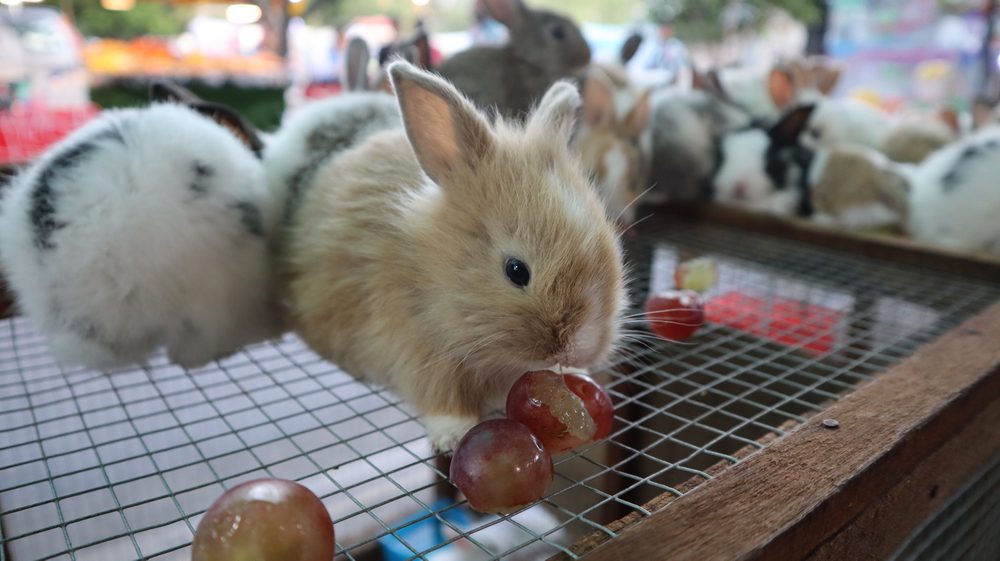
Yes — rabbits can eat grapes. Unlike dogs and cats, for whom even small quantities of grapes can cause acute kidney failure, rabbits do not appear to share this vulnerability. Multiple veterinary sources confirm there are no reported grape toxicities in rabbits, and grapes are widely recognized by rabbit nutrition authorities as a safe occasional treat when offered in appropriate amounts.
That said, “safe” and “appropriate to feed freely” are not the same thing. Grapes are one of the highest-sugar fruits commonly offered to pet rabbits, and their sugar content means they belong firmly in the treat category — not the daily diet. This guide covers the facts on grape safety for rabbits, how much is appropriate, what parts of the grape plant are safe, and the specific considerations for Angora rabbit owners.
Are Grapes Safe for Rabbits?
The consensus among rabbit nutrition specialists and veterinarians is that fresh grapes are not toxic to rabbits. Veterinarian Dr. Michelle Burch notes that grapes contain fiber, B vitamins, and vitamin K that may benefit rabbits. A case series at the ASPCA Poison Control Center identified tartaric acid as the compound responsible for grape toxicity in dogs and cats — a compound that does not appear to cause the same effect in rabbits.
One important note: the Pet Poison Helpline advises caution about grapes for rabbits as a precautionary measure, citing the lack of definitive data on the topic. This is not the same as confirmed toxicity in rabbits — it reflects appropriate conservatism in the face of limited research. If you have any specific health concerns about your individual rabbit, consult a rabbit-experienced veterinarian before offering grapes.
The practical position taken by most rabbit care authorities, and the one reflected in this guide, is that fresh grapes in small quantities are safe for healthy adult rabbits. The primary risk is not toxicity but the digestive disruption and systemic effects of excess sugar.
Why Grapes Should Be an Occasional Treat Only
Grapes contain approximately 15 to 16 grams of sugar per 100 grams of fresh fruit, among the highest sugar concentrations of any commonly available fresh fruit. For a rabbit whose digestive system evolved for a diet of grasses, hay, and leafy plants with very low sugar content, this is significant.
The rabbit digestive system relies on a delicate population of bacteria in the cecum — a fermentation chamber in the lower digestive tract — to process food. This bacterial population is optimized for high-fiber, low-sugar input. Introducing regular or excessive quantities of high-sugar foods disrupts the bacterial balance, can cause rapid overgrowth of unfavorable bacterial strains, and produces digestive symptoms ranging from soft droppings to diarrhea to, in more serious cases, GI stasis.
Beyond the acute digestive risks, consistent sugar excess in a rabbit’s diet contributes to weight gain, dental disease, and, in some rabbits over time, metabolic disruption. These are not hypothetical concerns — they are the documented health consequences of high-sugar feeding in domestic rabbit populations.
This is why veterinarians and rabbit nutritionists categorize grapes not with vegetables — which form a legitimate daily part of a rabbit’s diet — but with fruit treats that should be occasional, measured, and never the main event.
Grapes and Angora Rabbits: The Specific Consideration
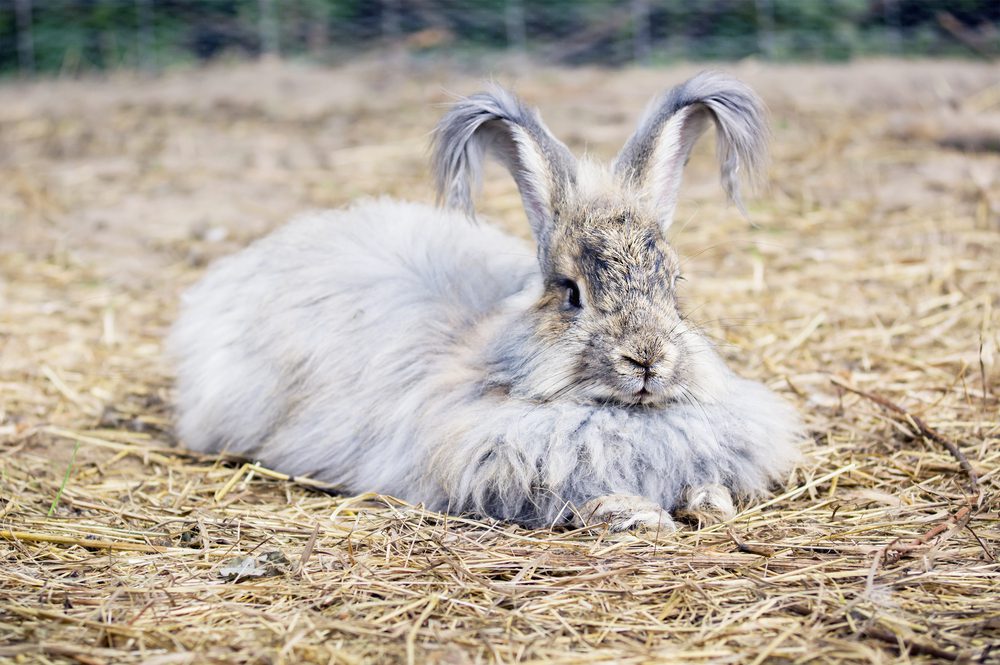
For Angora rabbit owners, the grape question carries an additional dimension tied to the breed’s nutritional requirements. Angora rabbits require a minimum of 17% protein in their pellets to support the continuous energy demands of wool growth. Their diet is more precisely calibrated than a standard pet rabbit’s, and the margin for treat disruption to core nutritional priorities is narrower.
The primary concern is the same as with all high-sugar foods: any treat that is palatable enough to compete with hay will reduce hay consumption. For Angora rabbits, reduced hay intake elevates wool block risk — the accumulation of ingested fiber in the digestive tract that is the leading cause of preventable death in Angora rabbits in US households.
An Angora rabbit that consistently receives sweet treats and reduces its hay consumption in response is a rabbit whose wool block risk is increasing. This does not mean grapes are prohibited for Angora rabbits — it means the treat quantities should be conservative, hay availability should be monitored, and any reduction in hay consumption following treat introduction should trigger a reduction in treat frequency.
For the full Angora rabbit diet framework, see our Angora Rabbit Care Guide.
How Much Grape Can a Rabbit Have?
The consistent recommendation across rabbit nutrition sources is one to two small grapes at a time, offered no more than once or twice per week. This represents a complete portion — not one or two per day.
For smaller rabbit breeds or younger rabbits being introduced to grapes for the first time, start with half a grape and monitor for any digestive changes over the following 24 hours. Soft or loose droppings, reduced hay consumption, or any behavioral change following grape introduction are signals to reduce the quantity or discontinue.
Baby rabbits under three months of age should not receive grapes. Their developing digestive systems are sensitive to dietary disruption from high-sugar foods, and the nutritional priority during this period is hay, appropriate starter pellets, and — where still nursing — mother’s milk.
Which Parts of the Grape Plant Are Safe?
Fresh grape fruit (seedless varieties): Safe in the quantities described above. Seedless varieties are preferred because grape seeds, while not acutely toxic, can be difficult for rabbits to digest and present a choking risk in smaller rabbits. If seeded grapes are the only option, remove the seeds before offering.
Grape leaves: Safe and nutritious. Grape leaves have a higher fiber content and lower sugar content than the fruit, making them more aligned with the rabbit’s dietary needs. They can be offered as part of the daily leafy green portion of the diet if fresh and washed from an unsprayed source.
Raisins (dried grapes): Not recommended. Raisins have had their water removed, concentrating the sugar significantly — a single raisin contains proportionally far more sugar than a fresh grape of the same weight. While not acutely toxic, the sugar concentration makes raisins inappropriate as a rabbit treat.
Grape stems: Avoid. Grape stems contain tannins and small quantities of oxalic acid. While occasional brief contact is unlikely to cause harm, stems are not an appropriate food item for rabbits and should not be offered intentionally.

How to Introduce Grapes Safely
If your rabbit has not had grapes before, introduce them as you would any new food — one small piece at a time, with monitoring over the following 24 hours.
Step 1: Wash the grapes thoroughly to remove any pesticide residue. Choose organic grapes where available, as conventional grapes are among the produce items with higher pesticide loads.
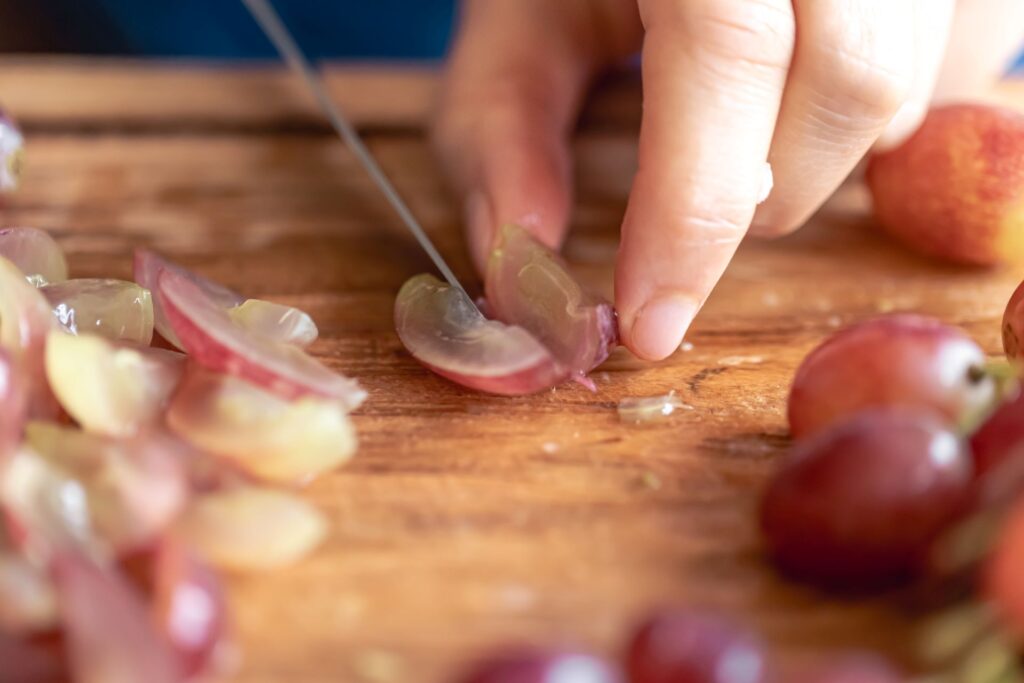
Step 2: Cut the grape into a small piece — roughly half a grape for a medium-sized rabbit — and offer it as a standalone treat, not mixed into the food bowl, where it might displace hay consumption.
Step 3: Observe the rabbit’s hay consumption and droppings over the following 24 hours. Healthy droppings are round, uniform, and abundant. Any change in droppings, any reduction in hay eating, or any behavioral change is a reason to pause before offering grapes again.
Step 4: If no adverse response is observed, grapes can be offered occasionally at the quantities described above.
Grapes vs. Other Fruit Treats: A Comparison
Grapes are not the only fruit appropriate for occasional rabbit treats, and not every fruit is equally suitable. For comparison:
Blueberries: Lower sugar content than grapes, high in antioxidants. A reasonable alternative or complement to grapes as a treat.
Apple slices (seedless): Safe and popular. Apple seeds must always be removed — they contain cyanogenic compounds. The flesh is a suitable treat in small quantities.
Banana: High in sugar — treat even more sparingly than grapes. A small slice once a week is an appropriate maximum.
Strawberries: Moderate sugar content, well-tolerated by most rabbits. A good lower-sugar alternative to grapes.
Cherries (pitted): Safe in small quantities. Remove the pit and stem, which contain cyanogenic compounds.
Citrus fruits: Best avoided. The acidity can cause digestive upset in many rabbits.
For the complete list of safe and unsafe foods for rabbits, see our Angora Rabbit Care Guide.
FAQs
Can rabbits eat grapes?
Yes — grapes are not toxic to rabbits and are safe as an occasional treat in small quantities. The concern is not toxicity but the high sugar content, which disrupts the gut bacteria balance and can cause digestive issues when offered in excess. One to two small grapes, once or twice a week at most.
Are grapes as dangerous for rabbits as they are for dogs?
No. Grapes cause acute kidney failure in dogs and cats through a mechanism involving tartaric acid. Current veterinary evidence indicates this mechanism does not affect rabbits in the same way, and there are no confirmed reports of grape toxicity in rabbits. This does not mean grapes should be fed freely — sugar remains the primary concern — but the acute toxicity risk that applies to dogs does not appear to apply to rabbits.
Can rabbits eat raisins?
Raisins are not recommended. The dehydration process concentrates the sugar from fresh grapes significantly, making raisins a much higher-sugar food than the equivalent weight of fresh grapes. While not acutely toxic, the sugar concentration makes them an inappropriate treat choice.
Can rabbits eat grape leaves?
Yes. Grape leaves have lower sugar content than the fruit and higher fiber content, making them more suitable for regular inclusion in the leafy green portion of the daily diet. Ensure they are fresh, washed, and from an unsprayed source.
How many grapes can an Angora rabbit have?
The same guideline applies as for any rabbit — one to two small grapes, once or twice per week. For Angora rabbits, monitoring hay intake after grape introduction is particularly important because reduced hay consumption elevates wool block risk.
What should I do if my rabbit eats too many grapes?
Monitor closely for the following 24 hours. Soft or loose droppings, reduced hay eating, or any behavioral change warrants attention. If droppings have not normalized within 24 hours, or if the rabbit shows signs of GI distress — hunched posture, tooth grinding, pressing the abdomen against the floor — contact a rabbit-experienced veterinarian promptly.
Conclusion
Grapes are a safe occasional treat for healthy adult rabbits, provided they are offered in small quantities, no more than once or twice a week, and as a supplement to — not a replacement for — the core diet of unlimited hay, measured high-protein pellets, and daily leafy greens.
For Angora rabbits, where diet quality directly affects coat health and wool block risk, conservative treat quantities and attentive hay monitoring are the practical standards that protect both health and fiber production.
For the complete diet and nutrition framework for Angora rabbits, see our Angora Rabbit Care Guide. For a parallel treatment of another common fruit question, see our Can Rabbits Eat Carrots? guide.
The information in this article is for general educational purposes and does not constitute veterinary advice. For any dietary concern relating to your rabbit, consult a licensed veterinarian. See our disclaimer for full details.