Types of Angora Rabbits: A Complete Breed Guide for US Owners
Angora rabbits are not a single breed. They are a group of breeds that share one defining characteristic: a long, continuously growing wool coat harvested for fiber. Beyond that shared trait, the breeds differ significantly — in size, temperament, grooming requirements, wool yield, fiber quality, and suitability for different types of owners.
The American Rabbit Breeders Association recognizes four Angora breeds: the English, French, Giant, and Satin Angora. The German Angora is recognized separately by the International Association of German Angora Rabbit Breeders and is widely kept in the United States despite not holding ARBA recognition. Each of these breeds has distinct characteristics that make it the right choice for some owners and the wrong choice for others.
This guide covers all five breeds in full — physical characteristics, wool production, grooming demands, temperament, and which type of owner each breed suits best — so that you can make an informed decision before bringing an Angora rabbit home.
A Brief History of the Angora Rabbit
The Angora rabbit originates from Ankara, Turkey — historically known as Angora — where the breed is believed to have been kept since at least the early 18th century. French sailors brought Angora rabbits to Europe in 1723, and the breed quickly became fashionable among French royalty. By the end of the 18th century, Angoras had spread across Europe. They arrived in the United States in the early 20th century, and domestic production expanded significantly during World War II as demand for the warm, lightweight fiber increased sharply.
The American Rabbit Breeders Association, founded in 1910 and headquartered in the United States, governs breed standards for all recognized Angora varieties in the US. The ARBA maintains the Standard of Perfection, updated every five years, which defines the weight, body type, coat requirements, and color varieties for each recognized breed. Full breed standards are available directly from arba.net.
The Four ARBA-Recognized Angora Breeds
1. English Angora
- Weight: 5 to 7.5 pounds (2.3 to 3.4 kg)
- Body type: Compact, rounded
- Wool coverage: Entire body, including face, ears, and feet
- Wool yield: 10 to 16 oz (280 to 450 g) per year
- Grooming level: High — daily attention required
- Molting: Yes — naturally sheds coat every 90 to 120 days
- Best for: Experienced rabbit owners, show breeders, fiber enthusiasts with ample grooming time
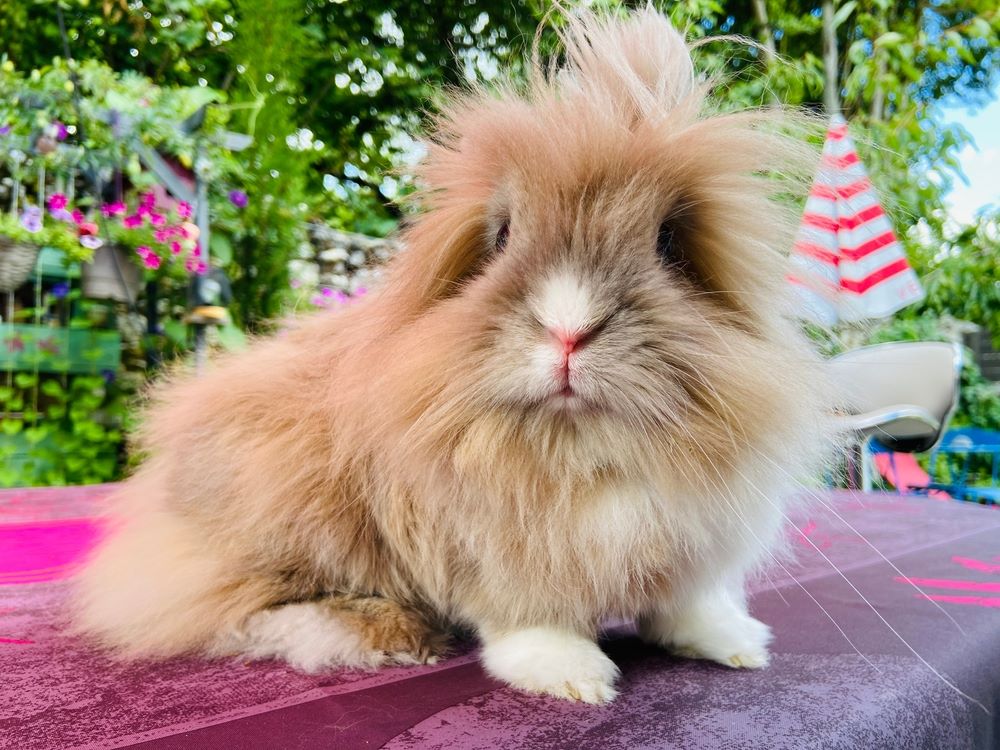
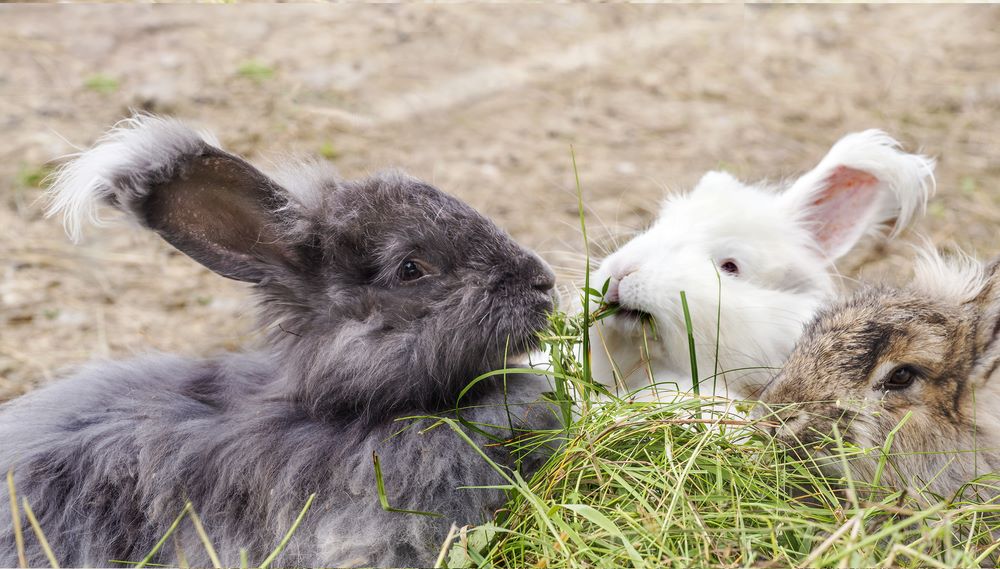
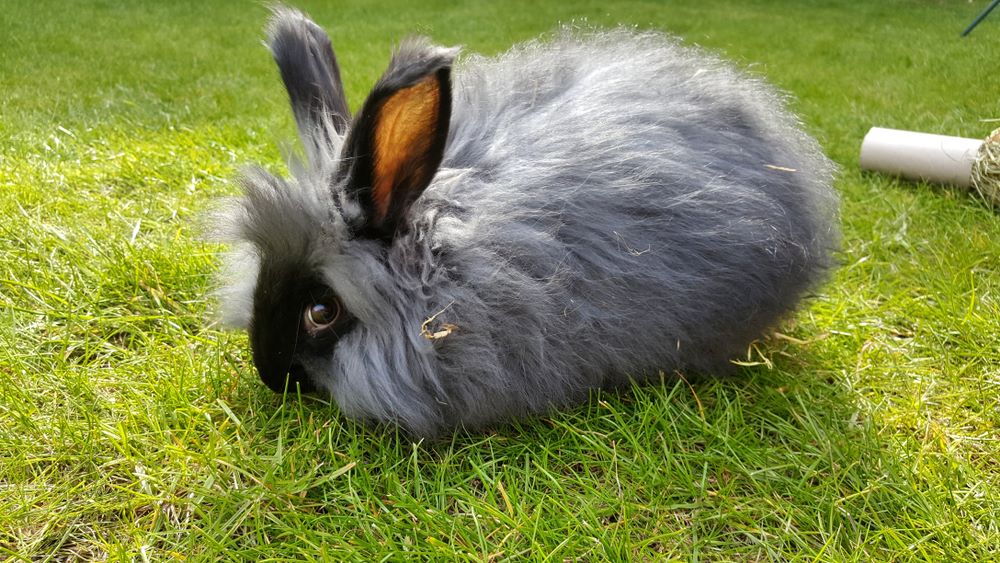
The English Angora is the smallest of the four ARBA-recognized Angora breeds and the most visually distinctive. It is the only Angora breed in which wool covers the entire body, including the face, ears, and feet — giving it a rounded, almost spherical appearance that makes it immediately recognizable.
The facial furnishings of the English Angora are both its most striking feature and its greatest care challenge. Wool growing around and near the eyes requires regular trimming to prevent eye irritation and infection. Without consistent attention, the facial wool mats rapidly and causes significant discomfort.
The English Angora’s coat has very few guard hairs, which produces exceptionally soft wool, considered the finest of all the Angora breeds by most spinners. This lack of guard hair also means the coat mats far more readily than other breeds, making consistent grooming non-negotiable. Owners who allow the coat to go without attention for even a few days during molting season may face a coat that is beyond salvage by combing alone.
English Angoras naturally shed their coats every 90 to 120 days and can be harvested by hand-plucking during the molt. Some show lines bred by specialist breeders — notably the line developed by Candy Haenszel — have reduced or eliminated the molting trait, requiring clipping instead.
The English Angora is the right choice for an owner who wants the softest, most luxurious Angora fiber and is prepared to commit the time that coat quality demands. It is not suitable for a busy owner or a first-time rabbit keeper without a strong understanding of what the grooming commitment entails.
For a detailed profile of this breed, see our English Angora Rabbits guide.
2. French Angora
- Weight: 7.5 to 10.5 pounds (3.4 to 4.8 kg)
- Body type: Commercial — oval, well-muscled
- Wool coverage: Body only — clean face, ears, and front legs
- Wool yield: 16 to 20 oz (450 to 570 g) per year
- Grooming level: Moderate — two to three times per week
- Molting: Yes — naturally sheds coat every 90 to 120 days
- Best for: First-time Angora owners, fiber enthusiasts who want good production with manageable grooming
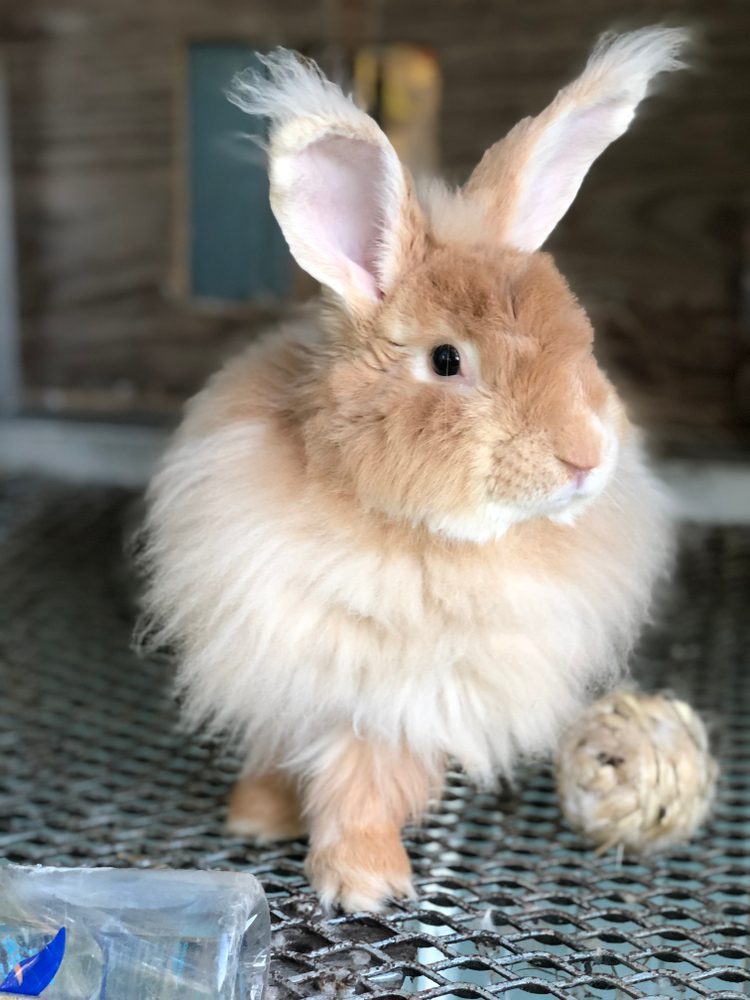
The French Angora is consistently recommended as the most beginner-friendly of the Angora breeds, and that reputation is well-earned. Its clean face, ears, and front legs eliminate the most labor-intensive part of English Angora grooming. The body coat still requires regular attention to prevent matting, but the absence of facial furnishings means that the highest-risk areas for eye irritation and mat formation are not present.
The French Angora has a higher proportion of guard hairs than the English Angora. This makes the coat more resistant to matting and easier to maintain, but it also produces a slightly coarser fiber with more structure. Experienced spinners find French Angora fiber easier to work with than the very fine, highly elastic English fiber, and the finished yarn has excellent weight, warmth, and durability.
The French Angora naturally molts and can be harvested by hand-plucking or combing during the shed. Wool yield is higher than that of the English Angora due to the breed’s larger body size.
The French Angora is a strong choice for any owner who wants a manageable, productive Angora rabbit. It suits households that do not have several hours per week for intensive grooming but still want regular fiber production and a rewarding companion animal.
For a detailed profile of this breed, see our French Angora Rabbits guide.
3. Giant Angora
- Weight: 9.5 pounds and above (4.3 kg and above) — no upper limit
- Body type: Commercial — large, heavily boned
- Wool coverage: Body, with furnishings on forehead and cheeks
- Wool yield: 28 to 40 oz (790 to 1,130 g) per year
- Grooming level: Moderate — two to three times per week
- Molting: Does not naturally molt — must be clipped every 90 days
- Best for: Serious fiber producers, experienced rabbit keepers with space for a large animal
- ARBA recognized color: Ruby-Eyed White only
The Giant Angora is the largest of the four ARBA-recognized Angora breeds and the highest producer of all recognized breeds by wool yield. It is the only ARBA breed with a six-class show structure, meaning it is judged in six weight categories rather than the standard four. The only color recognized by the ARBA for the Giant Angora is the Ruby-Eyed White.
The Giant Angora’s coat has a three-component structure: soft underwool, awn fluff, and awn hair. This combination produces a dense, structured coat that is easier to manage than the English Angora’s all-underwool coat, but still requires consistent grooming to prevent matting and maintain fiber quality.
The Giant Angora does not naturally shed its coat and must be clipped every 90 days, regardless of whether the owner wants to spin the fiber. Allowing the coat to grow beyond 90 days without harvesting causes the fiber to become overly long, matted, and uncomfortable for the animal.
Giant Angoras mature slowly. It typically takes more than one year to reach full size, and bucks can take up to 18 months. Their large size means they require more enclosure space than smaller breeds — a minimum cage size of 36 inches by 30 inches (91 cm by 76 cm) is recommended, with larger being preferable.
The Giant Angora suits a committed, experienced owner with physical space, an interest in maximizing fiber production, and the routine to maintain a clipping schedule every 90 days without exception.
For a detailed profile of this breed, see our Giant Angora Rabbits guide.
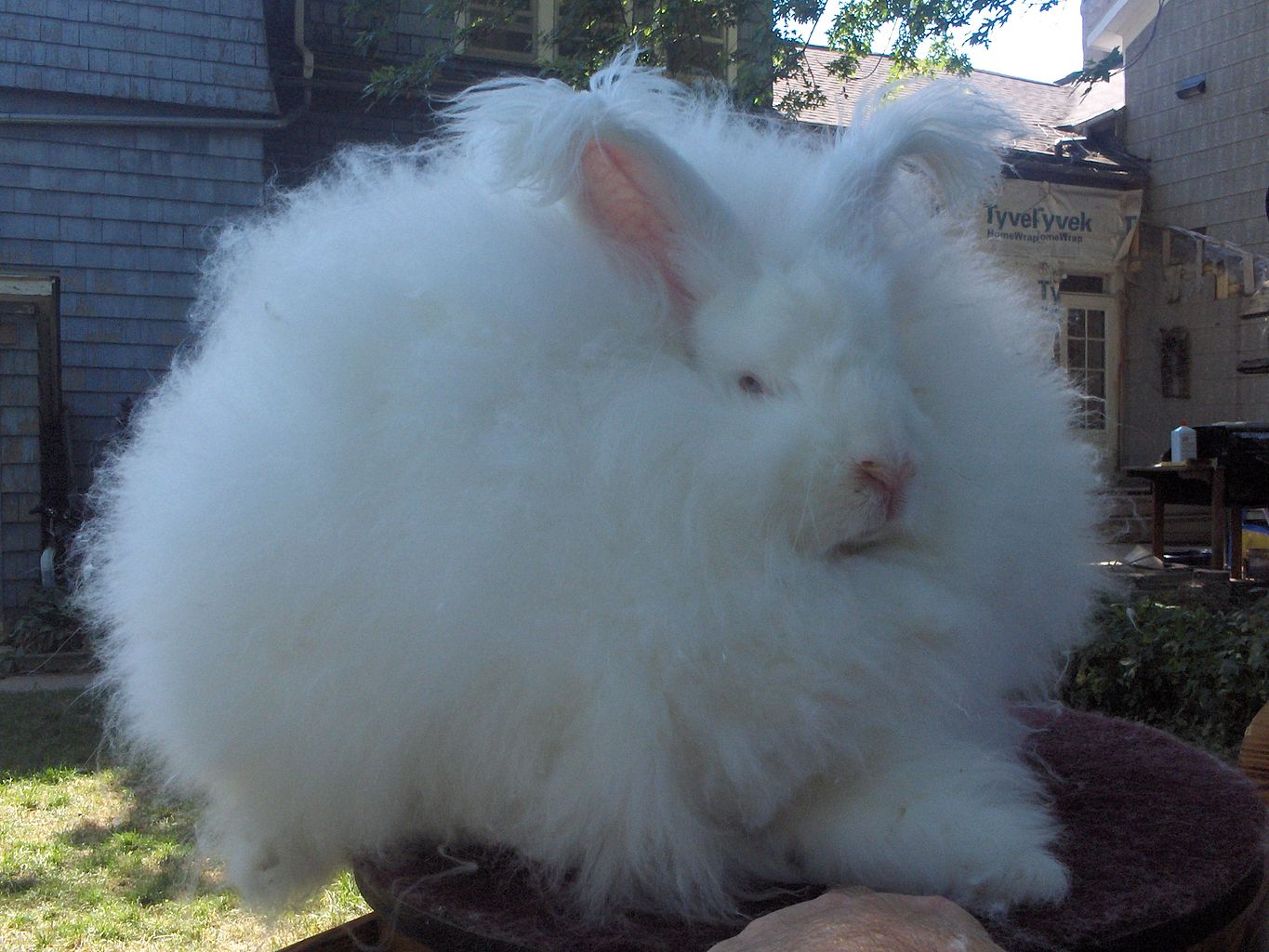
4. Satin Angora
- Weight: 6.5 to 9.5 pounds (3 to 4.3 kg)
- Body type: Semi-commercial — similar to French Angora
- Wool coverage: Body only — clean face, ears, and feet
- Wool yield: 10 to 16 oz (280 to 450 g) per year
- Grooming level: High — daily combing recommended
- Molting: Yes — naturally sheds coat
- Best for: Fiber artists who value luster and aesthetic quality in their yarn, experienced groomers
The Satin Angora is the most visually distinctive of all the Angora breeds when it comes to fiber quality. Its defining characteristic is the satin gene — a genetic mutation that produces a semi-transparent fiber shaft that reflects light, giving the coat an unmistakable high-sheen luster. No other Angora breed produces fiber with this quality.
The Satin Angora was developed in the late 1970s by Leopoldina Meyer of Holland Landing, Ontario, through crossbreeding French Angoras with Satin rabbits. In addition to the sheen, true red and copper pigments — not possible in other Angora breeds — emerged in the new breed.
Despite its visual appeal, the Satin Angora has some practical challenges. Its wool yield is the lowest of the four ARBA-recognized breeds. The satin fiber shaft, while beautiful, has a low guard hair count and a slippery texture that makes it more difficult to spin than English or French Angora fiber. Matting is also more of a concern than in the French Angora, and daily combing is the recommended standard for maintaining coat quality.
The Satin Angora is the right choice for a fiber artist who values the aesthetic quality of luster fiber and is prepared to manage a coat that demands more attention than its clean face and feet might suggest. It is not recommended as a first Angora breed.
For a detailed profile of this breed, see our Satin Angora Rabbits guide.
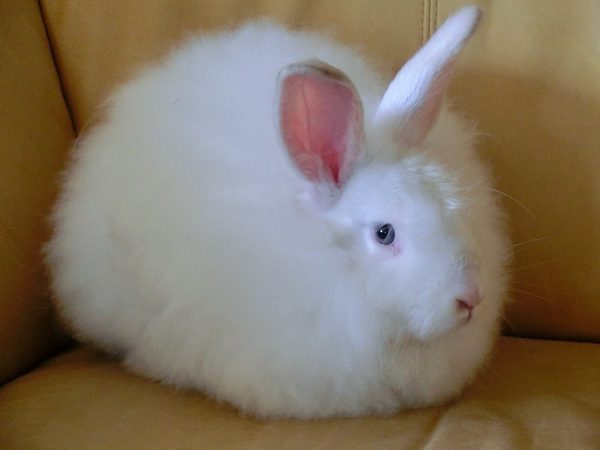
The German Angora — Not ARBA Recognized, but Widely Kept
- Weight: 5.5 to 12 pounds (2.5 to 5.4 kg)
- Body type: Compact, loaf-shaped body, broader and heavier than English
- Wool coverage: Full body, including forehead and cheeks
- Wool yield: 32 to 48 oz (900 to 1,360 g) per year — the highest of all Angora breeds
- Grooming level: Moderate — two to three times per week
- Molting: Does not naturally molt — must be clipped every 90 days
- Best for: Fiber farmers, homesteaders, and serious wool producers who do not intend to show under ARBA rules
The German Angora is not recognized by the American Rabbit Breeders Association. It is governed instead by the International Association of German Angora Rabbit Breeders, which maintains its own breed standard and registration program. Despite the lack of ARBA recognition, the German Angora is widely kept across the United States, particularly by owners focused on fiber production rather than showing.
The German Angora is bred primarily for maximum wool output. It produces significantly more fiber per year than any of the four ARBA-recognized breeds — up to 48 oz (1,360 g) annually from a well-bred individual. The coat has a consistent texture and density well-suited to commercial spinning.
Like the Giant Angora, the German Angora does not naturally molt and must be clipped on a strict 90-day schedule. Temperature sensitivity is a notable characteristic of the breed — German Angoras are more susceptible to heat stress than other Angora breeds and require careful housing management in warm climates and during US summers.
The German Angora suits an owner whose primary interest is fiber production and who is willing to manage a clipping schedule, housing temperature carefully, and the breed’s higher sensitivity to environmental conditions.
For a detailed profile of this breed, see our German Angora Rabbit guide.
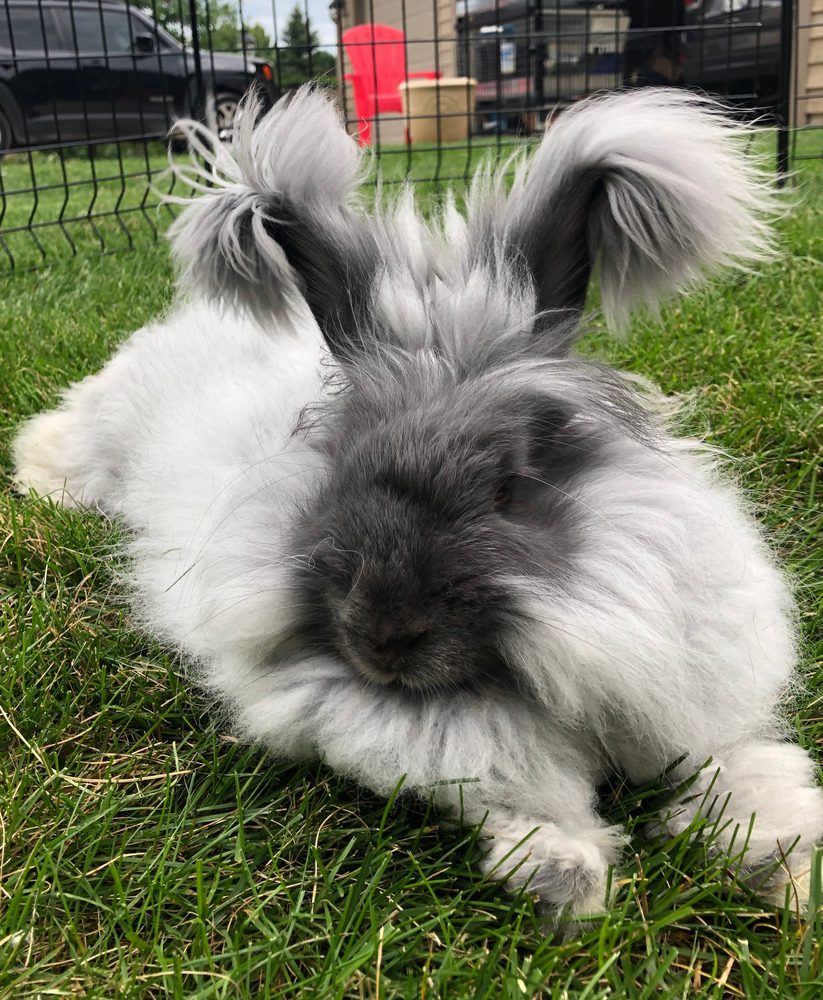
Side-by-Side Breed Comparison
| Feature | English | French | Giant | Satin | German |
|---|---|---|---|---|---|
| Weight | 5–7.5 lb | 7.5–10.5 lb | 9.5 lb+ | 6.5–9.5 lb | 5.5–12 lb |
| ARBA Recognized | Yes | Yes | Yes | Yes | No |
| Clean face | No | Yes | Partial | Yes | No |
| Molts naturally | Yes | Yes | No | Yes | No |
| Must be clipped | No* | No* | Yes | No* | Yes |
| Wool yield/year | 10–16 oz | 16–20 oz | 28–40 oz | 10–16 oz | 32–48 oz |
| Grooming level | High | Moderate | Moderate | High | Moderate |
| Best for beginners | No | Yes | No | No | No |
| Best for fiber production | Good | Good | Excellent | Moderate | Best |
*Molting breeds can also be clipped if preferred
How to Choose the Right Angora Breed
Choose the English Angora if: You want the softest, most luxurious fiber possible. You have significant time for daily or near-daily grooming. You are interested in showing. You are an experienced rabbit owner who understands what the coat demands.
Choose the French Angora if: You are new to Angora rabbits. You want good fiber production with a manageable grooming schedule. You have a moderately busy household. You want a rabbit that is easier to handle and maintain than the English.
Choose the Giant Angora if: You are serious about fiber production and want maximum yield from a recognized breed. You have adequate space for a large animal. You can commit to a strict 90-day clipping schedule. You want to show under ARBA rules.
Choose the Satin Angora if: You are a fiber artist who values the unique luster of satin fiber above yield. You have grooming experience and can commit to daily combing. You want a breed with striking visual appeal and unique fiber properties.
Choose the German Angora if: Your primary goal is maximum wool production, and you do not plan to show under ARBA. You live in a climate where you can manage the breed’s temperature sensitivity. You want a productive fiber animal with a manageable coat structure.
Care Considerations Across All Angora Breeds
Regardless of breed, all Angora rabbits share certain care requirements that differ meaningfully from short-haired rabbit breeds.
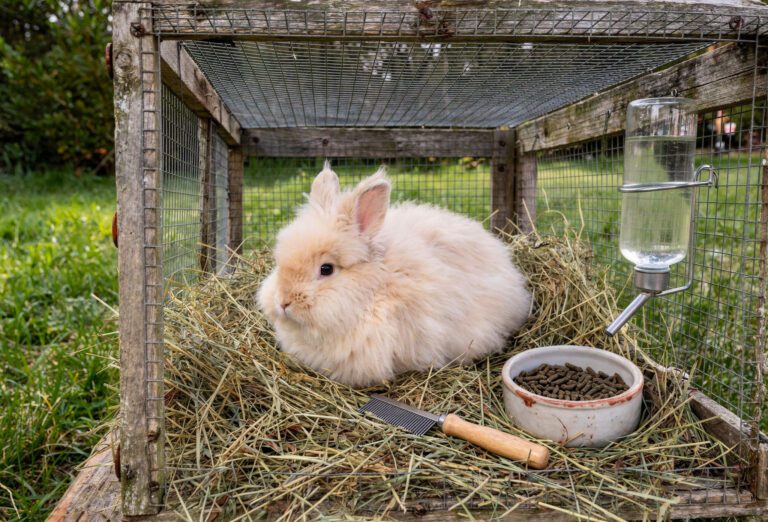
Wool block prevention is the most critical health priority for every Angora owner. All Angora rabbits ingest wool during self-grooming. Unlike cats, rabbits cannot vomit. When ingested, wool accumulates in the digestive tract, it can cause a fatal blockage. Regular grooming — to remove loose fiber before it is ingested — combined with unlimited timothy hay to keep the digestive tract moving, is the primary prevention strategy. Any Angora rabbit that stops eating or producing droppings requires immediate veterinary attention.
Harvesting is not optional. Whether a breed molts naturally or must be clipped, all Angora rabbit coats must be harvested regularly — typically every 90 days. Failing to harvest causes the coat to become overly long, severely matted, and increasingly uncomfortable and harmful to the animal. This applies even to owners who have no interest in spinning or selling fiber.
Diet and protein requirements for Angora rabbits are higher than for short-haired breeds. The continuous growth of a dense wool coat places significant nutritional demands on the animal. Rabbit pellets with a protein content of at least 17% are recommended for Angora rabbits in full coat. For a full diet guide, see our Angora Rabbit Care Guide.
Housing for all Angora breeds must be clean, dry, and well-ventilated. Damp conditions cause the coat to mat and create conditions for skin infection. For detailed housing guidance, see our Can Angora Rabbits Live Outside? article.
Veterinary care from a practitioner with rabbit experience is essential. The House Rabbit Society maintains a state-by-state directory of rabbit-savvy veterinarians across the United States.
For a complete health overview, see our Angora Rabbit Health guide.
Finding Your Angora Rabbit
Once you have decided which breed is the right fit, the next step is finding a reputable breeder or rescue. The American Rabbit Breeders Association maintains a breeder directory at arba.net. For German Angoras specifically, the International Association of German Angora Rabbit Breeders at iagarb.com lists registered breeders.
For guidance on the buying process — what to look for, what to ask breeders, and what to expect in terms of cost — see our Where to Buy an Angora Rabbit and How Much Are Angora Rabbits guides.
Conclusion
Angora rabbits are among the most rewarding animals you can keep — but only when the breed matches the owner. The English Angora demands daily attention and rewards you with the finest fiber of any breed. The French Angora offers a manageable entry point for new owners without sacrificing fiber quality. The Giant Angora delivers unmatched yield for the serious producer. The Satin Angora produces fiber with a luster no other breed can match. The German Angora is the choice for maximum production outside the ARBA show system.
The right breed is not the prettiest or the most popular — it is the one whose care requirements fit your daily reality. Take the comparison table in this guide seriously, match a breed to your lifestyle honestly, and you will be well-positioned to give an Angora rabbit the care it deserves.
FAQs
Which Angora rabbit breed is best for a first-time owner?
The French Angora. Its clean face and moderate grooming requirements make it far more manageable than the English or Satin Angora, while still providing good fiber production and an affectionate temperament.
Which Angora rabbit produces the most wool?
The German Angora produces the most wool of any Angora breed — up to 48 oz (1,360 g) per year from a well-bred individual. Among ARBA-recognized breeds, the Giant Angora produces the most.
Can I show a German Angora at ARBA shows?
No. The German Angora is not recognized by the ARBA and cannot be shown under ARBA rules. It is governed by the International Association of German Angora Rabbit Breeders.
Do all Angora rabbits need to be clipped?
No. English, French, and Satin Angoras naturally molt and can be harvested by hand-plucking or combing during the shed. Giant and German Angoras do not naturally molt and must be clipped every 90 days.
How long do Angora rabbits live?
Most Angora breeds live 7 to 12 years with proper care. For a full breakdown by breed, see our Lifespan of Angora Rabbits guide.
Are Angora rabbits good pets if I am not interested in spinning fiber?
Yes, provided you understand that the coat must still be managed and harvested regularly, regardless of whether you use the fiber. Neglecting an Angora rabbit’s coat causes serious health problems for the animal. The grooming commitment is real, whether or not you spin.