Are Rabbits Farm Animals? The Complete Answer
The direct answer is: it depends on the context. Rabbits are simultaneously one of the world’s most widely kept livestock species and one of the most popular companion animals. Whether a rabbit is classified as a farm animal depends on how it is kept, what it is kept for, and which legal or regulatory framework applies in a given US state.
This dual classification — livestock in some contexts, pet in others — creates genuine confusion for new rabbit owners, homesteaders, and anyone researching rabbit keeping for the first time. This article resolves that confusion with a complete, factual answer covering biology, history, US legal classification, and the practical implications for Angora rabbit owners.
What Defines a Farm Animal?
A farm animal — also called livestock — is an animal kept primarily for agricultural production: meat, fiber, milk, eggs, hides, labor, or breeding stock. The defining characteristic is productive use on a working property, not the species itself.
By this definition, rabbits are unambiguously farm animals in many contexts. They are raised commercially for meat, fiber (particularly Angora wool), pelts, and laboratory use across the United States and worldwide. The USDA classifies rabbits as livestock. The National Center for Appropriate Technology (NCAT) lists rabbits as alternative livestock specifically suited to small-acreage and beginning farmers.
At the same time, rabbits are the third most popular pet species in the United States after dogs and cats. Millions of domestic rabbits are kept exclusively as household companions, with no productive agricultural purpose whatsoever.
The animal is the same. The classification differs based entirely on use.
The History of Rabbits as Livestock
The European rabbit (Oryctolagus cuniculus) — the ancestor of all domestic rabbit breeds — was first exploited as a food source by the Romans, who kept wild rabbits in walled enclosures called leporaria. Organized rabbit farming, or cuniculture, developed through medieval Europe as monasteries and noble estates established managed rabbit warrens for meat and fur production.
By the 18th century, selective breeding had produced distinct rabbit breeds optimized for meat production, pelt quality, and — with the development of Angora breeds in Turkey and France — fiber production. The Angora rabbit arrived in the United States in the early 20th century, and small-scale Angora fiber production remains an active cottage industry across the US today.
Rabbits have never lost their livestock designation in US agriculture. The USDA includes rabbit meat production in its agricultural census data. Commercial rabbit operations producing meat and fiber operate legally in all 50 states.
Are Rabbits Classified as Livestock in the US?
At the federal level, the USDA classifies rabbits as livestock. This classification has several practical implications:
Tax treatment: In most US states, rabbits kept for agricultural production — meat, fiber, breeding — qualify as livestock for agricultural tax exemptions and deductions. Feed, housing, and veterinary costs may be deductible as farm expenses for productive rabbit operations.
Zoning: In many US municipalities, rabbits kept as livestock fall under agricultural zoning regulations rather than pet ownership rules. This can affect how many animals you may keep, how their housing must be constructed, and how waste must be managed.
Slaughter and sale: Rabbit meat is exempt from USDA mandatory inspection requirements under the Federal Meat Inspection Act — one of the few livestock species with this exemption. Individual states regulate rabbit meat processing differently. Checking state-specific requirements before selling rabbit meat is essential.
State variation — the California example: California classifies all domestic rabbits as livestock regardless of how they are kept. A rabbit kept as an indoor companion pet in a California apartment is legally classified as livestock under California law — a classification that affects shelter requirements, spay/neuter policies, and adoption protocols for rabbits in that state.
This California situation illustrates the core of the confusion around rabbit classification: the legal category does not always reflect the actual use or living conditions of the animal.
Rabbits as Productive Farm Animals: What They Are Raised For
Meat Production
Rabbit is one of the most feed-efficient meat animals available to small-scale US producers. A doe and two does can produce 40 to 50 market-weight offspring per year from a very small space and feed investment. Rabbit meat is high in protein, low in fat and cholesterol, and carries no religious dietary restrictions that limit its market. Commercial meat rabbit breeds include the New Zealand White and Californian.
Fiber Production
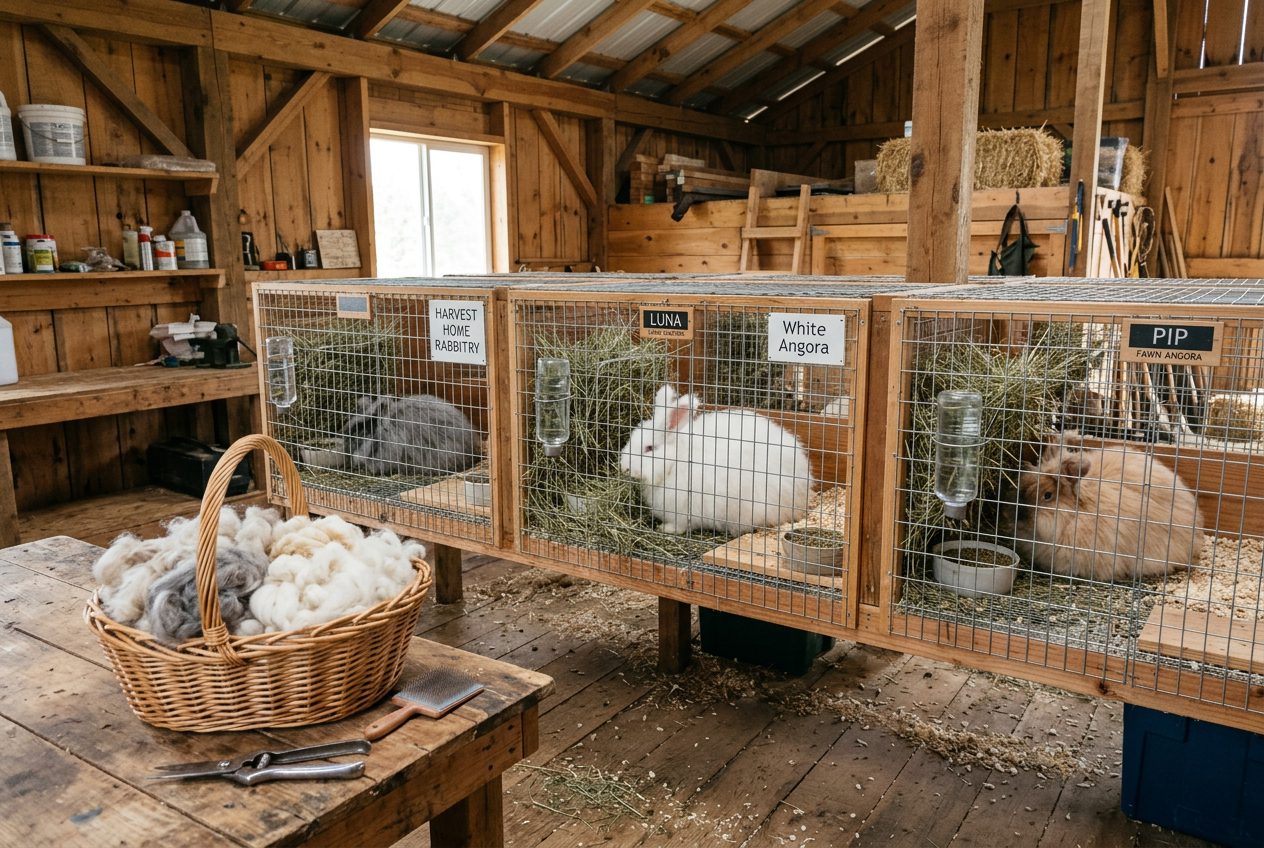
Angora rabbit breeds — English, French, Satin, Giant, and German — are kept specifically for their wool, which is harvested several times per year and sold to hand spinners, fiber artists, and small textile producers. A single German Angora produces 24 to 48 ounces of premium fiber per year, worth $8 to $12 per ounce raw. This is the direct agricultural use case most relevant to visitors of this site. For the complete fiber production guide, see our Raising Angora Rabbits for Wool article.
Pelt Production
Rabbit pelts are used in the fur industry, primarily from Rex and Satin breeds kept for their pelt quality. This is a declining market in the US, but it remains economically relevant in some regions.
Breeding Stock
Rabbits breed rapidly — gestation lasts 28 to 32 days, and does can produce multiple litters per year, making breeding stock sales a viable component of a small rabbitry’s income alongside fiber or meat production.
Fertilizer
Rabbit manure is one of the most valued small animal fertilizers available to homesteaders. Unlike poultry manure, rabbit droppings can be applied directly to garden beds without composting — they are naturally slow-release, low in nitrogen burn risk, and rich in phosphorus and potassium. Many small-scale rabbit operations generate supplemental income from manure sales to local gardeners.
Are Angora Rabbits Farm Animals or Pets?
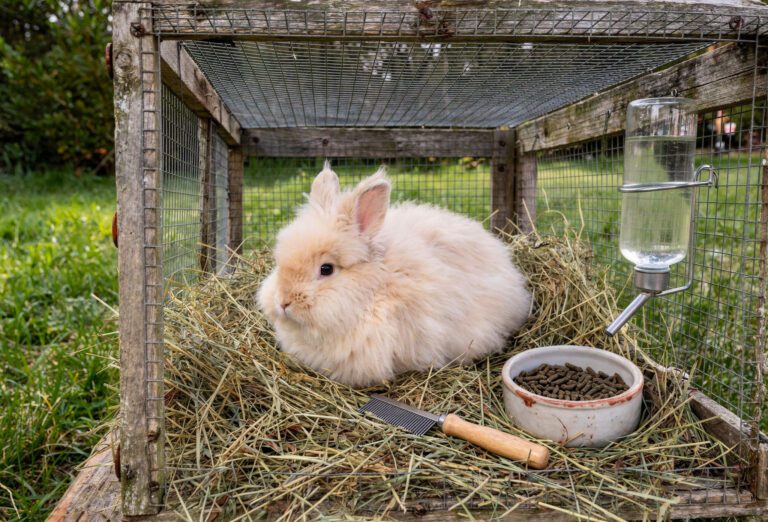
For most Angora rabbit owners in the United States, the honest answer is both. The majority of US Angora rabbit keepers maintain small numbers of animals — one to ten rabbits — kept indoors as household companions and groomed fiber animals simultaneously. These rabbits live in climate-controlled indoor environments, receive regular veterinary care, are handled daily, and produce fiber that is harvested several times per year.
This model sits squarely between the traditional livestock definition and the companion animal definition. For tax and zoning purposes in most states, fiber-producing Angora rabbits kept on a working property qualify as agricultural livestock. For daily care standards, welfare, and the human-animal relationship, they are companion animals.
The key practical implication: Angora rabbit owners who sell fiber or breeding stock should consult a local agricultural extension office or tax professional about whether their rabbitry qualifies for agricultural classification in their state. The benefits — tax deductions, zoning allowances — can be substantial even for very small operations.
FAQs
Are rabbits considered livestock by the USDA?
Yes. The USDA classifies rabbits as livestock at the federal level. This classification applies regardless of whether the rabbit is kept for meat, fiber, breeding, or as a companion animal.
Can I keep rabbits for farming purposes on a residential property?
It depends on your local zoning regulations. In many US municipalities, rabbits kept as livestock require agricultural zoning or a specific permit. Rabbits kept as pets typically fall under standard pet ordinances. Check your county zoning office before establishing a production rabbitry on residential property.
Are Angora rabbits considered farm animals?
Angora rabbits kept for fiber production are agricultural livestock by the USDA definition. Angora rabbits kept solely as companion animals with no production purpose occupy an ambiguous legal category that varies by state. In practical terms, most small-scale Angora fiber producers operate in a hybrid model that qualifies for agricultural classification.
Is rabbit farming legal in all US states?
Rabbit keeping for personal use and small-scale production is legal in all 50 states. Commercial rabbit farming for meat sale is subject to state-specific processing and sale regulations that vary significantly. Check your state’s department of agriculture for current requirements before selling rabbit products commercially.
Do farm rabbits and pet rabbits require the same care?
The same core care standards apply — adequate housing, appropriate diet, veterinary attention, and species-appropriate social needs. However, the practical application differs substantially. Commercial meat rabbit operations prioritize efficiency and productivity. Companion and fiber rabbit keeping prioritizes individual animal welfare, coat condition, and the owner-animal relationship. For Angora breeds specifically, the fiber production and companion care goals are inseparable — a rabbit in poor health from inadequate care produces poor-quality fiber.
What is the most common rabbit farming purpose in the US today?
Small-scale fiber production from Angora breeds is the most rapidly growing segment of US rabbit farming, driven by demand from the hand-spinning and fiber arts community. Rabbit meat production remains the largest commercial segment by volume, but has declined in scale relative to the mid-20th century peak.
Conclusion
Rabbits occupy a genuinely dual position in US agriculture and society — classified as livestock by the federal government, kept as companion animals by millions of households, and functioning as productive fiber animals by thousands of small-scale US producers who bridge both worlds.
For Angora rabbit owners specifically, understanding this dual classification matters practically: it affects tax treatment, zoning eligibility, and the regulatory framework that applies to fiber sales and breeding stock transactions. For new rabbit owners simply wondering whether their rabbit qualifies as a pet or a farm animal, the answer is that it can be both, and the distinction is determined by use, not species.
For everything you need to know about raising Angora rabbits specifically, see our Raising Angora Rabbits guide and our Angora Rabbit Care Guide.
This article is for general educational purposes. For tax, zoning, or legal questions specific to your situation, consult a qualified professional. See our disclaimer for full details.