7 Best Fluffy Rabbit Breeds for Pet Lovers
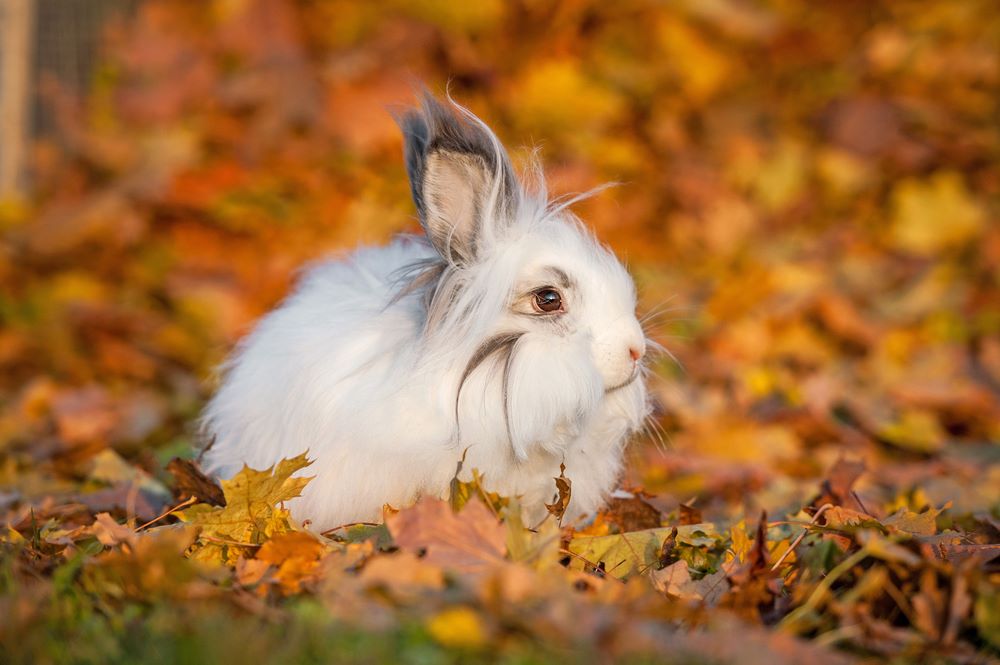
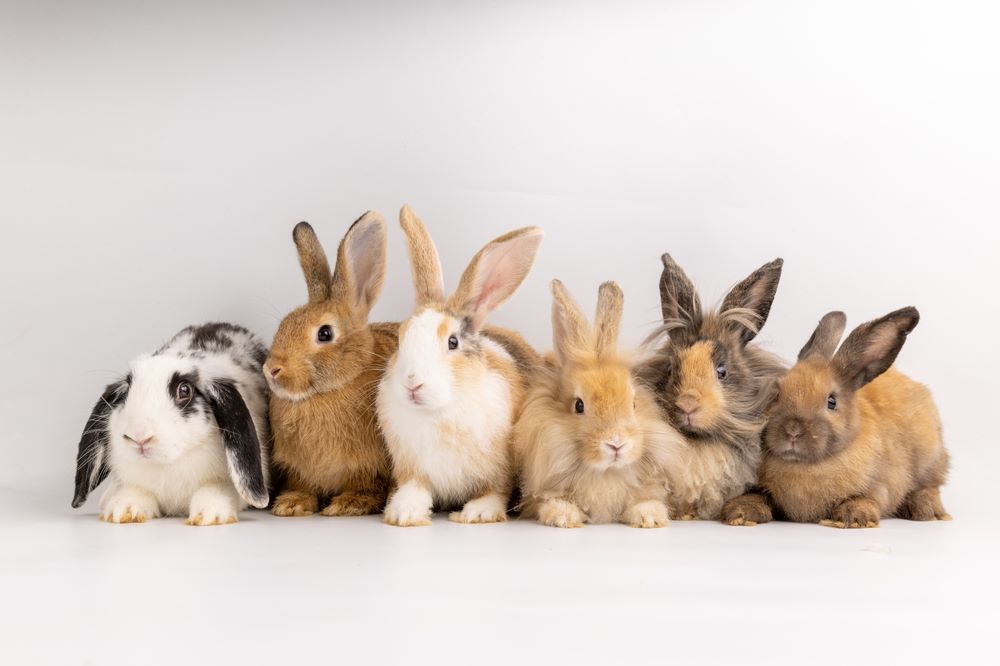
Fluffy rabbit breeds attract attention the moment you see them. The long, soft wool of an Angora, the dramatic mane of a Lionhead, the plush, compact body of a Holland Lop — these are the rabbits that stop people in their tracks at shows and send searches spiking online.
But visual appeal and practical ownership are two different things. Each fluffy rabbit breed comes with a specific set of care requirements, and the fluffier the rabbit, the more significant those requirements tend to be. This guide covers the seven best fluffy rabbit breeds for pet lovers in the United States — what each looks like, what it needs, and who it suits best — so you can make an informed decision before bringing one home.
All weight data and breed recognition status are sourced from the American Rabbit Breeders Association, the governing body for domestic rabbit breeds in the United States.
1. English Angora
- Weight: 5 to 7.5 pounds (2.3 to 3.4 kg)
- ARBA recognized: Yes
- Grooming level: High — daily attention required
- Best for: Experienced owners, fiber enthusiasts, show breeders
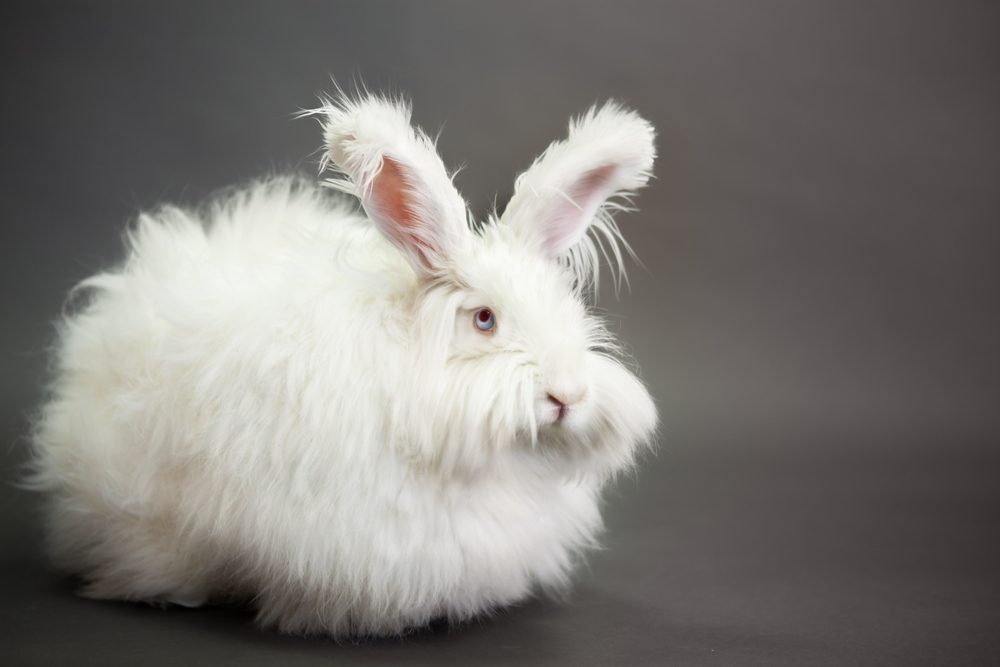
The English Angora is the fluffiest rabbit on this list and arguably the fluffiest of any domestic rabbit breed in existence. It is the smallest of the four ARBA-recognized Angora breeds and the only one in which wool covers the entire body, including the face, ears, and feet. The resulting appearance is almost perfectly spherical, with the rabbit’s facial features visible only through a dense frame of soft fiber.
The English Angora’s wool is the finest produced by any Angora breed. It is harvested every 90 to 120 days by hand-plucking during natural molts. The coat requires a minimum of two to three grooming sessions per week to prevent matting, with daily attention during the molting period. Without consistent grooming, the coat mats rapidly and causes serious discomfort.
The English Angora is not a low-maintenance pet. It suits experienced owners who are prepared to commit significant time to coat care and who are interested in the fiber the wool produces. For those owners, it is one of the most rewarding animals you can keep.
For a full breed profile, see our Types of Angora Rabbits guide and our dedicated English Angora Rabbits page.
2. French Angora
- Weight: 7.5 to 10.5 pounds (3.4 to 4.8 kg)
- ARBA recognized: Yes
- Grooming level: Moderate — two to three times per week
- Best for: First-time Angora owners, fiber enthusiasts, families with time for grooming
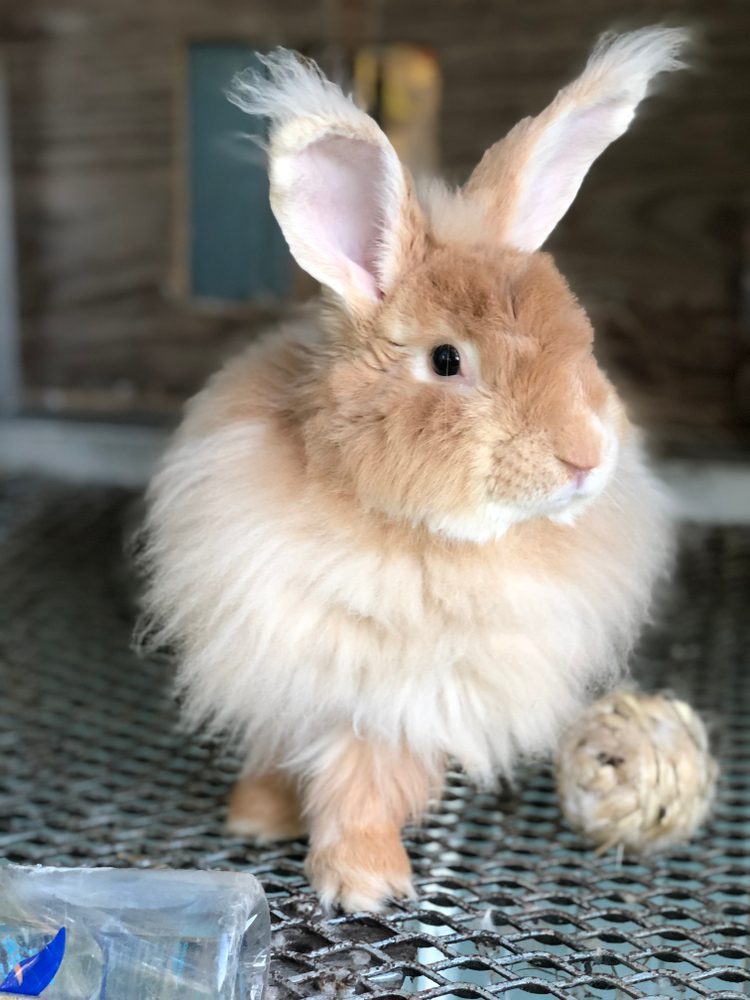
The French Angora is the recommended starting point for anyone new to Angora rabbit keeping. Its clean face, ears, and front feet remove the most labor-intensive aspect of English Angora grooming — the facial wool — making routine coat care significantly more manageable without eliminating the experience of keeping a genuinely fluffy, high-quality wool rabbit.
The French Angora is larger than the English and produces more wool per year — 16 to 20 oz (450 to 570 g) annually. Its body coat has more guard hairs than the English Angora, which makes it more resistant to matting. The fiber it produces is slightly more structured than English Angora wool and is considered easier to spin by most beginners.
The French Angora naturally sheds its coat every 90 to 120 days and can be harvested by hand-plucking or combing. It is the most accessible Angora breed for a committed but not highly experienced owner.
For a full breed profile, see our French Angora Rabbits page.
3. Lionhead Rabbit
- Weight: Maximum 3.75 pounds (1.7 kg)
- ARBA recognized: Yes — since 2013
- Grooming level: Moderate — mane requires regular attention
- Best for: Pet owners who want a small, visually dramatic companion with manageable care demands
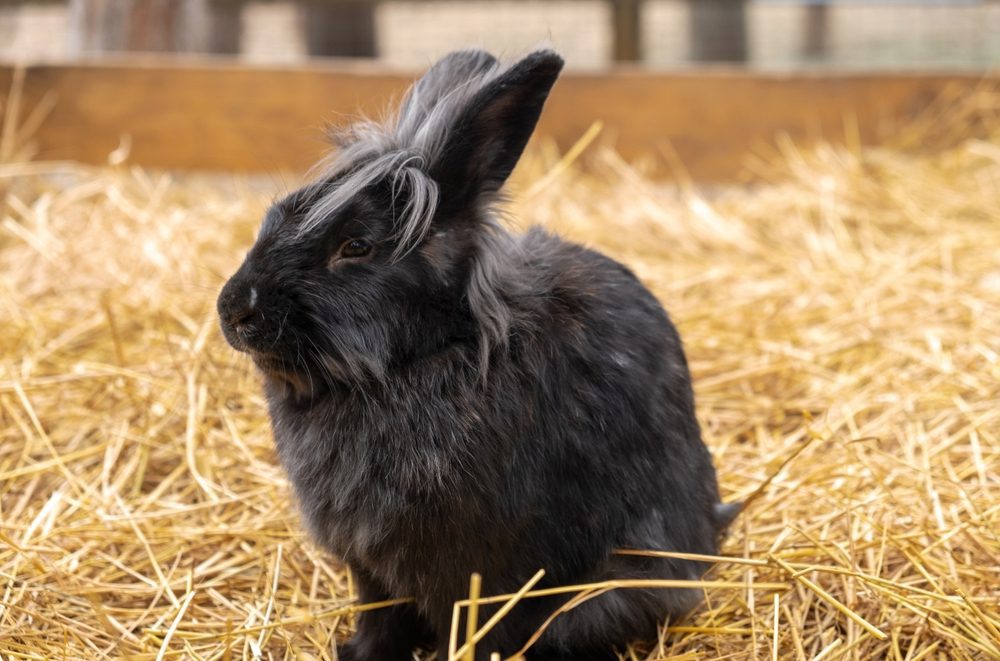
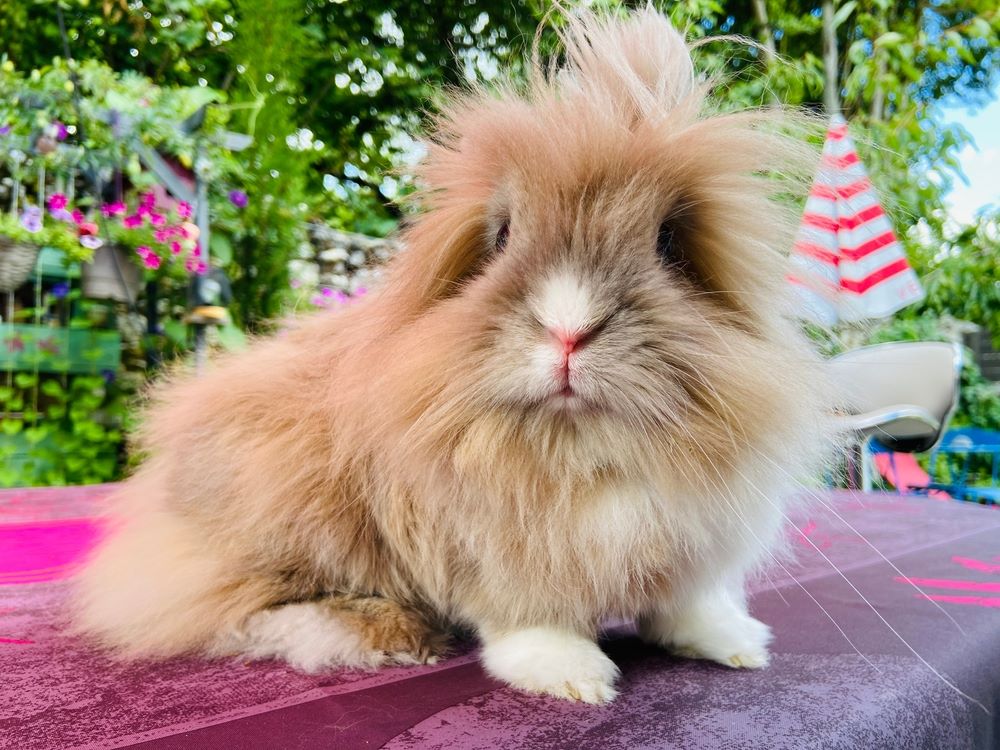
The Lionhead is the rabbit that most immediately captures attention with its appearance. Developed in Belgium and France from crosses involving Swiss Fox rabbits and Netherland Dwarfs, the breed carries a dominant genetic mutation — the mane gene — that produces a dense circle of wooled fiber around the head. The ARBA recognized the Lionhead in 2013, making it one of the newer recognized breeds in the US system.
Lionheads with two copies of the mane gene — called double-maned — maintain their full mane for life and also develop longer fiber along the flanks. Single-maned Lionheads have a thinner mane that may diminish with age.
The mane requires regular combing to prevent matting, particularly behind the ears and at the base where it meets the body coat. The body coat itself is standard rabbit fur and requires only weekly brushing. Total grooming demand is moderate — less than an Angora breed but more than a short-haired rabbit.
The Lionhead suits owners who want a small, visually striking companion with a manageable grooming commitment and no interest in spinning fiber from the coat. For full Lionhead genetics and care details relevant to Angora crossbreeding, see our Angora Lionhead Rabbit guide.
4. Jersey Wooly
- Weight: Maximum 3.5 pounds (1.6 kg)
- ARBA recognized: Yes — since 1988
- Grooming level: Low to moderate — weekly brushing, no shearing required
- Best for: First-time rabbit owners, apartment dwellers, anyone who loves wooled rabbits but wants lower maintenance
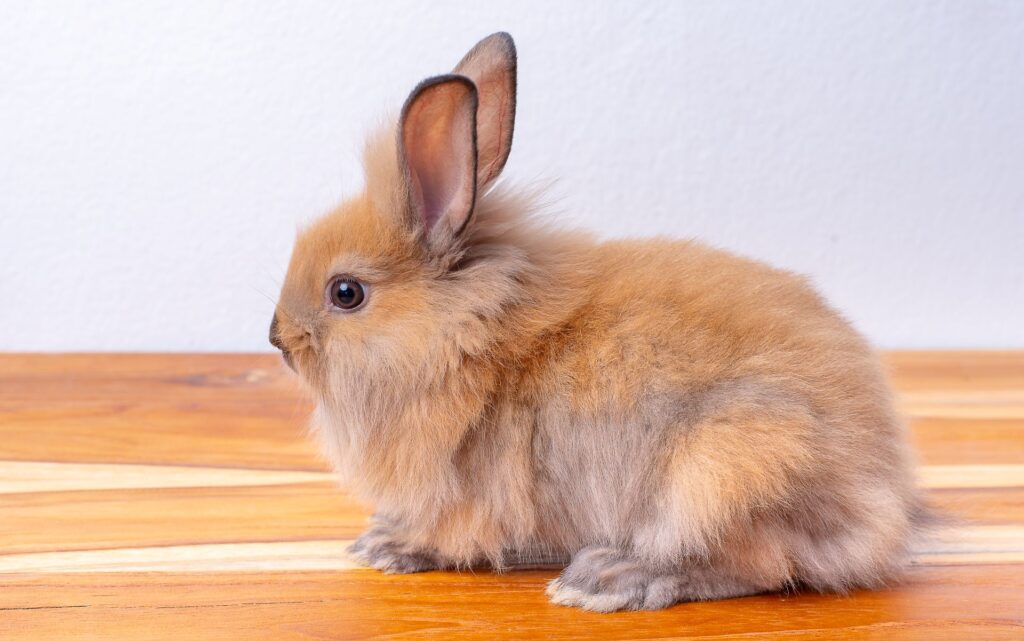
The Jersey Wooly was developed in New Jersey by Bonnie Seeley, who crossed Netherland Dwarfs with French Angoras to produce a small, wool-coated rabbit with a coat that was easy to care for. The ARBA recognized it in 1988, and it has consistently ranked among the top five most popular breeds in the US show system.
Unlike the Angora breeds, the Jersey Wooly’s wool does not require shearing. The coat is approximately 3 inches long, contains substantial guard hair, and requires only weekly brushing — with more frequent brushing during seasonal shedding. It does not produce fiber in sufficient quantities for spinning.
The Jersey Wooly is the right choice for an owner who loves the appearance of a wooled rabbit but cannot commit to the grooming demands of a full Angora breed. Its compact body, friendly temperament, and genuinely easy-care coat make it one of the most practical fluffy rabbits available in the US.
5. American Fuzzy Lop
- Weight: Maximum 4 pounds (1.8 kg)
- ARBA recognized: Yes — since 1988
- Grooming level: Moderate — two to three times per week
- Best for: Families, apartment owners who want a small wooled lop breed
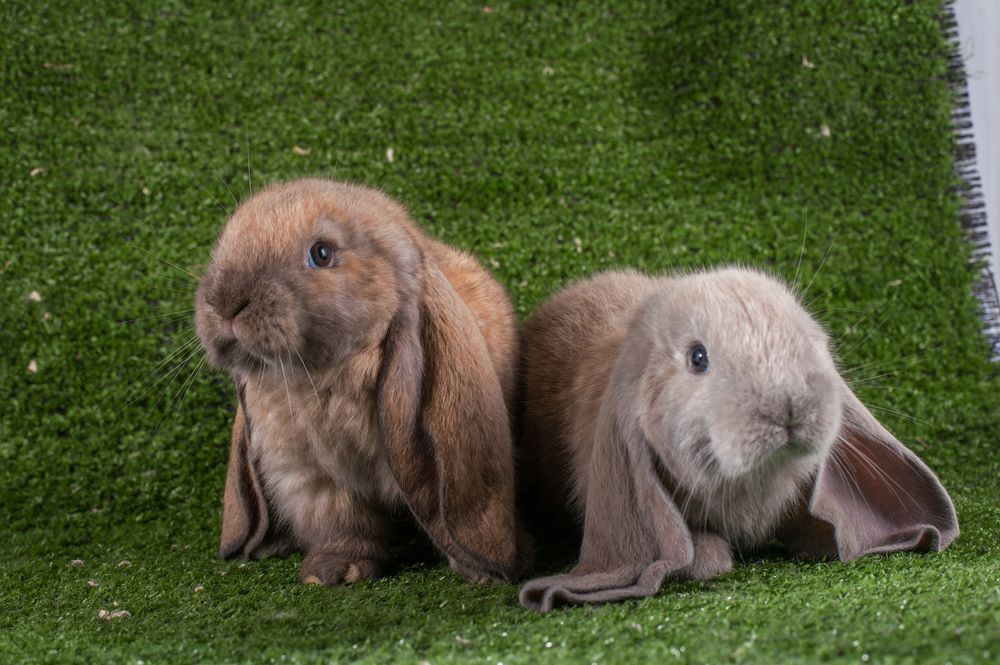
The American Fuzzy Lop is the result of introducing the wool gene into Holland Lop lines — a development that occurred when Holland Lops were crossed with French Angoras to introduce color varieties, inadvertently bringing the Angora wool gene into the Holland Lop gene pool. Breeders recognized the appeal of a small, lop-eared, wool-coated rabbit and developed it as a separate breed. ARBA recognized the American Fuzzy Lop in 1988.
The American Fuzzy Lop has the characteristic lopped ears and compact body of the Holland Lop combined with a dense, wool-type coat. Its maximum weight matches the Holland Lop at 4 pounds. The wool requires two to three times per week grooming to prevent matting — more intensive than the Holland Lop but less demanding than a full Angora breed. No shearing is required.
The American Fuzzy Lop is well-suited to owners who want a small, compact wooled rabbit with the added visual appeal of lop ears. Its social, playful temperament makes it a strong choice for families.
6. Holland Lop
- Weight: Maximum 4 pounds (1.8 kg)
- ARBA recognized: Yes — since 1979
- Grooming level: Low — weekly brushing
- Best for: First-time rabbit owners, families, apartment dwellers
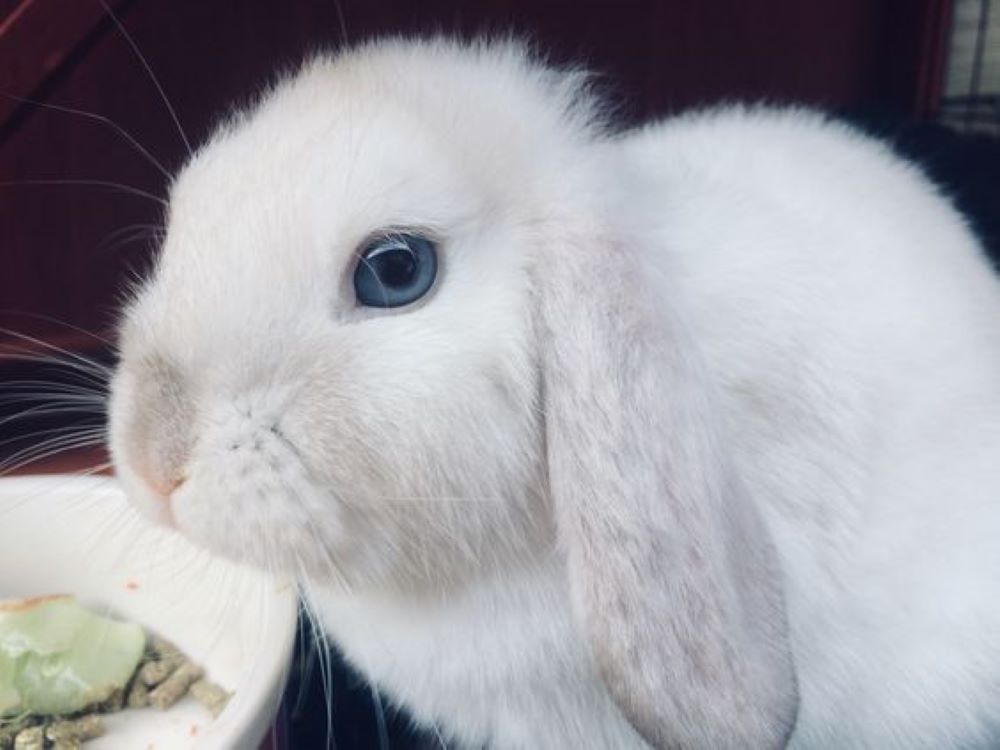
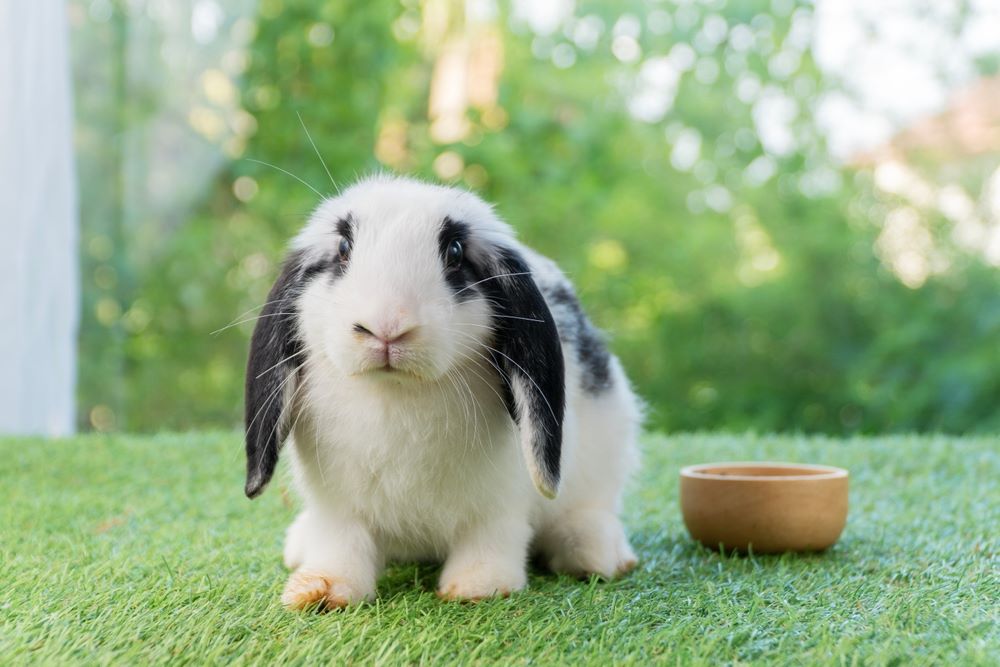
The Holland Lop is consistently one of the most popular rabbit breeds in the United States. Developed by Dutch breeder Adriann de Cock through crosses of French Lops and Netherland Dwarfs, it was recognized by the ARBA in 1979 and has remained near the top of the show entry charts ever since.
The Holland Lop’s coat is dense and plush, but standard rabbit fur in length, not Angora wool. It requires only weekly brushing to maintain it in good condition. The defining physical features are the lop ears that hang close to the face, the compact and heavily boned small body, and a broad, rounded head. It comes in more than 30 recognized color and pattern varieties.
The Holland Lop does not have the wool care demands of the Angora or Jersey Wooly. It is included here because its plush, dense fur and compact, rounded body give it a genuinely fluffy appearance that regularly draws comparisons to the Angora breeds among first-time rabbit buyers. It is the most practical entry point for a pet owner who wants a visually appealing, manageable rabbit.
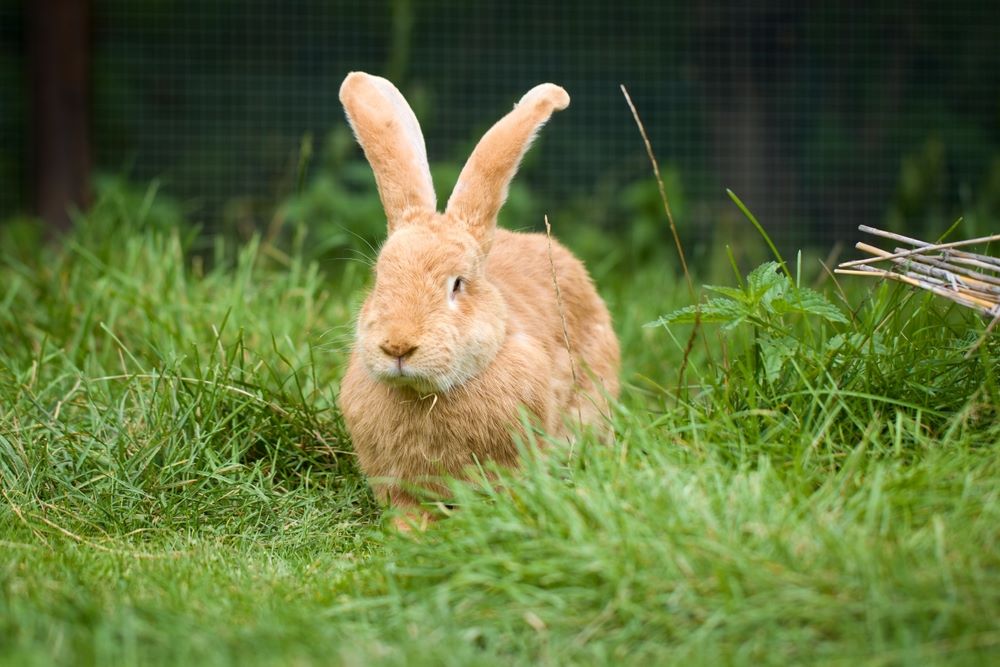
7. Flemish Giant
- Weight: No maximum — seniors typically 14 to 20 pounds (6.4 to 9.1 kg)
- ARBA recognized: Yes
- Grooming level: Low — weekly brushing
- Best for: Experienced rabbit owners with adequate space, families who want a large, docile companion
The Flemish Giant is included not for the length or texture of its fur — it has a short, dense, flyback coat — but for the sheer volume of animal, which creates an impression of extraordinary fluffiness at scale. It is one of the oldest domestic rabbit breeds, originating in Ghent, Belgium, and is one of the largest rabbit breeds in the world.
The Flemish Giant’s coat requires only weekly brushing. Its primary care challenges are size-related rather than coat-related: it needs an enclosure large enough for a rabbit that may exceed 20 pounds, a diet calibrated to its body mass, and handling by an adult or confident, experienced older child. Its temperament is notably calm and gentle for its size.
The Flemish Giant is not an apartment rabbit. It suits owners with adequate space, a preference for large animals, and the physical ability to manage a rabbit of considerable weight during grooming, veterinary visits, and daily care.
Comparing the 7 Fluffy Breeds at a Glance
| Breed | Weight | ARBA Recognized | Coat Type | Grooming Level | Best For |
|---|---|---|---|---|---|
| English Angora | 5–7.5 lb | Yes | Full Angora wool | High | Experienced owners, fiber enthusiasts |
| French Angora | 7.5–10.5 lb | Yes | Angora wool, clean face | Moderate | First-time Angora owners |
| Lionhead | Max 3.75 lb | Yes | Wool mane, normal body | Moderate | Small companion pets |
| Jersey Wooly | Max 3.5 lb | Yes | Short wool, no shearing | Low–Moderate | Beginners, apartment owners |
| American Fuzzy Lop | Max 4 lb | Yes | Wool, lop ears | Moderate | Families, compact wool lovers |
| Holland Lop | Max 4 lb | Yes | Dense plush fur | Low | Beginners, families |
| Flemish Giant | No max — 14–20+ lb | Yes | Short dense flyback | Low | Experienced owners with space |
What to Consider Before Choosing a Fluffy Rabbit Breed
Grooming commitment: The fluffier the rabbit, the greater the grooming requirement in almost every case. English and French Angora rabbits require a minimum of two to three grooming sessions per week, plus a coat harvest every 90 to 120 days. Lionheads and American Fuzzy Lops require consistent mane or coat attention two to three times per week. Holland Lops and Jersey Woolies require only weekly brushing. Be honest about your available time before choosing.
Wool block risk: Any rabbit with a long or wooled coat is at higher risk of wool block — a potentially fatal digestive blockage caused by ingested fiber. Angora breeds carry the highest risk due to their coat density and length. Prevention requires consistent grooming and unlimited hay at all times. Any rabbit that stops eating or producing droppings requires immediate veterinary attention.
Space requirements: Small breeds like the Holland Lop, Lionhead, and Jersey Wooly suit apartments and smaller homes well. The French Angora and Giant Angora require more space. The Flemish Giant requires significant space and is not suitable for most apartment settings.
Fiber use: If you are interested in spinning or selling Angora fiber, the Angora breeds — particularly the French, English, Giant, and German Angora — are the correct choice. Lionheads, Holland Lops, Jersey Woolies, and Flemish Giants do not produce fiber suitable for spinning in meaningful quantities.
For a dedicated guide to Angora rabbit care that covers all the breeds in this list with Angora parentage, see our Angora Rabbit Care Guide. For health information applicable across all long-coated breeds, see our Angora Rabbit Health guide.
FAQs
Which fluffy rabbit breed is best for beginners?
The Holland Lop or the Jersey Wooly. Both are ARBA-recognized, compact, well-tempered, and have the most manageable grooming requirements of any fluffy breed on this list. The French Angora is the recommended entry point for anyone specifically interested in an Angora wool breed.
Which fluffy rabbit is the easiest to groom?
The Holland Lop requires only weekly brushing and has no wool to manage. The Flemish Giant also requires minimal grooming. Among wool breeds, the Jersey Wooly requires the least grooming — weekly brushing, no shearing.
Do fluffy rabbits shed a lot?
All rabbits shed, but Angora breeds with natural molting cycles — English, French, and Satin Angoras — shed their entire coat periodically every 90 to 120 days. During these molting periods, daily grooming is required to remove loose fiber before it is ingested. German and Giant Angoras do not naturally molt and must be clipped instead.
Which fluffy rabbit produces wool for spinning?
The Angora breeds — English, French, Giant, and Satin (all ARBA-recognized), and the German Angora (IAGARB-recognized) — produce fiber suitable for spinning into yarn. Other fluffy breeds on this list do not produce spinnable fiber in meaningful quantities. For a full guide to Angora wool production, see our Raising Angora Rabbits for Wool guide.
Are fluffy rabbits good with children?
Most fluffy breeds on this list are gentle and manageable with children when properly socialized and handled. The Holland Lop and French Angora are particularly well-regarded as family-friendly breeds. The Flemish Giant, despite its size, is notably docile and typically patient. All rabbits require adult supervision with young children, particularly small breeds with fragile bone structure.
What is the fluffiest rabbit breed?
The English Angora is widely considered the fluffiest domestic rabbit breed. Its wool covers the entire body — including the face, ears, and feet — in a dense, continuously growing coat that produces the most visually rounded and fiber-dense appearance of any rabbit breed.
Conclusion
The seven fluffy rabbit breeds on this list range from the compact Jersey Wooly at 3.5 pounds to the Flemish Giant at 20 pounds or more, and from the weekly-brush Holland Lop to the twice-weekly Angora coat that must also be harvested every 90 days. The right choice depends entirely on the time, space, and commitment you can genuinely offer — not on which rabbit looks most appealing in a photograph.
For anyone drawn specifically to the Angora breeds — the English, French, Giant, or Satin — our site covers each in full detail. Start with our Types of Angora Rabbits guide for a complete side-by-side comparison, then explore the individual breed pages for whichever variety interests you most.