Why Do Rabbits Binky? The Complete Answer for Rabbit Owners
If you have ever watched your rabbit suddenly launch itself into the air, twist its body mid-flight, kick its hind legs sideways, and land running — you just witnessed one of the most unambiguous signals any animal sends to its owner. That behavior is called a binky. It means your rabbit is genuinely, physically happy — happy enough that its body cannot contain the feeling without expressing it through movement.
This complete guide covers what a binky is, why rabbits do it, the two distinct types, what triggers them, what it means if your rabbit has stopped binkying, how to tell a true binky from a fear jump, and specifically what Angora rabbit owners need to understand about binkying that standard rabbit guides do not cover.
What Is a Rabbit Binky?
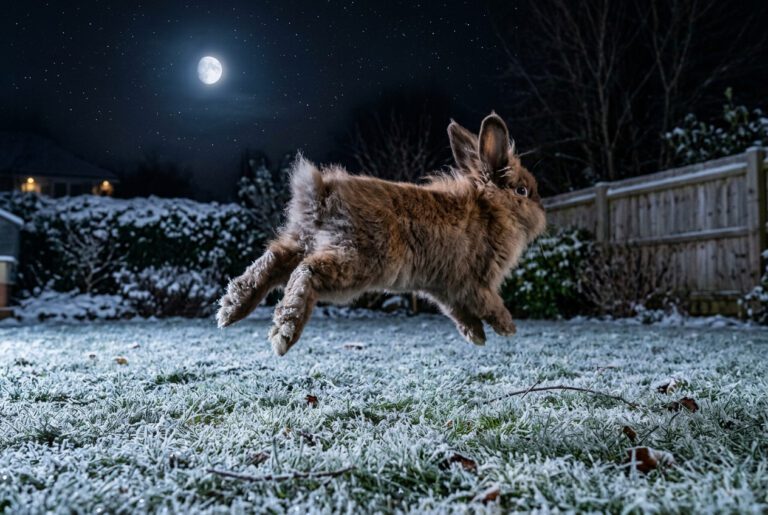
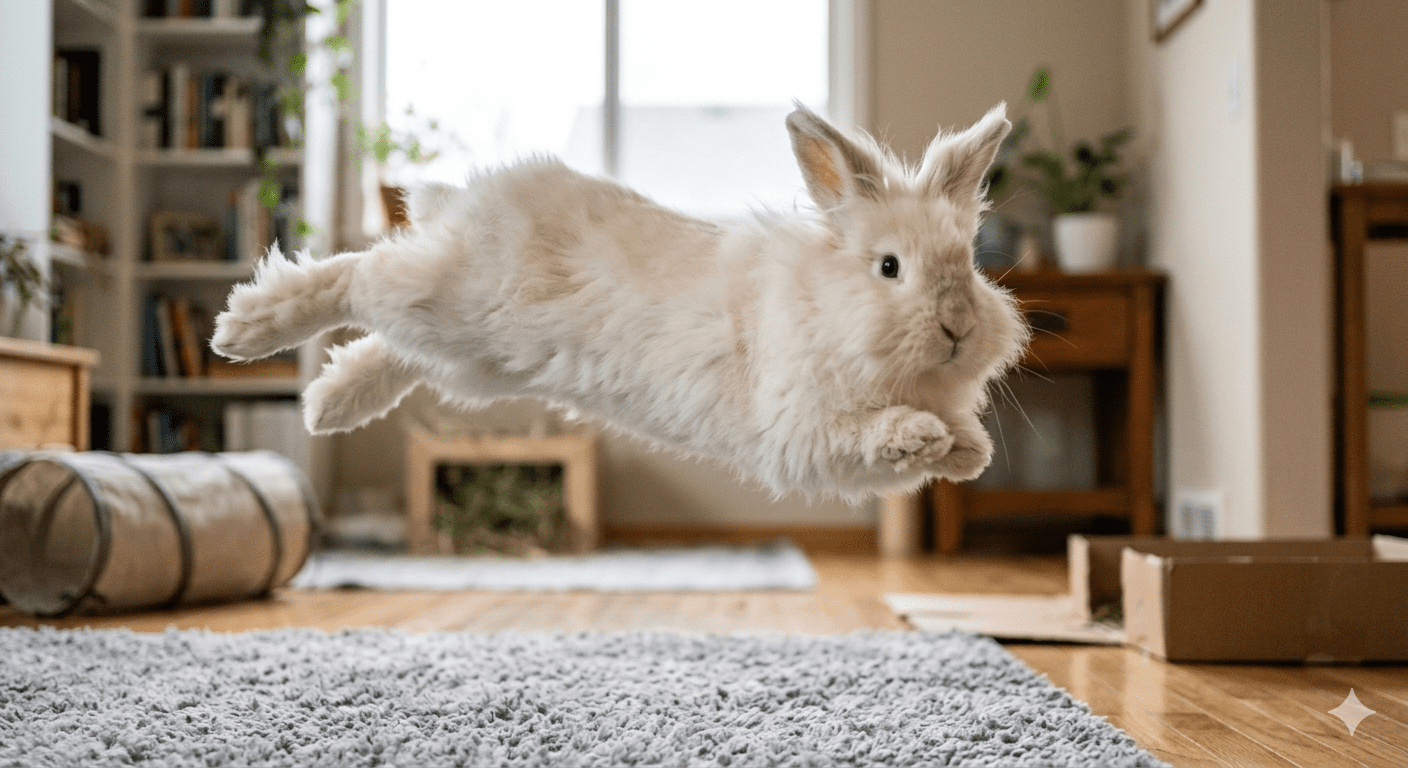
A binky is a sudden, explosive, full-body jump in which the rabbit simultaneously twists its spine, kicks its hind legs sideways, and often flicks or turns its head in the opposite direction from its hindquarters. The entire movement happens in a fraction of a second. The rabbit may be mid-run when it happens, or it may launch from a standstill. In either case, the movement is unmistakably different from a normal jump — the characteristic full-body twist and the apparent spontaneity are the defining features.
The word binky has no precise scientific origin — it is the term that has become universally adopted among rabbit owners and veterinarians to describe this specific behavior. The scientific literature describes it as an expression of a positive affective state, meaning the rabbit is experiencing a strongly positive emotional condition that it is physically expressing. In plain language: it is a jump for joy.
The Two Types of Binky
Full Binky
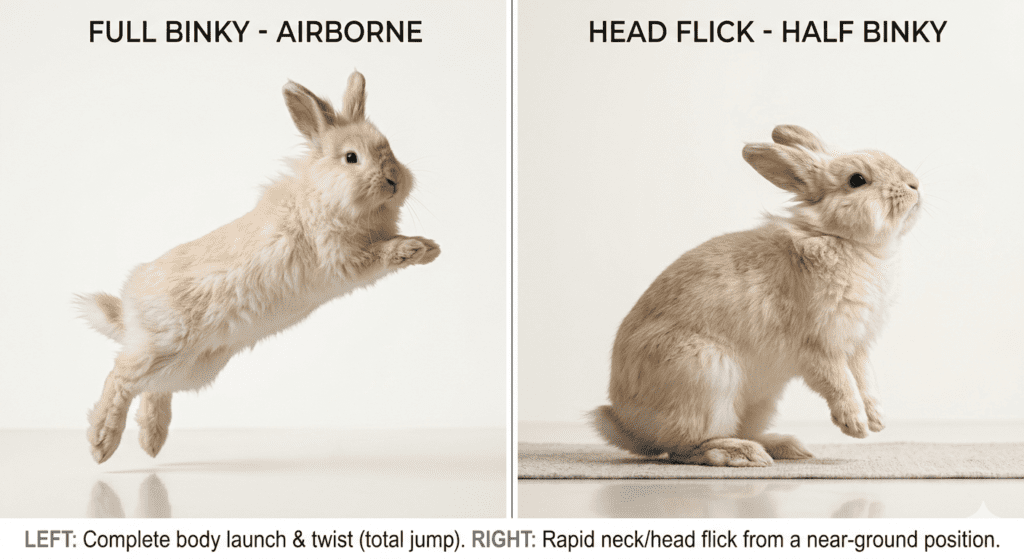
The full binky is the complete version — the rabbit leaves the ground with all four feet, twists the spine so that the hindquarters rotate in the opposite direction from the shoulders, kicks the hind legs out sideways or backward, and often flicks the head simultaneously. A particularly exuberant rabbit may chain two or three full binkies in rapid succession before returning to normal movement.
The full binky requires physical space — a rabbit cannot execute one properly in a small enclosure. A rabbit that never full-binkies despite appearing otherwise healthy may simply not have enough room to do so. The minimum free-roam space to regularly observe full binkies is approximately 8 by 8 feet of unobstructed floor space during exercise time.
Half Binky
The half binky is the more subtle version — a sharp sideways flick of the head, sometimes accompanied by a small ear twitch or a slight twist of the upper body, without the rabbit fully leaving the ground. It is easy to miss entirely, particularly in Angora rabbits, where the dense coat obscures body movement.
The half binky carries identical emotional meaning to the full binky. It is not a lesser expression of happiness — it is a physically smaller expression of the same positive state. Many calm, settled adult rabbits express contentment predominantly through half binkies rather than full binkies, particularly after the energy levels of kithood have settled.
Important for Angora rabbit owners: The half binky head flick can visually resemble the early sign of head tilt — a neurological condition caused by inner ear infection or Encephalitozoon cuniculi infection. The critical distinction is recovery: a rabbit executing a half binky immediately corrects its head position and continues moving normally. A rabbit experiencing head tilt cannot correct its posture. If a head flick is accompanied by circling, eye rolling (nystagmus), loss of balance, or inability to right itself, contact a rabbit-experienced veterinarian immediately — this is not a binky.
Why Do Rabbits Binky? The Complete Explanation
The Primary Cause: Genuine Happiness
The most straightforward answer is that binkying is the rabbit’s physical expression of peak positive emotional state. Rabbits are prey animals that mask vulnerability — they do not vocalize pleasure the way cats purr or dogs bark. The binky is one of the few unambiguous, externally visible expressions of strong positive emotion available to a species that otherwise communicates predominantly through subtle postural signals.
When a rabbit binkies during your presence — particularly when it binkies in your direction, runs toward you and then binkies, or binkies during free-roam time while you are watching — it is communicating that it associates your presence with safety and positive experience. This is among the most meaningful behavioral feedback a rabbit gives its owner.
The Neurological Mechanism: Dopamine and the Reward System
When a rabbit experiences a sudden surge of positive experience — a favorite food arriving, the enclosure opening for free-roam time, a trusted owner entering the room — the brain releases dopamine in a concentrated burst. Dopamine is the neurotransmitter associated with reward, motivation, and pleasure across virtually all mammalian species. The physical energy of this dopamine release needs an outlet, and in rabbits, that outlet is the binky.
This is the same neurological mechanism that causes dogs to zoom in circles, cats to engage in sudden bursts of running, and humans to involuntarily jump or clap when receiving good news. The binky is the species-specific physical expression of a positive neurochemical event.
The Evolutionary Function: Predator Evasion Practice
Wild European rabbits (Oryctolagus cuniculus) — the ancestor of all domestic rabbit breeds — face constant predation pressure from foxes, birds of prey, stoats, ferrets, and cats. Surviving a predator pursuit requires not just speed but unpredictability: a rabbit running in a straight line is catchable; a rabbit that randomly changes direction, height, and trajectory mid-run is significantly harder to intercept.
The binky’s mid-air twist and directional change are functionally identical to the evasive maneuver a pursued rabbit uses to break a predator’s trajectory. Researchers and behaviorists believe that binkying in safe environments may serve as instinctive practice for this survival skill — the same way a kitten stalks and pounces on toys to practice hunting skills it may never need in a domestic setting.
This also explains why wild rabbits occasionally binky — though less frequently than domestic rabbits, since wild rabbits rarely experience the extended feeling of complete safety that produces spontaneous joy-binkies in pet animals.
The Communication Function: Social Signal Between Rabbits
In multi-rabbit households, binkying during shared free-roam time signals to companion rabbits that the binkying rabbit is in a positive, non-threatening state. Rabbits that are bonded and comfortable together will frequently binky in proximity to each other during play. A rabbit that binkies in the presence of a new rabbit it is being introduced to is an encouraging sign during the bonding process — it indicates the binkying rabbit is not feeling threatened by the newcomer.
What Triggers a Rabbit to Binky?
Any experience that produces a sudden positive emotional surge can trigger a binky. The most commonly reported triggers among rabbit owners include:
Food-related triggers:
- Hay rack being refilled — the moment of transition from empty to full is a reliable trigger for many rabbits
- Favorite treat being offered — the anticipatory dopamine surge before the food arrives often produces a binky before the first bite
- Discovering a new safe food item during free-roam
Freedom and space triggers:
- The moment the enclosure door opens for free-roam time
- Entering a new room or space for the first time
- Returning to a familiar free-roam space after time away
Social triggers:
- The owner is entering the room
- A trusted owner sitting down at rabbit level
- Play interaction — chasing games (rabbit chasing the owner, never the reverse), toy throwing sessions, enrichment activities
Seemingly random triggers:
- No apparent external trigger at all — the rabbit simply experiences a spontaneous surge of contentment and expresses it
This last category is important to note. Some binkies appear completely unprompted. A rabbit may binky in the middle of eating, in the middle of grooming, or simply sitting quietly before suddenly launching into a full binky. This is normal. It reflects the rabbit’s background level of contentment rather than a response to any specific stimulus.
Angora Rabbit Binkying: What Every Fiber Breed Owner Needs to Know
Angora rabbit owners face two specific challenges related to binkying that standard rabbit guides do not address.
Reading Binkies Through the Coat
A full-coated English or French Angora rabbit in mid-binky can appear almost unrecognizable compared to a short-haired rabbit performing the same behavior. The dense wool obscures the spine twist and leg kick that make the binky immediately identifiable in short-haired breeds. New Angora owners sometimes describe their rabbit as “jumping strangely” or “lurching” when they are actually observing a full binky viewed through wool.
The reliable identifying features that remain visible through an Angora coat are the head flick and the directional change — the rabbit’s head moves in the opposite direction from the movement immediately before the binky, and the rabbit’s post-landing trajectory is different from its pre-launch trajectory. Watch for these rather than trying to see the body twist through the coat.
The Grooming Session Binky
Many Angora rabbit owners report that their rabbit binkies immediately after a grooming session ends — the moment they set the rabbit down on the floor following a comb session. This is consistent with what we understand about the binky as a happiness signal: a well-handled rabbit that has been groomed correctly, with sessions that do not exceed its tolerance threshold, experiences the end of the session as a positive event, and expresses relief and contentment through a binky.
A rabbit that never binkies after grooming — or that flattens and freezes during and after grooming sessions — may be experiencing grooming as a stressful event rather than a positive bonding one. Shortening sessions, using the correct comb technique starting with the underside, and pairing sessions with a small treat afterward can rebuild the association. For the complete approach, see our Angora Rabbit Grooming guide.
What If My Rabbit Never Binkies?
A rabbit that does not binky is not necessarily unhappy. Several factors reduce or eliminate binkying without indicating any welfare problem:
Age: Young rabbits typically binky more frequently than adults. Senior Angora rabbits over age five often reduce or stop binkying entirely — their joints are less able to support the explosive movement, and they express contentment through other signals such as flopping, approaching the owner voluntarily, and soft tooth purring during contact.
Personality: Some rabbits are constitutionally calmer than others and express positive emotion more subtly. A rabbit that flops near its owner, approaches voluntarily, and shows a relaxed body posture is happy — it simply expresses that happiness through less dramatic behaviors than a binky.
Space: A rabbit that never has enough unobstructed floor space to execute a full binky may simply never be able to perform one physically, even when it wants to. If you have never seen your rabbit binky and your rabbit’s free-roam time is in a small or cluttered space, increasing the floor area is the first adjustment to make.
Health: A rabbit that previously binkied regularly and has stopped abruptly without any change in environment or management is providing an early health signal. Pain, GI discomfort, dental disease, and systemic illness all suppress binkying before more obvious clinical symptoms develop. A sudden cessation of binkying in a previously active rabbit warrants veterinary assessment. For Angora rabbits specifically, GI stasis is the most common cause of sudden behavioral suppression — for the full guide, see our Angora Rabbit Health guide.
How to Tell a True Binky From a Fear Jump
This is one of the most important distinctions for rabbit owners to understand, and one that most guides handle superficially.
A joy binky has these characteristics:
- Occurs during a relaxed, positive context — free-roam time, play, feeding
- The rabbit continues moving normally after landing
- Body posture before and after is open and relaxed
- The rabbit may approach the owner, look for treats, or continue playing afterward
- The movement feels spontaneous and energetic
A fear jump has these characteristics:
- Occurs in response to a perceived threat — a sudden noise, an unfamiliar animal, a startling movement
- The rabbit either freezes after landing or runs to cover immediately
- Body posture is tense — flattened ears, wide eyes, thumping may follow
- The jump itself is more vertical than the diagonal twist of a true binky — it is designed to make the rabbit appear larger to a threat, not to express joy
- The rabbit does not return to relaxed behavior quickly
The key test: what happens in the 10 seconds after the jump. A joy binky is followed by normal, relaxed behavior. A fear jump is followed by flight, freeze, or thumping. Context and aftermath are more reliable distinguishing features than the jump itself.
FAQs
What does it mean when a rabbit binkies?
A binky means your rabbit is experiencing a strong positive emotional state — genuine happiness, excitement, or contentment. It is one of the most unambiguous positive signals a rabbit can give. Seeing your rabbit binky regularly means its welfare needs — space, diet, social interaction, and safety — are being met effectively.
Why do rabbits binky for no reason?
A binky with no apparent trigger reflects the rabbit’s background contentment level rather than a response to a specific event. A rabbit comfortable in its environment, with its needs consistently met, may binky spontaneously during normal activities. This is normal and positive — it means the rabbit’s baseline emotional state is high enough to produce spontaneous expressions of joy.
Do Angora rabbits binky?
Yes. All five Angora breeds — English, French, Satin, Giant, and German — binky in the same way as short-haired breeds. The behavior may be harder to read through the dense wool coat, particularly the body twist component, but the head flick and directional change remain identifiable. Post-grooming binkies are particularly common in well-handled Angora rabbits.
My rabbit used to binky, but has stopped. Should I be worried?
A gradual reduction in binkying as a rabbit ages is normal. A sudden cessation in a previously active younger rabbit — particularly combined with any change in appetite, droppings, or activity level — warrants veterinary assessment. In Angora rabbits, the sudden suppression of all expressive behaviors is often the first observable indicator of GI discomfort before stasis develops. Do not wait for obvious clinical signs before consulting your vet.
Can I make my rabbit binky?
You cannot force a binky — it is an involuntary expression of emotional state. You can create the conditions that make binkying more likely: adequate free-roam space, a consistent daily routine, a correct diet, regular positive interaction, and a calm environment. A rabbit whose needs are fully met will binky when the emotional moment arrives. The goal is not to produce a binky performance but to maintain the welfare conditions that make binkies a natural, regular part of your rabbit’s behavioral repertoire.
Is it normal for rabbits to binky while running?
Yes. The mid-run binky — sometimes combined with a series of fast zoomies — is one of the most common presentations. The rabbit is moving at speed, hits a peak of excitement or joy, expresses it through a binky, and continues running. This is a completely normal expression of exuberant positive emotion and requires no response from the owner other than appreciation.
Conclusion
A binky is your rabbit’s most direct, visible, and unambiguous communication of happiness. When your Angora rabbit binkies — whether in a full mid-air twist or a subtle half binky head flick — it is telling you that it feels safe, its needs are met, and it is experiencing your home as a positive environment. There is no clearer endorsement than an animal that communicates mostly through restraint and subtlety can give.
The practical value of understanding binkies goes beyond the emotional satisfaction of seeing your rabbit happy. Monitoring binky frequency — keeping an informal mental note of how often your rabbit binkies during free-roam time — gives you a baseline behavioral signal for health monitoring. A rabbit whose binky frequency drops noticeably is a rabbit worth watching more carefully.
For everything your rabbit’s body language is communicating beyond the binky, see our Angora Rabbit Behavior guide. For the closely related behavior that owners often see alongside binkies, see our Rabbit Zoomies guide.
This article is for general educational purposes and does not constitute veterinary advice. If your rabbit shows behavioral changes combined with any changes in appetite or droppings, contact a rabbit-experienced veterinarian. See our disclaimer for full details.