Angora Lionhead Rabbit: Breed Facts, Genetics, Care, and What US Owners Need to Know
The Angora Lionhead rabbit is one of the most visually striking small rabbits you will encounter — combining the mane of a Lionhead with the long body wool of an Angora parent in a compact, personable package. It is also one of the most misunderstood, because the term is used inconsistently across breeders, pet sellers, and online listings.
This guide covers exactly what an Angora Lionhead rabbit is, how it differs from a purebred Lionhead, what its coat genetics mean for grooming and care, and what US owners should know before purchasing one.
What Is an Angora Lionhead Rabbit?
The term “Angora Lionhead” refers to a cross between a Lionhead rabbit and an Angora rabbit — most commonly an English Angora or French Angora. It is not a recognized breed under the American Rabbit Breeders Association and has no standardized breed profile in the United States. What you find sold under this name will vary significantly between breeders in terms of size, coat type, wool coverage, and mane expression.
The two parent breeds are distinct in almost every characteristic except one: both carry wool-type fiber as a core breed trait.
The Lionhead rabbit is a fully ARBA-recognized breed as of 2013 — eligible to compete at ARBA shows from February 2014 onward. It is a dwarf-class rabbit with a maximum weight of 3.75 pounds (1.7 kg), recognized in multiple color varieties, and defined above all by its distinctive mane of wooled fiber encircling the head. The mane results from a dominant genetic mutation — designated the mane gene — that causes long, wool-type fiber to grow specifically around the head and, in double-maned animals, along the flanks and hindquarters.
The Angora rabbit — in any of its recognized varieties — carries the Angora gene, which causes long, continuously growing wool to cover the entire body. This is a separate genetic mechanism from the Lionhead mane gene.
When the two breeds are crossed, the offspring inherit some combination of both traits. The expression of each trait in any individual rabbit depends on which genes it inherits from each parent, and this is where the significant variation in Angora Lionhead rabbits originates.
Origin and Development
The Lionhead rabbit itself originated in Belgium and France, where breeders working with dwarf rabbit breeds — most likely crossing Swiss Fox rabbits with Netherland Dwarfs — produced a litter carrying a spontaneous genetic mutation causing the distinctive mane. The breed was recognized by the British Rabbit Council in 2002 and introduced to the United States in the late 1990s, achieving ARBA recognition in 2013 after a multi-year presentation process.
The crossing of Lionheads with Angora breeds in the US and Europe has occurred both deliberately — by breeders seeking a small, maned rabbit with enhanced wool coverage — and incidentally, as part of introductions intended to improve color or body type within Lionhead lines. The outcome in either case is the same: offspring that may carry the mane gene, the Angora wool gene, both, or neither in varying degrees.
Because there is no governing standard for the Angora Lionhead cross in the United States, breeders use the term at their discretion. A rabbit sold as an Angora Lionhead may have a full mane and full-body Angora wool coverage, a partial mane with moderate body wool, or a standard Lionhead body coat with only mane fiber. Prospective owners should ask specifically about the parent breeds and the coat characteristics of previous litters before purchasing.
Understanding the Genetics: Mane Gene and Angora Gene
Two distinct genes define the Angora Lionhead’s coat — and understanding how each works explains why these rabbits vary so dramatically in appearance.
The Mane Gene
The mane gene is a dominant mutation. A rabbit needs only one copy of the mane gene to express some form of mane — this is called a single-maned Lionhead. A single-maned rabbit has a mane that encircles the head and may appear at the ears, chin, and chest. However, single-maned rabbits frequently lose some or all of their mane as they mature — the mane can thin significantly or disappear in adult animals.
A rabbit with two copies of the mane gene — a double-maned Lionhead — maintains a full, dense mane for life and also develops a characteristic “skirt” of longer fiber around the flanks and hindquarters. Double-maned animals are identifiable at birth by a visible V-shaped wool formation across the back. Under the ARBA standard, the mane must be at least 2 inches in length and form a full circle around the head, with the wool dense enough to make the mane full and prominent.
When a double-maned Lionhead is crossed with a rabbit of another breed — including an Angora — all offspring receive one copy of the mane gene, making them all single-maned. When a single-maned Lionhead is crossed with a non-Lionhead, approximately 50% of offspring receive the mane gene, and approximately 50% receive no copy at all and show no mane.
The Angora Gene
The Angora wool gene — carried at the L locus in rabbit genetics — causes the full-body, continuously growing long wool coat characteristic of all Angora breeds. A rabbit must inherit two copies of this recessive gene to express the full Angora wool coat. A rabbit with only one copy carries the gene but has normal-length fur.
When an Angora rabbit is crossed with a Lionhead — which does not naturally carry the Angora wool gene — the first generation of offspring will typically carry one copy of the Angora gene but not express full Angora wool. If two first-generation offspring are bred together, approximately 25% of their offspring will inherit two copies of the Angora gene and express the full wool coat alongside whatever mane genetics they carry.
This genetic layering is why producing Angora Lionhead rabbits with both a full mane and a full Angora body coat consistently requires multiple generations of selective breeding — and why the rabbits found under this name vary so widely in coat type.
Physical Characteristics
- Weight: 2.5 to 4 pounds (1.1 to 1.8 kg) — varies by the Angora parent breed used
- Body type: Compact, rounded — influenced by the Lionhead’s dwarf-class body structure
- Mane: Present in varying degrees depending on the number of mane gene copies inherited
- Body coat: Ranges from short normal fur (single Angora gene copy) to full long Angora wool (two Angora gene copies)
- Ears: Short to medium, erect — Lionhead standard calls for ears no longer than 3.5 inches
- Eyes: Large, wide-set, expressive
- Lifespan: 7 to 10 years with proper care
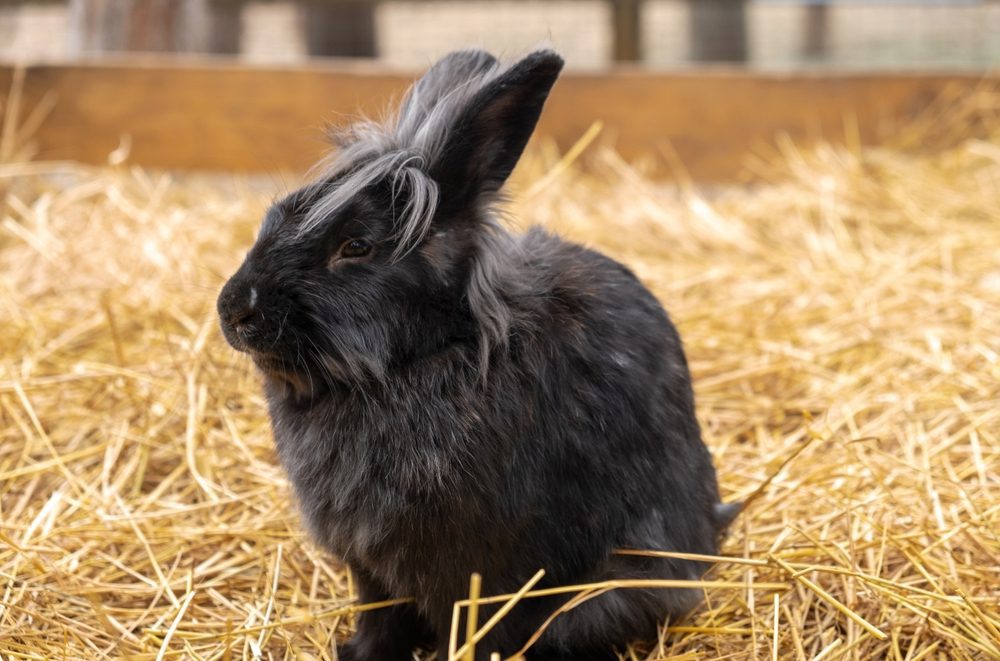
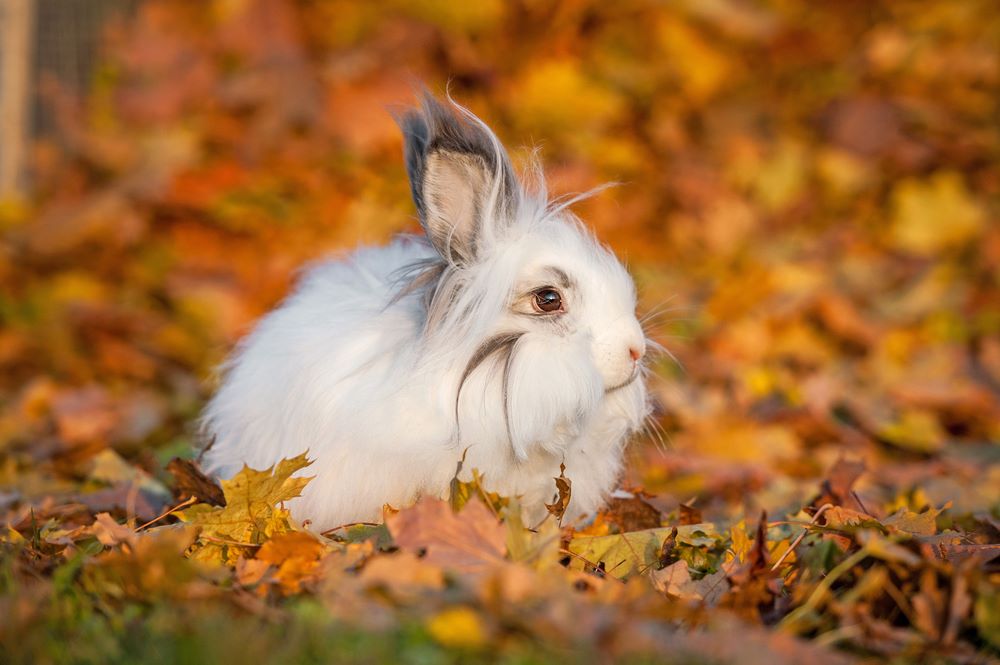
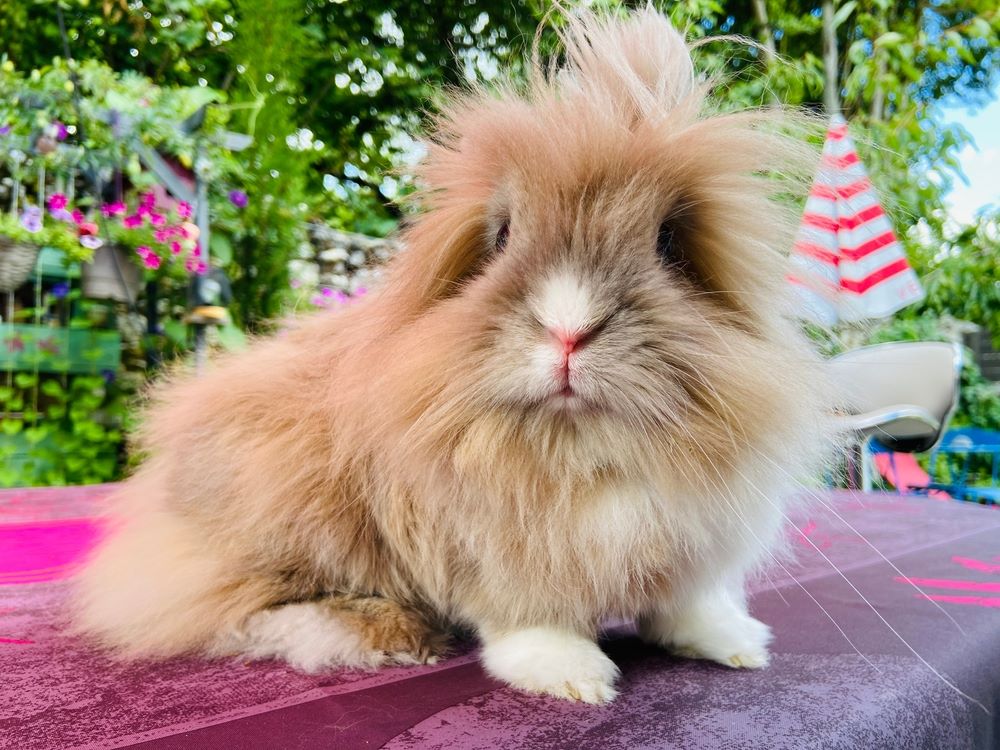
The most immediately striking feature of an Angora Lionhead is its mane — the dense circle of wooled fiber around the head. In a well-bred double-maned animal with full Angora body wool, the combined effect is a rabbit that appears almost surrounded by long, soft fiber with a particularly dramatic frame around the face.
The body coat varies more than the mane. In rabbits that have expressed the full Angora gene, the body wool grows continuously at approximately 1 inch (2.5 cm) per month and must be managed on the same schedule as any standard Angora breed. In rabbits that carry only one Angora gene copy, the body coat is closer to normal rabbit fur in length but may still be noticeably fuller and softer than a standard short-haired breed.
Temperament and Personality
The Angora Lionhead inherits temperament from both parent breeds. Both Angoras and Lionheads are recognized for being calm, social, and amenable to handling — characteristics that carry through reliably into the cross.
Angora Lionheads are typically gentle and curious. They respond well to consistent, calm handling from a young age and can develop strong bonds with their owners. Like all rabbits, they dislike being picked up suddenly or improperly and should always be held with both hands, providing full body support, the spine never allowed to arch unsupported.
Their small size — compared to full-sized Angora breeds — makes them physically easier to handle for grooming sessions, which is a practical advantage given the grooming commitment required to maintain their coat.
They are active animals that require daily free-roam time outside their enclosure in a rabbit-proofed environment. A bored or inactive Angora Lionhead may develop stress-related behaviors, including excessive grooming, cage chewing, or aggression. Enrichment through toys, tunnels, safe chewable items, and regular human interaction keeps them physically and mentally engaged.
Grooming Requirements
Grooming is the most significant care commitment for an Angora Lionhead and its complexity depends directly on the coat type the individual rabbit has inherited.
Mane grooming
The mane requires dedicated attention regardless of the body coat. Mane fiber mats readily, particularly behind the ears, at the base of the mane where it meets the body coat, and under the chin. These areas should be checked and combed during every grooming session. Use a wide-tooth steel comb and work from the tip of the fiber inward, never pulling from the skin outward. Mats in the mane that cannot be separated with a comb must be cut free with blunt-nosed scissors, feeling carefully for the skin before cutting.
The ARBA breed standard for the Lionhead requires the mane to be at least 2 inches in length and to form a full circle around the head. For show animals, mane condition and fullness carry significant point weight — 35 points out of 100 in the ARBA Lionhead standard. For companion animals, the priority is keeping the mane clean, tangle-free, and away from the eyes.
Body coat grooming
If the Angora Lionhead has inherited full Angora body wool, the grooming requirements are identical to those of a standard Angora rabbit — a minimum of two to three times per week, with daily attention during molting periods. The coat must be harvested every 90 to 120 days, regardless of whether the owner intends to use the fiber.
If the body coat is shorter — indicating only one copy of the Angora gene — grooming is less intensive but still required at least once per week, with increased frequency during seasonal shedding.
Wool block prevention
Both the mane and the body wool of an Angora Lionhead are ingested during self-grooming. Because rabbits cannot vomit, swallowed fiber must pass through the digestive tract entirely. Accumulated fiber can cause a potentially fatal blockage — wool block — that requires immediate veterinary intervention. Regular grooming to remove loose fiber before it is ingested, combined with unlimited hay to maintain gut motility, are the primary prevention measures. Any Angora Lionhead that stops eating, produces reduced or no droppings, or shows a hunched posture requires immediate veterinary attention.
For the full grooming protocol applicable to all long-wooled rabbits, see our Angora Rabbit Grooming guide.
Diet and Nutrition
The dietary requirements of the Angora Lionhead follow the same principles as all Angora-type rabbits, adjusted for the animal’s smaller body size.
Timothy hay must be available at all times and forms the foundation of the diet. It provides the fiber necessary for continuous digestive tract motility and natural dental wear. Angora Lionheads should never be without hay.
Rabbit pellets with a protein content of at least 17% are recommended for Angora-coated rabbits. If the Angora Lionhead has a shorter, non-Angora body coat, a standard 15% to 16% protein pellet is appropriate. Portion size should be calibrated to the rabbit’s actual body weight — a 3-pound Angora Lionhead requires substantially less daily pellet volume than a 9-pound French Angora.
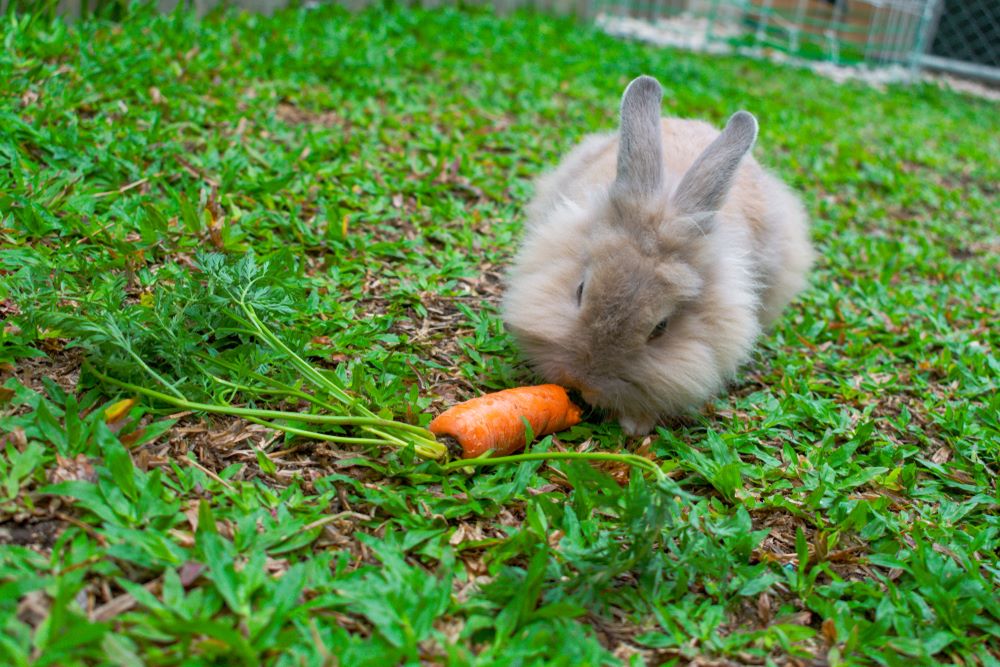
Fresh leafy greens may be introduced gradually once the rabbit is settled in its new environment. Safe options include romaine lettuce, cilantro, parsley, and dark leafy herbs. Carrots and fruit are treats — offered occasionally in small amounts — not dietary staples. Avoid iceberg lettuce, starchy vegetables, and all members of the onion family, which are toxic to rabbits.
Fresh water must be available at all times from a clean bowl or functioning sipper bottle.
Housing Requirements
Enclosure size: Minimum 24 inches deep by 36 inches long by 24 inches high (61 cm by 91 cm by 61 cm) for a single Angora Lionhead of up to 4 pounds. The enclosure must allow the rabbit to take three full hops, stand upright without its ears touching the top, and stretch out fully.
Indoor housing is strongly recommended. The Angora Lionhead’s mane and body wool accumulate dirt, moisture, and debris in outdoor environments, significantly increasing the grooming burden and the risk of flystrike during warm months.
Temperature: Comfortable range is 50 to 70 degrees Fahrenheit (10 to 21 degrees Celsius). Temperatures above 75 to 80 degrees Fahrenheit (24 to 27 degrees Celsius) risk heat stress — a particular concern for any long-wooled rabbit. Ensure adequate ventilation and shade at all times, and provide active cooling measures during US summer months in warm climates.
Flooring: Provide a solid resting board within any wire-bottomed cage to prevent sore hocks. The small bone structure of dwarf-influenced rabbits makes sore hocks a more pressing concern than in larger breeds.
Daily free-roam time in a rabbit-proofed area is essential. Remove or cover all electrical cables, block access to unsafe spaces, and ensure no toxic plants are accessible at floor level.
For guidance on housing Angora rabbits indoors versus outdoors, see our Can Angora Rabbits Live Outside? article.
Health Considerations
Wool block is the primary health risk for any Angora-coated rabbit, including the Angora Lionhead. See the grooming section above for prevention details. Treat any reduction in eating or droppings as an emergency and contact a veterinarian immediately.
Dental disease is relevant in Angora Lionheads that carry strong dwarf gene influence, as the compact skull of dwarf breeds can cause tooth misalignment (malocclusion). Overgrown or misaligned teeth cause pain and prevent normal eating. Unlimited hay supports natural dental wear. Annual veterinary dental checks are essential.
Ear health requires attention in any rabbit with ear furnishings or mane fiber near the ears. Debris and wax can accumulate in the fiber around the ear canal, increasing the risk of ear infections. Check and clean the ear area during regular grooming sessions and consult a veterinarian at the first sign of head shaking, scratching at the ears, or visible discharge.
Eye health must be monitored in any Angora Lionhead with fiber growing near the face. Mane fiber or body wool making contact with the eyeball causes irritation and can progress to infection. Keep the area around the eyes trimmed and clear. Any persistent discharge, cloudiness, or redness requires veterinary assessment.
Flystrike — fly larvae infestation in soiled or matted wool — is a warm-season risk for any long-coated rabbit. Daily inspection of the hindquarters, keeping the vent area clean and trimmed, and prompt attention to any soiling are essential preventive measures.
Wool mites (Cheyletiella parasitovorax) cause flaking skin, fiber loss, and mat formation. Signs include visible white flakes in the coat and increased skin sensitivity. Veterinary treatment is required. Regular coat inspection during grooming sessions is the best early detection method.
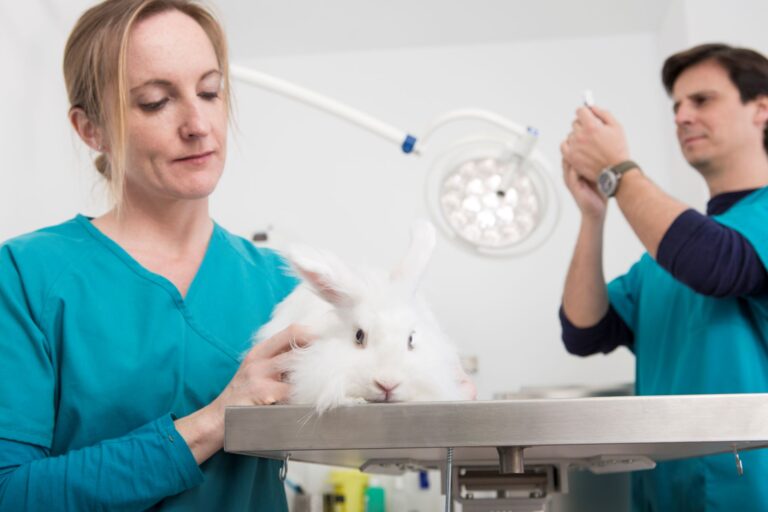
For a complete health guide for Angora rabbits, see our Angora Rabbit Health guide. For any health concern, consult a licensed veterinarian with rabbit experience. The House Rabbit Society maintains a state-by-state directory of rabbit-savvy veterinarians across the United States.
Angora Lionhead vs. Purebred Lionhead: Key Differences
| Feature | Angora Lionhead | Purebred Lionhead |
|---|---|---|
| ARBA recognized | No | Yes — since 2013 |
| Body coat | Long Angora wool (if 2 Angora genes) or moderate | Standard short rabbit fur |
| Mane | Present — varies by mane gene copies | Present — single or double mane |
| Grooming demand | High — mane plus full body wool | Moderate — mane only |
| Wool for spinning | Yes — if full Angora gene expressed | Mane fiber only — insufficient for spinning |
| Weight | 2.5 to 4 lb | Maximum 3.75 lb |
| Show eligibility | Not showable under ARBA | Showable under ARBA in recognized varieties |
| Consistency | Variable — no breed standard | Yes — if the full Angora gene is expressed |
Is the Angora Lionhead Right for You?
The Angora Lionhead suits owners who want the visual appeal of the Lionhead mane combined with the fuller wool coat of an Angora breed, in a compact body size more manageable than a full-size English or French Angora.
It is the right choice if you can commit to consistent grooming of both the mane and the body wool, understand that the specific coat type of any individual Angora Lionhead cannot be guaranteed without seeing the rabbit and its parentage, and have no interest in showing under ARBA rules.
It is not the right choice for owners who want a predictable, standardized breed with show eligibility, or for owners who are not prepared for the grooming commitment of a long-wooled maned rabbit.
For a full comparison of all Angora breeds and their characteristics, see our Types of Angora Rabbits guide.
FAQs
Is the Angora Lionhead rabbit an ARBA-recognized breed?
No. The Angora Lionhead is a cross between a Lionhead rabbit and an Angora rabbit — it is not a recognized breed in the United States. The purebred Lionhead has been ARBA-recognized since 2013. The Angora breeds — English, French, Giant, and Satin — are also ARBA-recognized. The cross between them is not.
What does the Angora Lionhead’s coat look like?
It depends on which genes the individual rabbit inherited. Some Angora Lionheads have a full circle mane and a complete, long Angora body wool coat. Others have a mane with a moderate body coat. Others have a mane and normal-length body fur. The coat cannot be predicted without knowing the parent breeds and the specific genes involved.
How often does an Angora Lionhead need grooming?
At a minimum, two to three times per week. If the rabbit has inherited full Angora body wool, grooming is required at that frequency or more, with daily attention during molting periods. The mane requires inspection and combing at every grooming session, regardless of body coat type.
Can Angora Lionhead wool be spun into yarn?
Single-maned Angora Lionheads — those that inherited only one copy of the mane gene — often develop a thinner mane as they mature and may lose most of their mane by adulthood. Double-maned animals — those with two copies of the mane gene — retain their full mane for life. Ask the breeder whether the rabbit’s mane genetics have been confirmed as single or double before purchasing.
What is the lifespan of an Angora Lionhead rabbit?
With proper care, most Angora Lionheads live 7 to 10 years. Lifespan is influenced by genetics, diet, grooming management, housing quality, and access to veterinary care. For a detailed breakdown of factors affecting Angora rabbit lifespan, see our Lifespan of Angora Rabbits guide.
Where can I find an Angora Lionhead rabbit in the United States?
Because the Angora Lionhead is not an ARBA-recognized breed, there is no central registry. Look for breeders who work with both Lionhead and Angora lines and who can show you the parent breeds and their coat characteristics. Fiber festivals and Angora rabbit breeders’ networks are good starting points. For broader guidance on finding any Angora-type rabbit, see our Where to Buy an Angora Rabbit guide.
Conclusion
The Angora Lionhead rabbit is a genuinely distinctive animal — one that combines the dramatic mane of the Lionhead with the soft, continuously growing wool of an Angora parent in a compact, personable body. Its appeal is real and well-founded. So is the care commitment it requires.
Understanding the genetics behind the coat — specifically how the mane gene and the Angora wool gene work independently and in combination — is the most important thing a prospective owner can do before purchasing one. The coat type of any individual Angora Lionhead cannot be assumed from the name alone. Ask the breeder, see the parents, and know what you are bringing home.
Approach the Angora Lionhead with clear expectations about grooming, diet, and housing, and you will find it a rewarding and characterful companion. For everything you need to know about caring for a long-wooled rabbit of any type, start with our Angora Rabbit Care Guide.