Dwarf Angora Rabbit: Complete Breed Guide for US Owners
How we researched this guide: In October 2026 we checked the facts in this article against American Rabbit Breeders Association, Scottish Government and Rabbit.org, and corrected or removed anything we could not verify. Our sources are listed at the end. See our editorial policy. Last reviewed: October 2026.
Quick answer: There is no ARBA breed called the Dwarf Angora. The name usually means a small wooled rabbit, such as a Jersey Wooly, or a cross between a dwarf breed and an Angora. These rabbits need the same wool care as a full-size Angora.
The Dwarf Angora rabbit combines everything that makes Angora rabbits remarkable — soft, continuously growing wool, a gentle temperament, and that unmistakable round, fluffy appearance — in a compact body that suits smaller living spaces and first-time wool rabbit owners.
This guide covers everything a prospective or current Dwarf Angora owner in the United States needs to know: what the breed is, how it differs from other Angora varieties, its physical characteristics, temperament, care requirements, health considerations, and where to find one.
What Is the Dwarf Angora Rabbit?
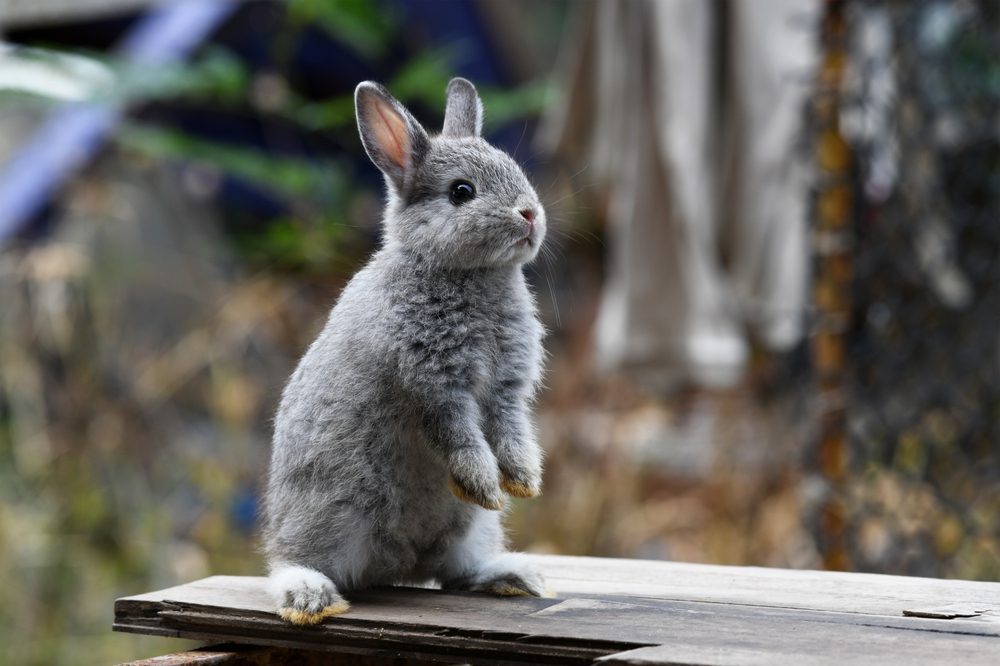
The Dwarf Angora rabbit is a small wooled rabbit usually described as a cross between a dwarf breed and established Angora breeds such as the English Angora or French Angora. The result is a compact rabbit that carries the wool gene of the Angora parent in a noticeably smaller body frame.
The Dwarf Angora is not currently recognized as a breed by the American Rabbit Breeders Association. It is not shown under ARBA rules in the United States. Breeders working with Dwarf Angoras operate outside the ARBA show system, and standards vary between breeders and regions. This means that the characteristics of a rabbit sold as a Dwarf Angora can vary more than those of a fully standardized ARBA breed, making breeder selection particularly important.
It is worth noting for US readers that the Jersey Wooly — a recognized ARBA breed developed by crossing Netherland Dwarfs with French Angoras — occupies a similar space to that of a small, wooled companion rabbit. The Jersey Wooly has a fully standardized breed profile, ARBA show eligibility, and a maximum weight of 3.5 pounds (1.6 kg). It is a distinct breed from the Dwarf Angora and is covered separately. The focus of this guide is the Dwarf Angora as an Angora-type companion rabbit for wool-interested owners.
Origin and Development
The concept of a dwarf-sized Angora rabbit developed from the same impulse that produced the Jersey Wooly in the United States — the recognition that not every rabbit owner has space for a standard or large Angora breed, and that the appeal of soft Angora wool does not require a 7 to 10 pound animal.
Dwarf Angora rabbits are produced when breeders introduce the dwarf gene — which produces the characteristically compact, rounded body of breeds like the Netherland Dwarf — into Angora lines. The Angora gene, which causes continuous long wool growth, is inherited separately from the dwarf gene. When a rabbit inherits both, the result is a small animal with a full Angora wool coat.
Small wooled rabbits are also bred in Europe, where some clubs have their own standards. In the United States, Dwarf Angoras are bred by individual breeders without a unified governing standard. This means that what you find under the name “Dwarf Angora” in the US will vary more widely than a fully standardized ARBA breed.
Physical Characteristics
- Weight: 2 to 4 pounds (0.9 to 1.8 kg) — varies by breeding
- Body type: Compact, rounded — shorter and rounder than a standard Angora
- Wool coverage: Full body, similar to the English Angora parent in most lines — including face, ears, and feet in rabbits with heavy English Angora influence
- Wool length: 2 to 4 inches (5 to 10 cm) at full growth
- Ears: Short and erect — shorter than full-size Angora breeds
- Eyes: Large, round, and bright — characteristic of dwarf-influenced breeds
- Lifespan: 7 to 12 years with proper care
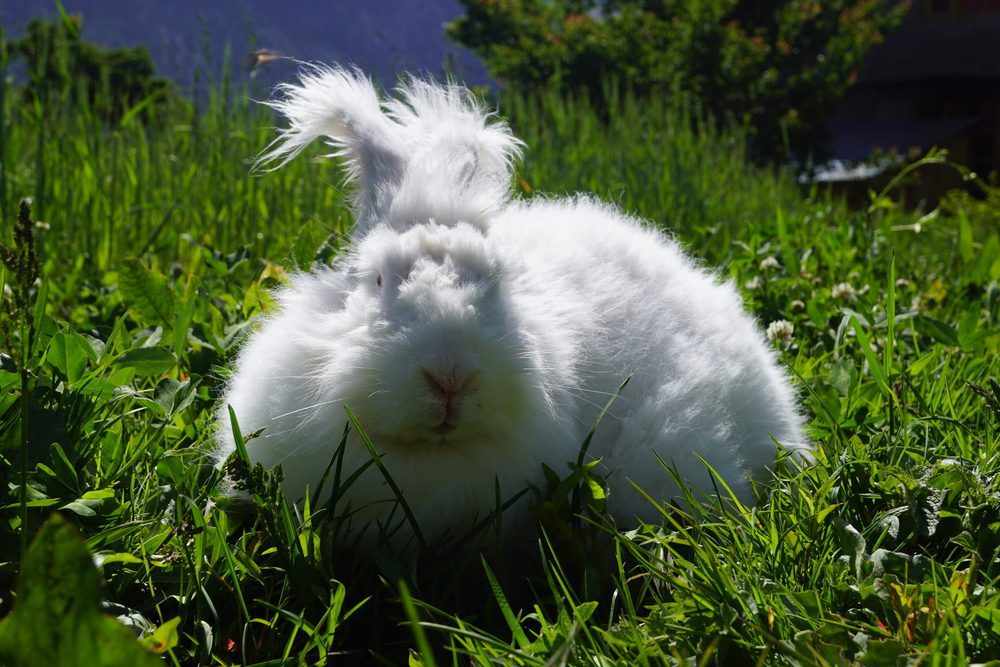
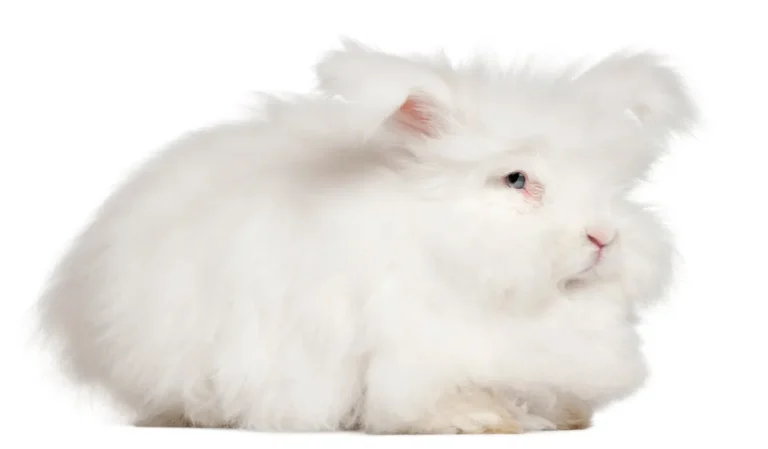
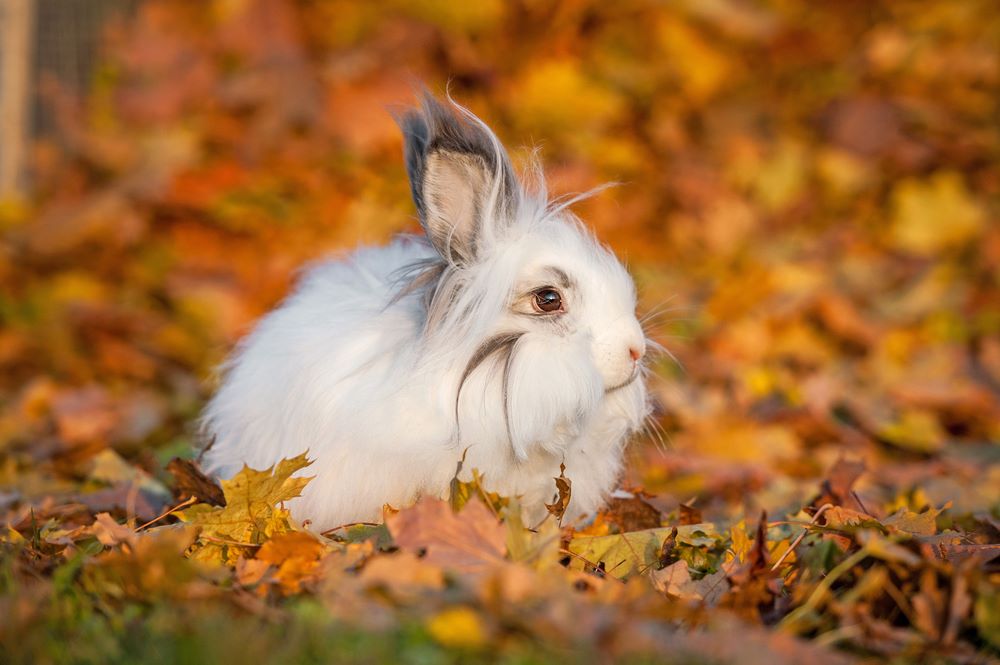
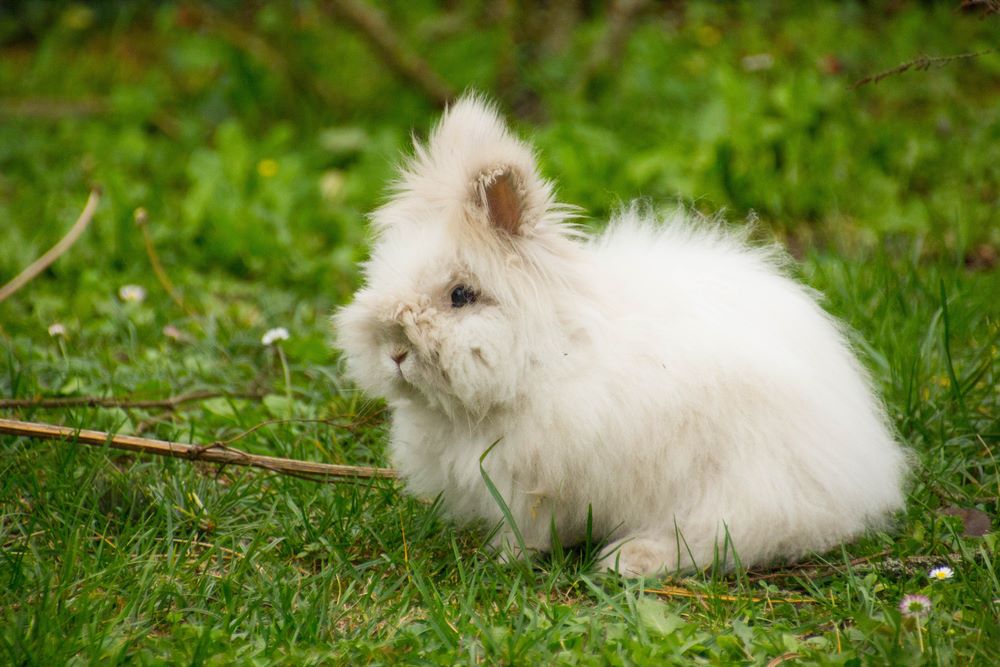
The Dwarf Angora’s most immediately striking feature is the contrast between its small body and its full wool coat. At full coat, a Dwarf Angora can appear almost perfectly round — the dense wool coverage creating a shape that is more spherical than rabbits with shorter fur.
Wool coverage and coat characteristics depend heavily on which Angora parent was used in the breeding. Dwarf Angoras with English Angora parentage tend to carry full facial furnishings and ear tufts, resembling a miniature English Angora. Those bred from French Angora lines often have cleaner faces and a denser body coat without the full facial coverage. The coat grows at approximately 1 inch (2.5 cm) per month and must be managed on a regular schedule regardless of the owner’s interest in spinning.
Temperament and Personality
The Dwarf Angora inherits the temperament of its parent breeds. Both Angora rabbits and dwarf breeds — particularly the Netherland Dwarf — are known for being social, curious, and generally amenable to handling when properly socialized from a young age.
Dwarf Angoras are typically calm and docile when handled gently and consistently. They respond well to daily interaction and will often seek out human contact once they have established trust with their owner. Like all rabbits, they are prey animals and can react with alarm to sudden movements, loud noises, or improper handling. Picking up a Dwarf Angora — or any rabbit — should always be done with full body support, with the spine never allowed to arch unsupported.
Their small size makes them appealing for apartment and smaller home environments. However, small size does not mean minimal space requirements. A Dwarf Angora still requires an enclosure large enough to take at least three full hops in any direction, stand fully upright, and stretch out completely. Daily free-roam time in a rabbit-proofed area is essential for physical and mental well-being.
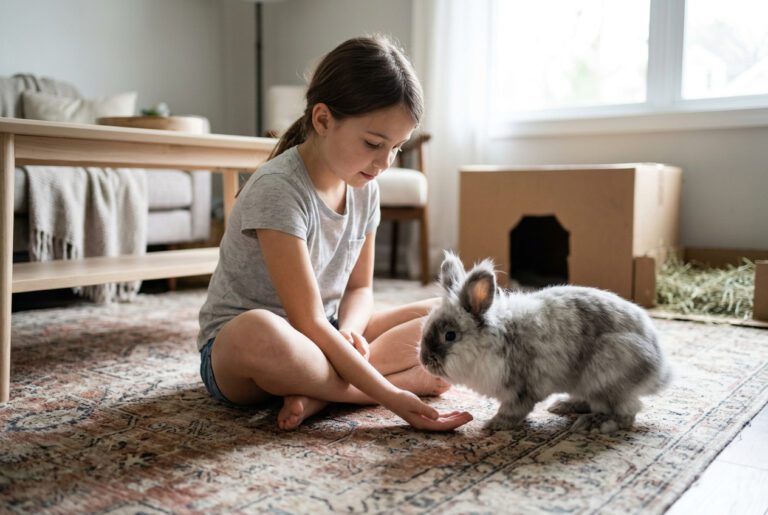
Dwarf Angoras are not recommended as a first rabbit for very young children without consistent adult supervision. Their small bones are more fragile than those of larger breeds, and an improperly handled dwarf rabbit can sustain serious spinal injury from a single drop or sudden twisting movement.
Grooming Requirements
Grooming is the defining care commitment for any Angora rabbit, and the Dwarf Angora is no exception. The wool coat grows continuously and must be managed on a consistent schedule. The small body of the Dwarf Angora does not reduce the grooming commitment — in some respects, the dense coat relative to the body size makes mat prevention at least as demanding as in larger Angora breeds.
Routine grooming frequency: Two to three times per week at a minimum. During molting periods — typically every 90 to 120 days — daily grooming is required to remove loosening fiber before it mats into the new coat.
Tools required: A wide-tooth steel comb is the primary grooming tool. Work through the coat from the tip of the fiber toward the skin, section by section, never pulling from the skin outward. A slicker brush is useful for finishing the undercoat once major tangles have been addressed with the comb.
Facial wool: Dwarf Angoras with English Angora parentage carry wool around the face, ears, and feet. The facial wool must be kept trimmed back from the eyes to prevent eye irritation and infection. Any wool making contact with the eyeball requires immediate attention.
Mat management: Mats range from loose webbing — which can be gently separated with the fingers and then combed — to tight, solid masses that must be cut free with blunt-nosed scissors. Always feel for the skin before cutting. Severe matting on a rabbit that has been neglected should be addressed by a veterinarian or professional rabbit groomer rather than an inexperienced owner.
Coat harvesting: The Dwarf Angora’s wool must be harvested every 90 to 120 days, regardless of whether the owner intends to spin it. If the coat is not harvested, it becomes excessively long, mats severely, and causes significant discomfort. Harvesting is done either by hand-plucking during a natural molt or by clipping with small scissors or electric clippers. Most Dwarf Angoras with Angora parentage that includes a molting breed will shed naturally, allowing hand-plucking. Confirm the molting behavior of your specific rabbit with the breeder before purchasing.
For the full grooming guide applicable across all Angora breeds, see our Angora Rabbit Grooming guide.
Diet and Nutrition
The dietary requirements of the Dwarf Angora are consistent with all Angora rabbit breeds, with the adjustments appropriate to its smaller body size.
Timothy hay must be available at all times and forms the foundation of the diet. Unlimited hay provides the fiber necessary to keep the digestive tract moving continuously and reduces the risk of wool block — the most serious health risk for any wooled rabbit.
Rabbit pellets with a higher protein content are often recommended for Angora rabbits in full coat. The protein supports the continuous demands of wool growth. Portion size should be calibrated to the rabbit’s body weight — a Dwarf Angora at 2 to 3 pounds requires substantially less daily pellet volume than a Giant or French Angora.
Fresh leafy vegetables can be introduced gradually once the rabbit is fully settled into its new environment — typically after two to three weeks. Introduce one new vegetable at a time and monitor for digestive upset. Safe options include romaine lettuce, cilantro, parsley, and leafy green herbs. Avoid iceberg lettuce, starchy vegetables, and high-sugar fruits as dietary staples.
Fresh water must always be available. A heavy ceramic bowl or a sipper bottle — monitored daily to ensure it functions correctly — are both suitable options.
Foods to avoid entirely: All members of the onion family, avocado, rhubarb, chocolate, and anything containing artificial sweeteners. These are toxic to rabbits.
Housing Requirements
Minimum enclosure size: The enclosure must allow the rabbit to take at least three full hops, stand fully upright on its hind legs without the ears touching the ceiling, and stretch out fully in any direction. For a 2 to 4 pound Dwarf Angora, a small cage is not enough; UK welfare guidance suggests about 10 × 6 × 3 feet of total space for two rabbits. Larger is always better.
Indoor housing is strongly recommended for Dwarf Angoras. Their small size makes them more vulnerable to predation, extreme temperatures, and environmental hazards than larger breeds. The dense wool coat makes them susceptible to overheating in warm conditions — housing must be in a well-ventilated area away from direct sunlight and heat sources.
Temperature: Dwarf Angoras tolerate temperatures between 50 and 70 degrees Fahrenheit (10 to 21 degrees Celsius) comfortably. Temperatures above 75 to 80 degrees Fahrenheit (24 to 27 degrees Celsius) place them at risk of heat stress. Air conditioning or fans may be necessary during the US summer months, particularly in warmer climates.
Flooring: Wire-bottomed cages allow waste to fall through, keeping the coat cleaner and reducing the risk of flystrike. However, wire flooring without a resting mat can cause sore hocks in smaller rabbits. Provide a solid resting board or mat within the enclosure at all times.
Daily free-roam time in a rabbit-proofed room is essential. Rabbit-proofing means removing or covering all electrical cables, blocking access to under-furniture spaces where a rabbit can become trapped, and removing any toxic plants or chewable hazards at floor level.
For guidance on indoor versus outdoor housing for Angora rabbits, see our Can Angora Rabbits Live Outside? article.
Health Considerations
Wool block is the most serious and most Angora-specific health risk for the Dwarf Angora. Rabbits self-groom continuously and ingest loose fiber in the process. Unlike cats, rabbits cannot vomit — swallowed fiber must pass through the digestive system. When accumulated wool forms a mass in the digestive tract, it can cause a potentially fatal blockage known as wool block or GI stasis. The primary prevention measures are consistent grooming to remove loose fiber before it is ingested, unlimited hay to keep gut motility high, and daily monitoring of food intake and droppings.
Any Dwarf Angora that stops eating, produces reduced or misshapen droppings, or shows a hunched posture requires immediate veterinary attention. Do not wait to see if the situation resolves on its own.
Dental disease is common across dwarf rabbit breeds due to the compact skull structure produced by the dwarf gene. The shortened jaw in dwarf rabbits can cause teeth to be misaligned — a condition called malocclusion — in which the teeth do not wear correctly against each other. Overgrown teeth cause pain, difficulty eating, and secondary health problems. Provide unlimited hay to encourage natural dental wear and have a veterinarian check the teeth at every annual examination.
Wool mites (Cheyletiella parasitovorax) are a common concern in all long-coated rabbits. Signs include flaky skin patches, fur loss, and increased scratching or skin sensitivity. Wool mites require veterinary treatment. Regular inspection of the skin beneath the coat during grooming sessions is the best early detection method.
Flystrike — a condition in which flies lay eggs in soiled or matted wool — is a serious risk during warm months for any long-coated rabbit. Keep the coat and the vent area clean and trimmed at all times, particularly during summer. Daily inspection of the hindquarters is essential for any Angora rabbit kept outdoors or in a warm climate.
Sore hocks can develop in smaller rabbits housed on wire flooring without adequate resting surfaces. The weight of the wool coat on a small body concentrates pressure on the hind feet. Provide a solid resting board within the enclosure and inspect the hind feet during each grooming session.
For a full health overview applicable to all Angora breeds, see our Angora Rabbit Health guide. All health concerns should be assessed by a licensed veterinarian with rabbit experience. The House Rabbit Society shares local vet lists through its affiliates, and Rabbit.org keeps a state-by-state list of rabbit-savvy vets.
Is the Dwarf Angora Right for You?
The Dwarf Angora suits a specific owner profile. It is not, despite its size, a low-maintenance rabbit. Its wool coat demands consistent grooming regardless of how small the animal is.
The Dwarf Angora is a strong choice if you want the experience of keeping and possibly spinning Angora wool, but do not have the space for a standard English, French, or Giant Angora. Its smaller body is more manageable in apartment and smaller-home environments, and its generally calm temperament makes it a rewarding companion for patient, attentive owners.
It is not the right choice for a very busy household where regular grooming cannot be prioritized, for homes with very young children who cannot be supervised around a small, fragile animal, or for owners who are not prepared to manage a continuous wool coat regardless of their interest in spinning.
If your primary interest is showing rather than keeping a companion wool rabbit, the ARBA-recognized Jersey Wooly — a Netherland Dwarf and French Angora cross recognized since 1988 — offers the structured show environment, standardized breed profile, and ARBA registration that the unrecognized Dwarf Angora does not. Our Types of Angora Rabbits guide covers all Angora and Angora-related breeds for comparison.
Finding a Dwarf Angora Rabbit in the United States
Because the Dwarf Angora is not ARBA-recognized, finding one requires more targeted searching than locating a standard Angora breed through ARBA’s breeder directory.
Angora specialty breeders occasionally offer dwarf or small Angora rabbits alongside their standard lines. Contact breeders of English Angoras or French Angoras directly and ask whether they maintain any dwarf lines.
Rabbit shows and fiber festivals. ARBA shows and fiber arts festivals — particularly those in agricultural regions with active fiber rabbit communities — are good venues for meeting breeders who work with small and non-standard Angora varieties.
Rabbit rescues and shelters. Smaller wooled rabbits occasionally appear in rescue. The House Rabbit Society maintains a directory of rabbit rescues across the United States.
When evaluating any Dwarf Angora, ask the breeder about the parent breeds used in the cross, the coat type and molting behavior of the line, the protein content of the diet the rabbit was raised on, and any health history of the parents. A reputable breeder will answer all of these questions directly and without hesitation.
For general guidance on the buying process and pricing, see our Where to Buy an Angora Rabbit and How Much Are Angora Rabbits guides.
FAQs
Is the Dwarf Angora recognized by the ARBA?
No. The Dwarf Angora is not a recognized ARBA breed in the United States and cannot be shown at ARBA-sanctioned shows. The closest ARBA-recognized equivalent is the Jersey Wooly — a Netherland Dwarf and French Angora cross recognized by the ARBA in 1988.
How big does a Dwarf Angora rabbit get?
Most Dwarf Angoras reach a fully grown weight of 2 to 4 pounds (0.9 to 1.8 kg), depending on the parent breeds used in the cross and the specific breeding line. The dense wool coat makes them appear significantly larger than their actual body weight suggests.
How often does a Dwarf Angora need grooming?
At a minimum, two to three times per week. During molting periods, daily grooming is necessary. The coat must also be harvested — by hand-plucking or clipping — every 90 to 120 days, regardless of whether the owner uses the fiber.
Do Dwarf Angora rabbits molt?
Most do, depending on which Angora parent was used in the breeding. Dwarf Angoras with English or French Angora parentage typically retain the natural molting behavior of those breeds. Confirm the molting habits of a specific rabbit’s line with the breeder before purchasing.
Can a Dwarf Angora rabbit live in an apartment?
Yes, provided it has an adequate enclosure size, daily free-roam time in a rabbit-proofed room, appropriate temperature management, and consistent grooming. The Dwarf Angora’s smaller body size makes it better suited to apartment living than larger Angora breeds, but its care requirements — particularly grooming — are identical in commitment.
What is the lifespan of a Dwarf Angora rabbit?
With proper care, a Dwarf Angora typically lives 7 to 12 years. Lifespan is affected by diet, grooming management, housing conditions, genetics, and access to veterinary care.
Are Dwarf Angora rabbits good for beginners?
They can be, with important qualifications. The grooming commitment is non-negotiable and must be understood before purchasing. First-time owners willing to commit to a consistent grooming routine and a diet based on unlimited hay can successfully keep a Dwarf Angora. First-time owners unwilling to groom regularly should consider a short-haired breed first.
Conclusion
The Dwarf Angora rabbit offers the wool coat, the temperament, and the companionship of a standard Angora rabbit in a body size that is accessible to a wider range of living situations. It is not, however, a low-maintenance choice — the grooming commitment of a long-wooled rabbit does not diminish with body size.
Approach the Dwarf Angora with clear expectations: a consistent two to three times per week grooming routine, unlimited hay as the dietary foundation, indoor housing with careful temperature management, and a commitment to harvesting the coat every 90 to 120 days. Meet those requirements, and the Dwarf Angora is a genuinely rewarding companion.
For a full comparison of all Angora breeds and their care demands, see our Types of Angora Rabbits guide. For grooming guidance applicable to any long-wooled rabbit, see our Angora Rabbit Grooming guide. If you have questions about a specific Dwarf Angora rabbit, use our contact page and we will do our best to help.
Sources
- American Rabbit Breeders Association. Jersey Wooly, checked October 2026.
- American Rabbit Breeders Association. Breed ID Guide (January 2026), checked October 2026.
- Scottish Government. Pet rabbit welfare guidance: The need for a suitable environment, checked October 2026.
- Rabbit.org. Find a Rabbit Vet Near You, checked October 2026.
This guide is for general information and is not a substitute for advice from a vet. Read our disclaimer.