Best Food for Angora Rabbits: Hay, Pellets and Greens
How we researched this guide: In October 2026 we checked every feeding fact against the House Rabbit Society, Angora-specific feeding guides and the manufacturers’ published guaranteed analyses. Anything we could not verify, we left out. See our editorial policy. Last reviewed: October 2026.
Affiliate note: Some links in this guide are Amazon affiliate links. If you buy through them, we may earn a small commission at no extra cost to you. It never changes what we recommend. See our affiliate disclosure.
Quick answer: The best food for an Angora rabbit is unlimited grass hay, a daily mix of leafy greens and a measured amount of plain, high-fibre pellets. Many Angora keepers choose pellets with more protein than standard pet pellets, roughly 16 to 18%, because growing wool uses protein. Fresh water should always be available.
What an Angora Rabbit Should Eat
The House Rabbit Society breaks an adult rabbit’s diet down like this:
- Hay: about 85%, offered without limit
- Vegetables: about 10%, mostly leafy greens
- Pellets: about 5%
- Fruit and treats: under 5%
Angoras follow the same basic plan as other rabbits. The main difference is pellets: Angora breeders and spinners often feed a higher-protein pellet to support wool growth. More on that below.
Hay: The Most Important Food
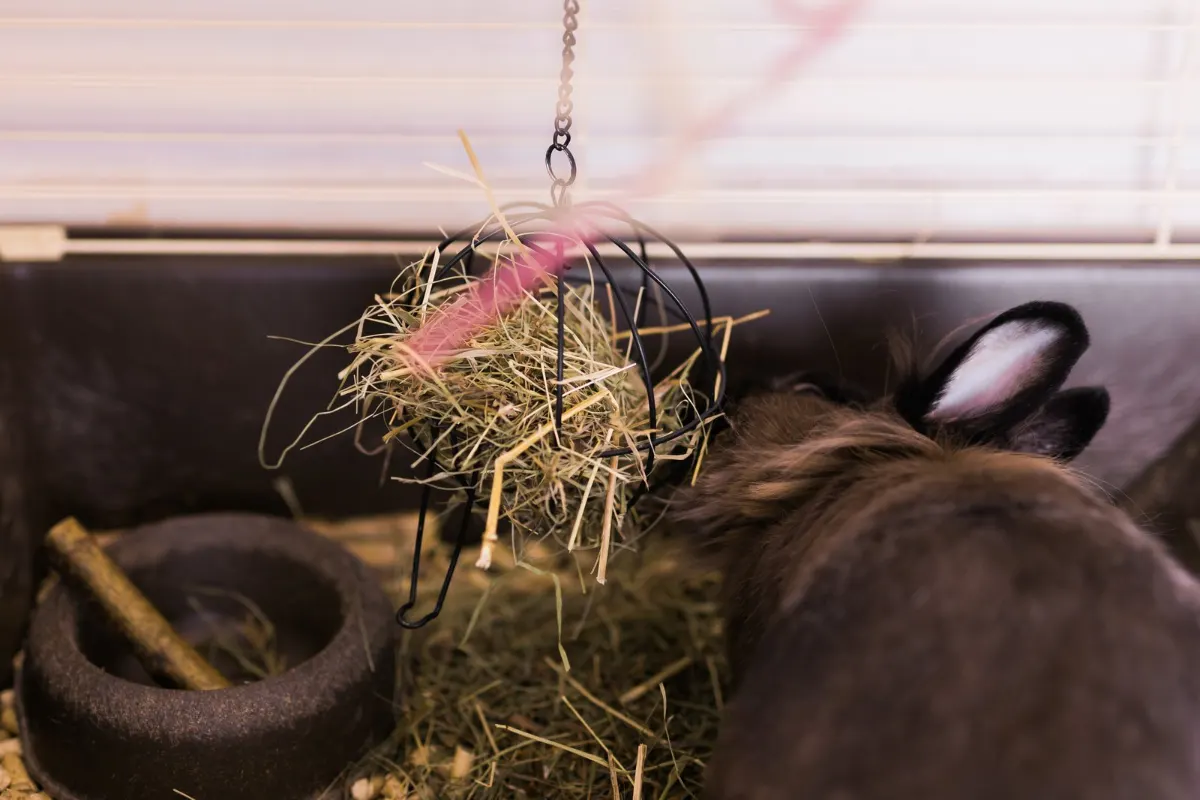
Hay should make up about 85% of what your Angora eats, and it should never run out. The House Rabbit Society says adult rabbits do best on timothy and other grass hays. Alfalfa is richer and is meant for babies, nursing mothers, and elderly or injured rabbits (source).
Hay matters even more for Angoras. They swallow wool while grooming, and long-strand hay keeps the gut moving. If you notice smaller or fewer droppings, read our Angora rabbit health guide and call a rabbit-savvy vet.
Easy to find online: Oxbow Western Timothy Hay is a widely sold grass hay.
Pellets: Why Angoras Often Need More Protein
Standard pet pellets are built for rabbits that are not growing a heavy coat. For example, Oxbow Essentials Adult Rabbit Food lists 14% minimum crude protein and 25 to 29% crude fiber (guaranteed analysis).
Angora sources recommend more protein than that. The classic Angora book Completely Angora (Sampson and Kilfoyle, 1988) gives 15 to 17% as the ideal, as quoted by Joybilee Farm, which raises French Angoras. The Furry Critter Network suggests a minimum of 16 to 18% protein and 18 to 20% fiber. Figures vary, so treat roughly 16 to 18% as a common range, not a rule.
Fibre still matters. The House Rabbit Society recommends pellets with at least 18% fiber and no added nuts, seeds or grains. Some high-protein feeds are lower in fibre, so read both numbers on the label. If your Angora is a pet you rarely harvest wool from, ask your vet whether a standard pellet is enough.
Pellets We Checked
These figures come from each maker’s published guaranteed analysis, checked in October 2026. Labels can change, so confirm on the bag.
| Pellet | Protein (min) | Fiber | Where to buy | Notes |
|---|---|---|---|---|
| Kalmbach 18% Best-in-Show | 18% | 18–22% | Farm and feed stores | Made for all classes of rabbits |
| Purina Show Rabbit Feed | 16% | 18.5–23% | Farm and feed stores | Purina says show rabbits should be limit-fed about ½ oz per pound of body weight per day |
| Purina Professional Rabbit Feed | 18% | 14.5–18.5% | Farm and feed stores | High protein, but fibre can fall below the 18% the House Rabbit Society recommends |
| Oxbow Essentials Adult Rabbit Food | 14% | 25–29% | Amazon and pet stores | Very high fibre; protein below the usual Angora range |
How much to feed: pellets are only about 5% of the diet, so measure them. Follow the feeding chart on the bag, then adjust with your vet based on your rabbit’s weight and body condition.
Leafy Greens: Every Day
The House Rabbit Society suggests about 1 to 2 cups of vegetables for every 4 lb of body weight each day, using at least three kinds of leafy greens. Add one new vegetable at a time, and stop it if it causes soft droppings (source).
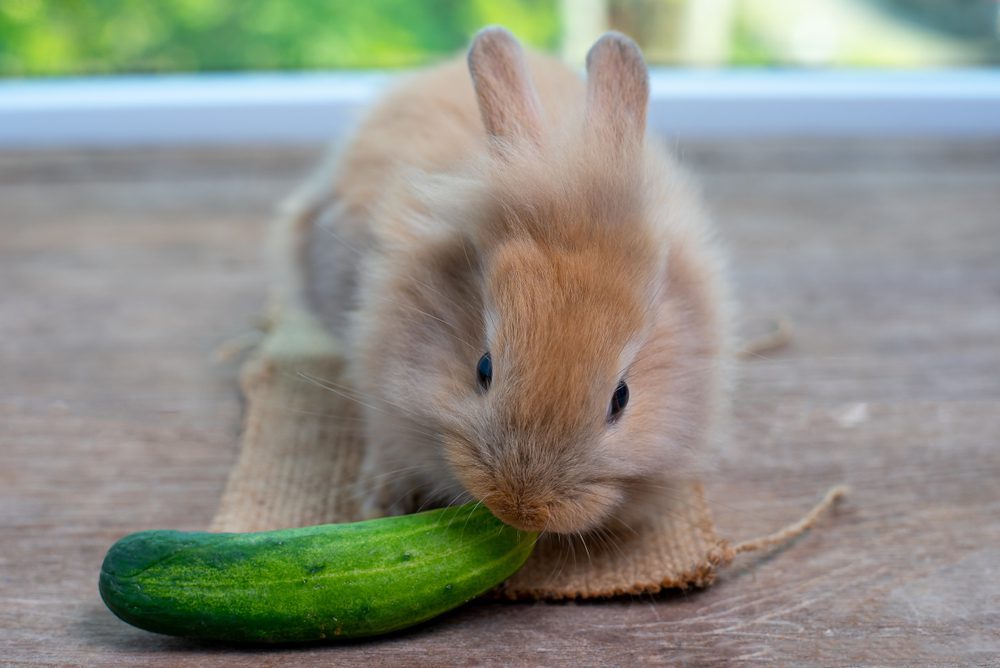
Not sure about a specific vegetable? See can rabbits eat cucumber and can rabbits eat cauliflower.
Fruit and Treats: Small and Occasional
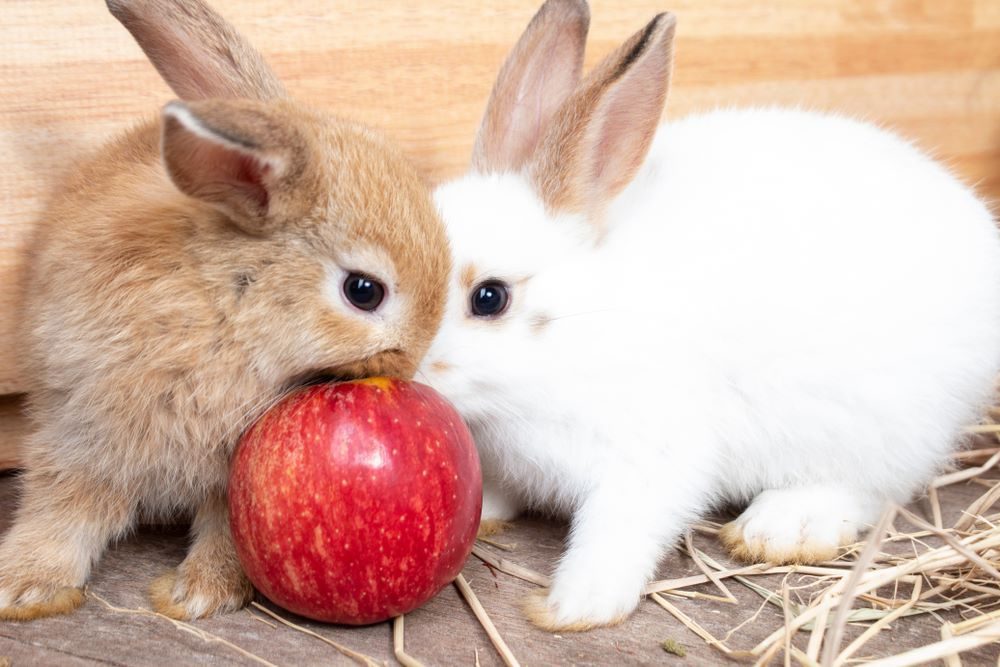
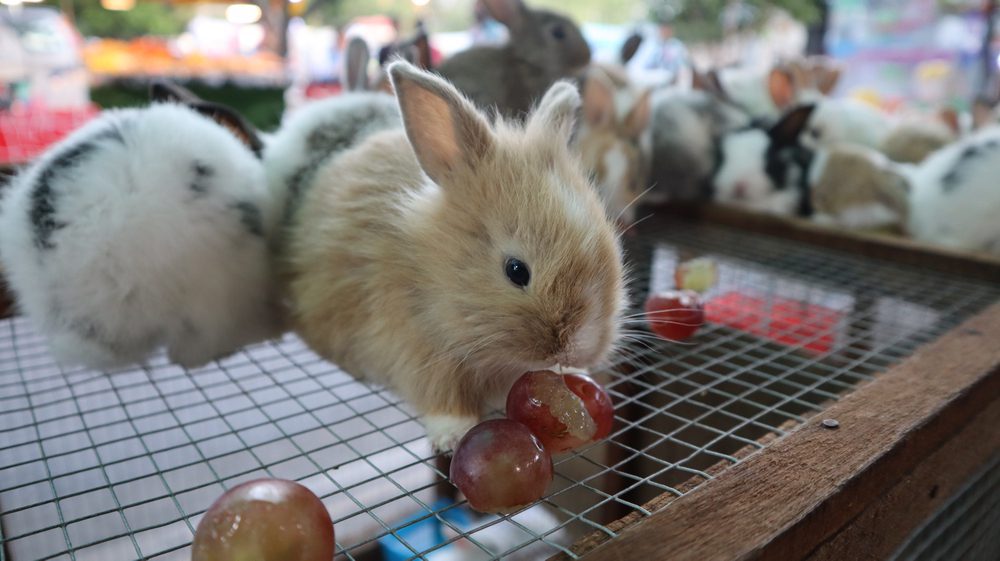
Fruit and carrots should be a very small amount, once or twice a week. Sugary fruits like bananas and grapes are occasional treats only (source). Our guides to grapes, apples and carrots cover safe amounts.
Foods to Avoid
The House Rabbit Society lists these as foods to skip:
- Processed human foods, including chocolate, cookies, crackers, breakfast cereals, bread, pasta and yogurt drops
- “Gourmet” pellet mixes with nuts, seeds or grains
Water
Fresh, clean water should be available at all times. Check bottles and bowls every day.
Related reading: can rabbits eat celery.
Frequently Asked Questions
What protein should pellets for an Angora rabbit have?
Angora sources commonly suggest about 15 to 18% protein, higher than standard pet pellets. Check fibre too: the House Rabbit Society recommends at least 18% fiber. Ask your vet what suits your rabbit.
Is alfalfa hay OK for adult Angoras?
The House Rabbit Society recommends timothy and other grass hays for adults. Alfalfa is meant for babies, nursing mothers, and elderly or injured rabbits.
How many greens should an Angora eat each day?
About 1 to 2 cups of vegetables for every 4 lb of body weight, using at least three kinds of leafy greens, according to the House Rabbit Society.
Can Angora rabbits eat fruit every day?
No. Fruit should be a very small amount once or twice a week, and sugary fruits like bananas and grapes are occasional treats only.
Are seed and grain pellet mixes good for Angoras?
No. The House Rabbit Society advises avoiding “gourmet” pellet mixes that contain nuts, seeds or grains.
Sources
- House Rabbit Society: Healthy rabbit diet
- Joybilee Farm: Feeding Angora rabbits (quotes Completely Angora, 1988)
- Furry Critter Network: French Angora nutritional needs
- Kalmbach Feeds: 18% Best-in-Show Rabbit Pellet
- Purina: Show Rabbit Feed
- Purina: Professional Rabbit Feed
- Oxbow Essentials Adult Rabbit Food (guaranteed analysis)