Can Rabbits Eat Cucumber? The Complete Feeding Guide
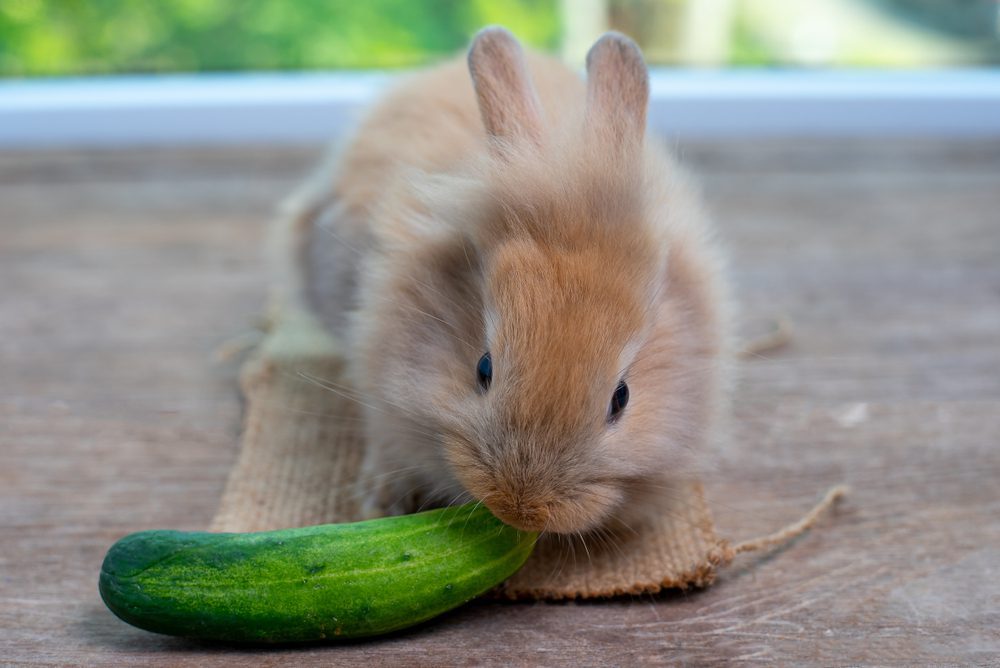
Yes — rabbits can eat cucumber safely. Cucumber is non-toxic to rabbits, well-tolerated by most individuals, and a refreshing, hydrating treat, particularly in warm months. However, its very high water content (approximately 95%) and low fiber content mean it must be fed in small quantities as an occasional treat — not as a dietary staple or a substitute for hay or leafy greens.
This guide covers everything: the nutritional profile of cucumber for rabbits, the correct serving size, how often to feed it, which parts of the cucumber are safe, the risks of overfeeding, and how cucumber fits into the complete Angora rabbit diet.
Cucumber Nutritional Profile for Rabbits
Understanding what cucumber provides — and what it does not — clarifies why it belongs in the treat category rather than the daily dietary vegetable category.
| Nutrient | Per 100g Cucumber | Relevance to Rabbits |
|---|---|---|
| Water | ~95g | Hydration support — but too much causes diarrhea |
| Calories | ~16 kcal | Very low calorie — suitable for weight-conscious rabbits |
| Fiber | ~0.5g | Very low — does not contribute meaningfully to gut motility |
| Vitamin K | ~16.4 mcg | Supports blood clotting — beneficial in moderate amounts |
| Vitamin C | ~2.8 mg | Antioxidant — less critical for rabbits than for guinea pigs |
| Potassium | ~147 mg | Supports muscle and nerve function |
| Magnesium | ~13 mg | Supports bone health |
The key nutritional facts for rabbit owners: Cucumber is almost entirely water with minimal fiber. This is why it cannot function as a dietary vegetable alongside leafy greens like romaine or parsley — it provides hydration and trace minerals but does not contribute the fiber that rabbit gut motility depends on.
For a rabbit whose diet is correctly founded on unlimited hay, small additions of cucumber as a treat add hydration and variety without disrupting the dietary balance. For a rabbit whose hay intake is inadequate, the cucumber’s near-zero fiber content makes the imbalance worse.
Is Cucumber Safe for Rabbits?
Yes. Cucumber contains no compounds toxic to rabbits. Specifically:
- No oxalic acid in significant quantities (unlike spinach or kale)
- No harmful essential oils (unlike onion or garlic family members)
- No theobromine (unlike chocolate)
- No solanine (unlike raw potato)
- No amygdalin (unlike apple seeds or stone fruit pits)
- Seeds are safe — cucumber seeds do not contain harmful compounds and do not need to be removed before feeding
The primary risk of cucumber is not toxicity but digestive disruption from overfeeding — specifically, the high water content causing diarrhea, and the low fiber content failing to support gut motility if cucumber displaces hay or leafy greens from the diet.
How Much Cucumber Can a Rabbit Eat?
Serving Size by Rabbit Weight
| Rabbit Weight | Maximum Serving Size Per Session |
|---|---|
| Under 4 lbs (dwarf breeds, young rabbits) | 1 thin slice |
| 4–6 lbs (English Angora, smaller adults) | 1–2 thin slices |
| 6–8 lbs (French Angora, Satin Angora) | 2–3 thin slices |
| 9–12 lbs (Giant Angora, German Angora) | 3–4 thin slices |
A “thin slice” is approximately 3 to 5mm thick — a slice you would put in a glass of water, not a thick cutting-board slice.
The alternative measure offered by some rabbit nutritionists: no more than 1 tablespoon of cucumber per 2 pounds of body weight per serving. For a 6-pound French Angora, this is approximately 3 tablespoons — roughly equivalent to two to three thin slices.
Feeding Frequency
Two to three times per week maximum for adult rabbits. Daily feeding is not recommended — the high water content of daily cucumber intake creates consistently soft cecotropes (the nutrient-rich droppings rabbits re-ingest), which reduces the nutritional completeness of the cecotrophy cycle.
Baby rabbits under 12 weeks: Do not offer cucumber or any fresh vegetables. Young rabbit digestive systems are still developing. Introduce vegetables gradually between 12 weeks and 6 months, one item at a time, in very small quantities.
Which Parts of the Cucumber Are Safe?
Flesh
Safe. The primary part that most owners feed. High water content, mild flavor, readily accepted by most rabbits.
Skin (Peel)
Safe and nutritionally preferable — the skin contains more fiber than the flesh and is the most nutritious part of the cucumber for a rabbit. If feeding organic cucumbers or washing non-organic cucumbers thoroughly with clean water, the skin can and should be left on.
Important: Non-organic cucumbers are frequently coated with food-grade wax to extend shelf life and appearance. This wax is not toxic to rabbits in the quantities present on a few slices, but washing thoroughly removes both wax coating and pesticide residue. If in doubt, peel non-organic cucumbers before feeding.
Seeds
Safe. Cucumber seeds do not contain amygdalin or other harmful compounds. There is no need to scoop out the cucumber interior before feeding — seeds, flesh, and skin together are all appropriate.
Leaves and Vines (from the cucumber plant)
Safe in moderation, if you grow cucumbers. Cucumber plant leaves and vines are not toxic to rabbits. They can be offered occasionally as a foraging addition, washed thoroughly. Do not feed leaves treated with pesticides or herbicides.
Pickled Cucumber (Pickles)
Never feed. Pickles are cucumbers preserved in brine, a high-sodium solution that is harmful to rabbits. Many pickle recipes also include garlic, dill, or spices that are either toxic or inappropriate for rabbit consumption. The salt content alone warrants complete avoidance.
How to Introduce Cucumber to Your Rabbit
If your rabbit has never eaten a cucumber before, follow this introduction protocol to avoid digestive upset:
Day 1: Offer one very thin slice. Observe droppings over the following 24 hours. Normal, round, firm fecal pellets indicate good tolerance. Soft, misshapen, or reduced droppings indicate the introduction was too fast or the rabbit has cucumber sensitivity.
Day 3–4 (if Day 1 was well tolerated): Offer one to two thin slices. Monitor droppings again.
Ongoing (if no digestive changes observed): Feed at the serving sizes and frequency recommended above — two to three times per week as an occasional treat alongside the primary diet of hay, pellets, and leafy greens.
If diarrhea or very soft droppings develop: Remove the cucumber from the diet immediately. Ensure unlimited hay is available — hay is the primary remedy for mild digestive softness. Offer extra fresh water. If diarrhea persists beyond 24 hours or the rabbit stops eating, contact a rabbit-experienced veterinarian.
The Role of Cucumber in the Complete Angora Rabbit Diet
Cucumber fits into the Angora rabbit diet as an occasional hydration treat — it does not replace any component of the core diet structure.
The core diet structure remains:
- Unlimited timothy hay — foundation, non-negotiable
- Minimum 17% protein pellets — measured daily portion
- Daily fresh leafy greens — romaine, cilantro, parsley, dandelion greens
- Fresh water at all times
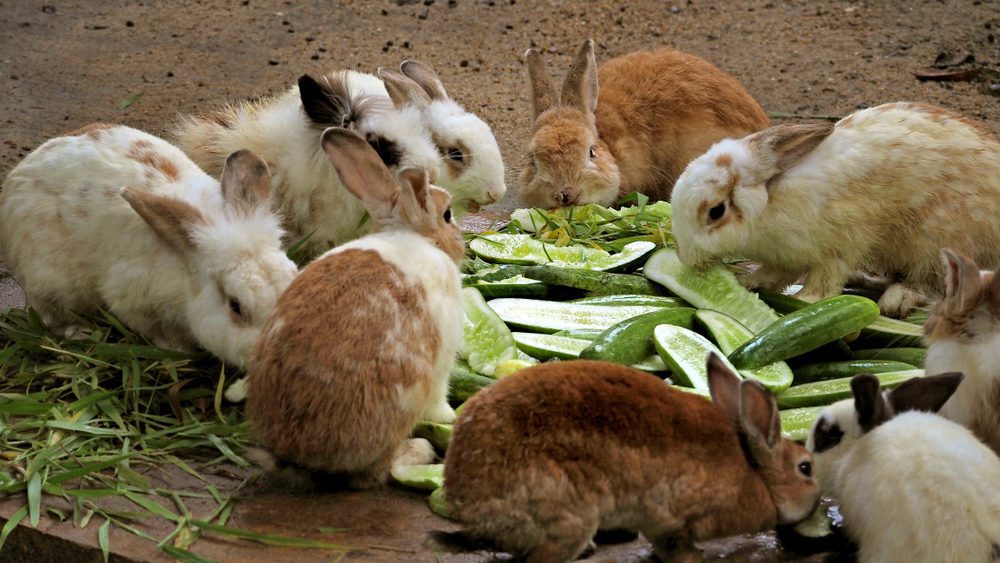
Cucumber sits outside this structure as a treat — two to three times per week, in the serving sizes above, alongside the complete diet rather than displacing any component of it.
For Angora rabbit fiber production: Cucumber’s hydration contribution can be a minor positive in warm summer months when water intake and coat condition are both under heat stress pressure. It does not contribute to fiber quality in any direct way — the 17% protein pellet standard and hay adequacy are the diet variables that affect fiber quality.
Signs of Too Much Cucumber
Watch for these indicators that the cucumber serving size or frequency needs to be reduced:
- Soft or watery fecal pellets — the most immediate indicator of excess water intake from the cucumber
- Cecotropes left uneaten — soft cecotropes (the cluster-form droppings rabbits re-ingest) are sometimes not consumed when their texture changes from excess water in the diet
- Reduced hay consumption — if the cucumber is displacing hay intake, reduce or eliminate the cucumber immediately
- Loose posture or lethargy — more severe digestive upset; contact a veterinarian if these persist
FAQs
Can rabbits eat a cucumber every day?
Not recommended. Two to three times per week, in the serving sizes appropriate for the rabbit’s body weight, is the correct frequency. Daily cucumber feeding risks consistent soft cecotropes from excess water intake, which reduces the nutritional completeness of the cecotrophy cycle.
Can rabbits eat cucumber skin?
Yes — and it is the most nutritious part of the cucumber for a rabbit, as it contains more fiber than the flesh. Wash thoroughly to remove pesticide residue and wax coating before feeding, particularly for non-organic cucumbers.
Can rabbits eat cucumber seeds? Yes. Cucumber seeds do not contain harmful compounds and do not need to be removed. The entire cucumber — skin, flesh, and seeds — can be fed together.
How much cucumber can I give my Angora rabbit?
Two to four thin slices per session, depending on the rabbit’s breed size, two to three times per week. English Angoras (4 to 6 lbs) — one to two slices. French and Satin Angoras (6 to 9 lbs) — two to three slices. Giant and German Angoras (9 to 12+ lbs) — three to four slices.
Can baby rabbits eat a cucumber?
No. Rabbits under 12 weeks of age should not receive any fresh vegetables — their digestive systems are still developing, and fresh produce can cause fatal digestive disruption in very young rabbits. Introduce cucumber and other vegetables gradually from 12 weeks onward, one item at a time in very small quantities.
Can rabbits eat pickles?
No. Pickles are high in sodium from the brine and often contain garlic or other seasonings that are harmful to rabbits. Never feed pickles or any pickled food to a rabbit.
Conclusion
Cucumber is a safe, refreshing, and well-tolerated treat for rabbits — including all five Angora rabbit breeds — when fed correctly. Two to three thin slices, two to three times per week, with skin on and seeds included, added alongside the complete core diet of unlimited hay, measured high-protein pellets, and daily leafy greens.
It is a treat, not a dietary staple. It contributes hydration and trace minerals, but not the fiber that rabbit gut health depends on. Keep the hay rack full, maintain the core diet, and a cucumber makes a perfectly appropriate addition to the weekly treat rotation.
For the complete Angora rabbit diet guide, including all safe and unsafe foods, see our Best Food for Angora Rabbits guide. For the full care framework, see our Angora Rabbit Care Guide.
This article is for general educational purposes and does not constitute veterinary advice. If your rabbit shows signs of digestive distress, contact a rabbit-experienced veterinarian. See our disclaimer for full details.