Are Rabbits Mammals? The Complete Answer
Yes — rabbits are mammals. They satisfy every defining characteristic of the class Mammalia: they are warm-blooded, possess fur, give birth to live young, and nurse those young on milk produced by the mother. There is no scientific ambiguity on this point.
What is less obvious — and more interesting — is exactly where rabbits sit within the mammal family tree, why they are frequently and incorrectly called rodents, and what their mammalian biology means in practice for anyone keeping a domestic rabbit. This guide covers the full classification, the lagomorph distinction, and the specific ways Angora rabbits express their mammalian characteristics through their remarkable wool.
The Defining Characteristics of Mammals
The class Mammalia is defined by a set of characteristics that, together, distinguish mammals from all other animal groups:
Warm-bloodedness (endothermy). Mammals maintain a constant internal body temperature independent of the external environment, regulated by internal metabolic processes. Rabbits maintain a core body temperature of approximately 101 to 103 degrees Fahrenheit (38.3 to 39.4°C). This is why heat stress above approximately 80°F (27°C) is dangerous — the rabbit’s thermoregulation system has limits, and the Angora’s dense wool coat compounds the heat management challenge significantly.
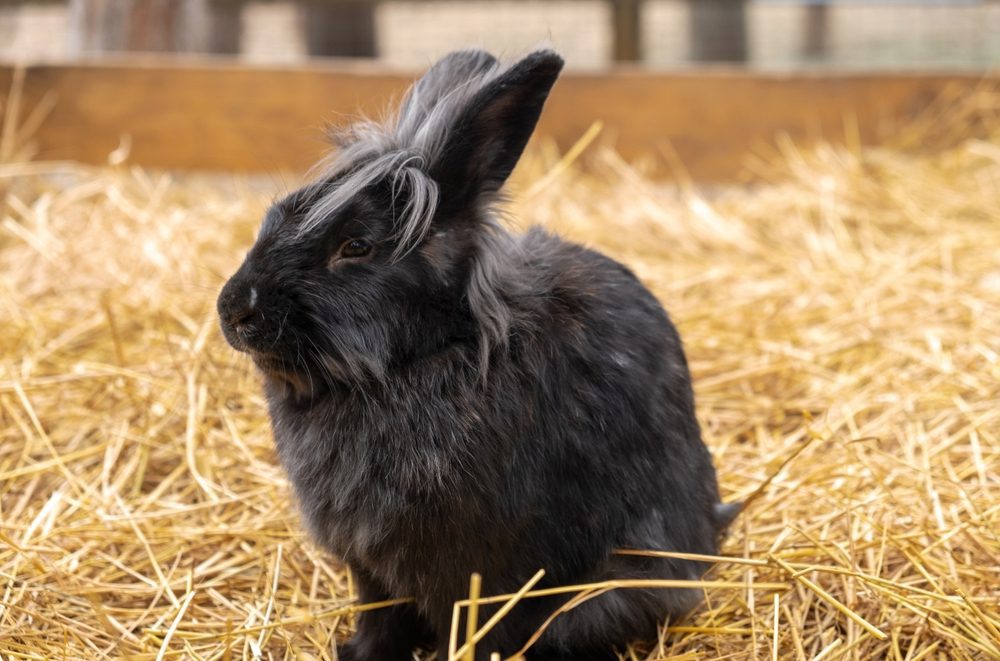
Hair or fur. All mammals have hair at some stage of life. In rabbits, fur covers the entire body and serves both insulation and, in the case of Angora breeds, extraordinary fiber production. Angora rabbit fiber — among the finest natural fibers in the world at 14 to 16 micrometers in diameter — is simply rabbit hair that has been selectively bred for exceptional length and fineness.
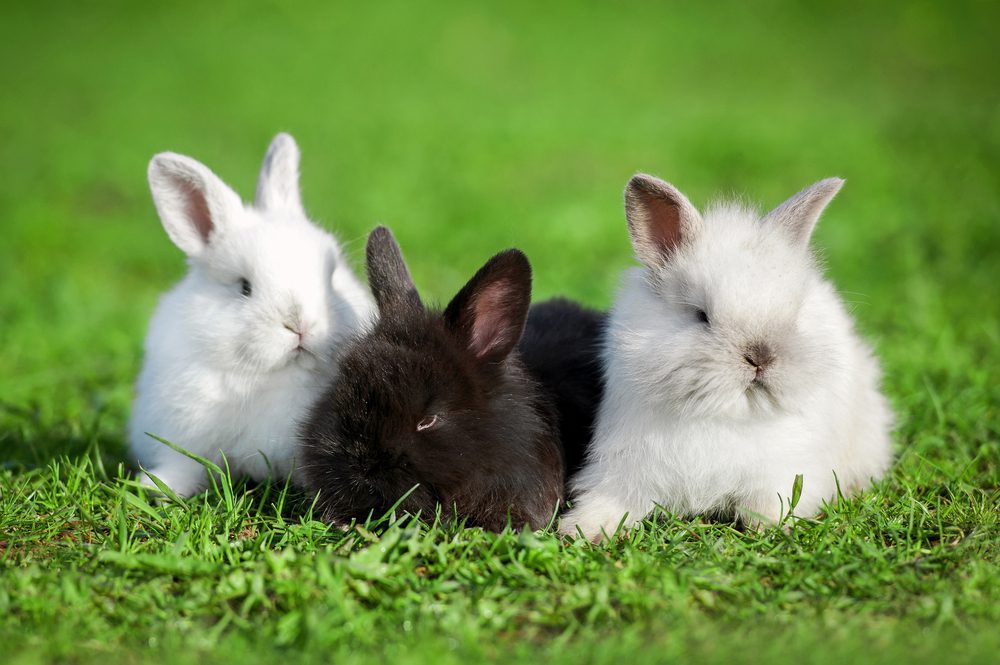
Live birth (viviparity). Mammals give birth to live young rather than laying eggs, except the monotremes (platypus and echidnas). Rabbits are viviparous — does (female rabbits) give birth to litters of kits that have been developing within the uterus. Gestation in domestic rabbits is approximately 28 to 32 days.
Lactation. Mammalian mothers produce milk through mammary glands to feed their young. Rabbit does nurse their kits with milk that is among the most energy-dense of any domestic animal — rabbit milk contains approximately 10 to 15% fat and 10 to 15% protein, far richer than cow or human milk. This high caloric density allows the nurse to nurse for only a few minutes once or twice daily while still providing adequate nutrition to entire litters.
Three middle ear bones. A characteristic shared by all mammals and no other vertebrates: three bones in the middle ear (the malleus, incus, and stapes) that transmit sound vibrations. Rabbits’ highly sensitive hearing is enabled by this structure alongside their large, mobile ear pinnae.
A neocortex. The brain structure is associated with higher-order sensory perception, conscious thought, and spatial reasoning. Present in all mammals.
Rabbits possess all of these characteristics without exception, placing them firmly and unambiguously in the class Mammalia.
Are Rabbits Rodents? The Lagomorph Distinction
The most common classification error made about rabbits is placing them in the order Rodentia — the rodents. Mice, rats, squirrels, beavers, porcupines, and hamsters are rodents. Rabbits are not.
Rabbits belong to the order Lagomorpha, alongside hares and pikas. This classification was formalized in the early twentieth century after anatomical study made clear that lagomorphs and rodents, despite some superficial similarities, are fundamentally distinct groups.
The defining anatomical difference is in the incisor teeth. Rodents have a single pair of upper incisors. Lagomorphs have two pairs of upper incisors — a large primary pair and a small secondary pair of peg-like teeth (called peg teeth or secondary incisors) positioned directly behind the primary pair. These peg teeth have no counterpart in any rodent. In a domestic rabbit, they are small and easy to miss, but they are present and are the defining dental feature that distinguishes the lagomorph from the rodent lineage.
Additional distinctions between lagomorphs and rodents:
Cecotrophy. Lagomorphs practice cecotrophy — the selective re-ingestion of specific soft droppings called cecotropes that are produced in the cecum (a specialized fermentation chamber). These cecotropes are nutritionally distinct from regular fecal pellets and contain protein, B vitamins, and beneficial bacteria. The rabbit consumes them directly from the anus, typically early in the morning. This behavior is not seen in rodents and is a defining characteristic of lagomorph digestive physiology.
Fully herbivorous. Lagomorphs are exclusively herbivorous — they eat only plant material. Many rodents are omnivorous, consuming insects, eggs, or other animal protein opportunistically. Rabbits have no capacity for digesting animal protein and should never be offered meat or animal-derived food.
Digestive physiology. The lagomorph digestive system is built around hindgut fermentation in the cecum, producing both hard fecal pellets and soft cecotropes. This is a more complex digestive arrangement than that of most rodents and reflects a very different evolutionary strategy for extracting nutrition from fibrous plant material.
Skeletal structure. Lagomorphs have a different skeletal structure from rodents, including differences in limb proportions and skull anatomy that reflect their distinct evolutionary lineage.
Full Taxonomic Classification of the Domestic Rabbit
For reference, the complete Linnaean classification of the domestic rabbit:
- Kingdom: Animalia
- Phylum: Chordata
- Class: Mammalia
- Order: Lagomorpha
- Family: Leporidae
- Genus: Oryctolagus
- Species: Oryctolagus cuniculus
All domestic rabbit breeds — including all five Angora breeds — are varieties of Oryctolagus cuniculus, the European rabbit. The extraordinary diversity of domestic rabbit breeds, from the 5-pound English Angora to the 14-pound Flemish Giant, and from the Rex’s velvet fur to the Angora’s full-body wool, all represent selective breeding within a single species over the past few centuries.
Reproduction in Rabbits: Mammalian Biology in Practice
Rabbit reproduction illustrates mammalian biology in several notable ways.
Induced ovulation. Rabbit does do not have a fixed ovulation cycle. Ovulation is induced by mating — the physical act of copulation triggers the hormonal cascade that releases eggs. This makes rabbits highly efficient breeders under conditions that favor reproduction.
Gestation. Domestic rabbit gestation lasts approximately 28 to 32 days — among the shortest of any mammal. Litters typically range from 4 to 12 kits, with breed variation.
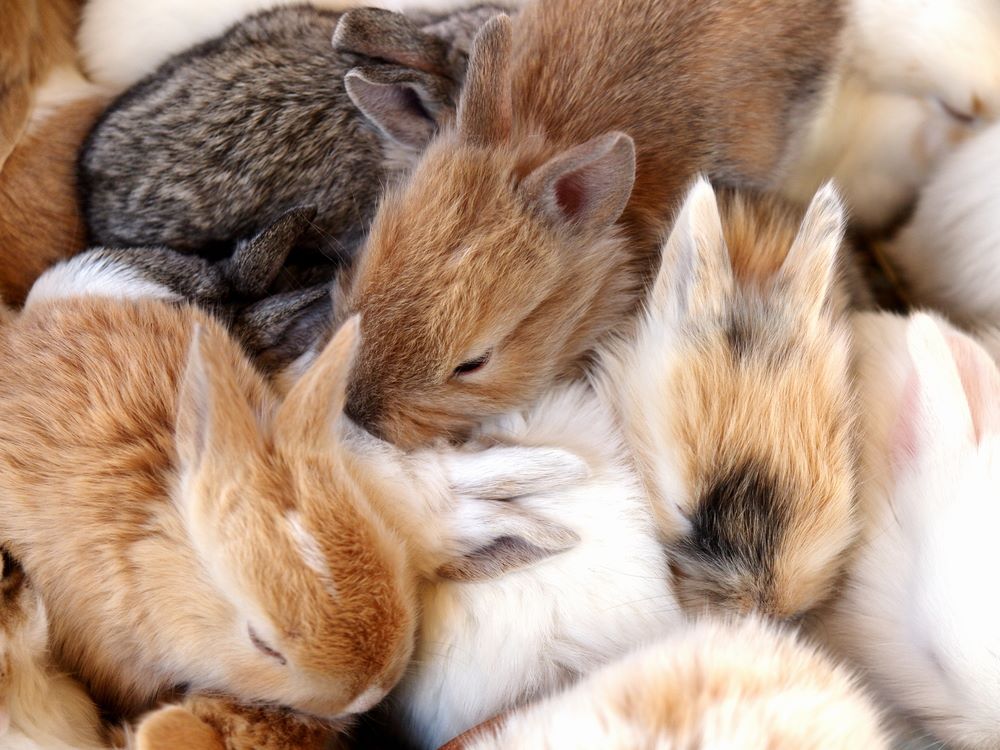
Altricial young. Rabbit kits are born in an altricial state — eyes closed, ears folded, with minimal fur. This contrasts with precocial young (such as deer fawns, which can stand within hours of birth). The altricial state means kits require sustained maternal care, warmth, and nursing during the first weeks of life.
Brief nursing periods. Despite the richness of rabbit milk, does nurse their kits for only a few minutes once or twice daily. A doe that appears to be ignoring her nest is almost certainly nursing nocturnally — this is normal lagomorph maternal behavior, not neglect.
Weaning. Kits are weaned at approximately four to eight weeks of age as their digestive systems develop the capacity to process hay and solid food.
Angora Rabbit Fur: Mammalian Hair Expressed at Its Extreme
All mammalian hair serves the same fundamental biological function — thermoregulation and environmental protection. In Angora rabbits, selective breeding over centuries has produced a coat that expresses the mammalian hair characteristic at an extreme that is unmatched in the domestic animal world.
Angora rabbit fiber grows at approximately 1 inch (2.5 cm) per month — a continuous growth rate that does not self-limit. Unlike the seasonal molting cycle of most mammals, Angora wool (in non-molting breeds such as the German and Giant Angora) grows continuously and must be harvested through clipping every 90 to 120 days. Molting breeds — English, French, and Satin Angoras — naturally shed their coats periodically and can be harvested by plucking during the molt.
The fiber itself, at 14 to 16 micrometers in diameter, is finer than cashmere (typically 14 to 19 micrometers) and lighter than sheep wool due to a hollow medulla in each fiber that traps air. These characteristics are the result of the same mammalian biology — specialized hair follicles producing keratin fiber — that produces the coarser guard hairs on a wild rabbit or the slick pelt of a Rex.
Understanding that Angora wool is rabbit hair — mammalian hair at its most refined — gives context to why grooming demands are so intense. A coat that grows at 1 inch per month and does not self-limit will, without intervention, become unmanageable, mat severely, and cause the animal serious health problems. The biology that makes Angora fiber extraordinary is the same biology that makes Angora rabbit ownership a significant care commitment. For the full grooming guide, see our Angora Rabbit Grooming guide.
Common Misconceptions About Rabbit Classification
“Rabbits are rodents.” Incorrect. Rabbits are lagomorphs. The distinguishing anatomical feature is the double upper incisor — a secondary pair of peg teeth behind the primary incisors that rodents do not have. The lagomorph and rodent lineages diverged approximately 85 million years ago.
“Rabbits only eat carrots.” Incorrect. Rabbits are obligate herbivores whose diet is built around fibrous grasses and hay. Carrots are a high-sugar treat appropriate only in small quantities. This is covered in detail in our Can Rabbits Eat Carrots? guide.
“Rabbits are low-maintenance pets.” Inaccurate for any domestic rabbit breed, and particularly inaccurate for Angora breeds. Rabbits have complex dietary, environmental, social, and health needs that exceed those of many commonly kept pets.
“A rabbit eating its droppings is sick.” Incorrect. Cecotrophy — the re-ingestion of soft cecotropes — is a normal and essential component of lagomorph nutrition. A rabbit that does not consume its cecotropes may suffer nutritional deficiency. This behavior should not be discouraged or mistaken for illness.
FAQs
Are rabbits mammals?
Yes — rabbits are mammals. They are warm-blooded, covered in fur, give birth to live young, and nurse those young on milk. They belong to the class Mammalia without any ambiguity.
Are rabbits rodents?
No. Rabbits are lagomorphs, not rodents. The two groups share a broad herbivorous lifestyle but are anatomically distinct lineages that diverged approximately 85 million years ago. The clearest differentiator is the double upper incisor of lagomorphs — a secondary peg tooth behind the primary incisors that is absent in all rodents.
What order do rabbits belong to?
Rabbits belong to the order Lagomorpha, family Leporidae, genus Oryctolagus, species Oryctolagus cuniculus.
Why do rabbits eat their droppings?
Rabbits practice cecotrophy — the re-ingestion of soft cecotropes produced in the cecum. These cecotropes are nutritionally distinct from regular fecal pellets and contain protein, B vitamins, and beneficial bacteria that cannot be absorbed on the first pass through the digestive system. This behavior is normal and essential, not a sign of illness.
How is Angora rabbit wool connected to mammalian biology?
Angora wool is rabbit hair — the same keratin-based structure as all mammalian hair — selectively bred for extraordinary fineness (14 to 16 micrometers in diameter) and continuous growth rate (approximately 1 inch per month). The continuous growth is managed through regular harvesting and grooming.
How long is rabbit gestation?
Domestic rabbit gestation lasts approximately 28 to 32 days. Litters typically range from 4 to 12 kits. Rabbit does practice induced ovulation — mating triggers egg release rather than a fixed hormonal cycle.
Conclusion
Rabbits are mammals — specifically, lagomorphs of the species Oryctolagus cuniculus — with all the defining characteristics of the class Mammalia expressed in a biology shaped by their role as prey animals: exceptional hearing, wide-field low-light vision, rapid reproduction, and a digestive system built around fibrous plant material processed through hindgut fermentation.
The confusion between rabbits and rodents, while common, is anatomically unfounded. The double upper incisor and the cecotrophic digestive system mark lagomorphs as a distinct evolutionary lineage from rodents, with a separate biology that matters practically for anyone keeping a domestic rabbit.
For Angora rabbit owners, the mammalian characteristic most immediately relevant to daily care is the fur — rabbit hair grown to lengths and fineness unmatched in the domestic animal world, requiring the grooming commitment that defines Angora rabbit ownership. For the full guide to managing that commitment, see our Angora Rabbit Grooming guide.
The information in this article is for general educational purposes. See our disclaimer for full details.